Human Factors Engineer
At Intel, I served as a Human Factors Engineer and UX Product Owner, playing a key role in the end-to-end design and development of a custom-built SAP CRM solution tailored to Intel’s unique business needs. As a member of a 12-person Design & Research team, I helped conceptualize and shape a platform equivalent to Salesforce, but designed from the ground up to align with Intel’s complex sales operations.
This enterprise application provided Intel’s global sales force with an advanced, collaborative environment to efficiently manage all sales funnel activities, optimize workflows, and enhance customer relationship management at scale. My work involved defining UX requirements, driving user research, and ensuring a seamless, intuitive interface, ultimately contributing to a highly customized solution that improved productivity and streamlined sales operations across the organization.
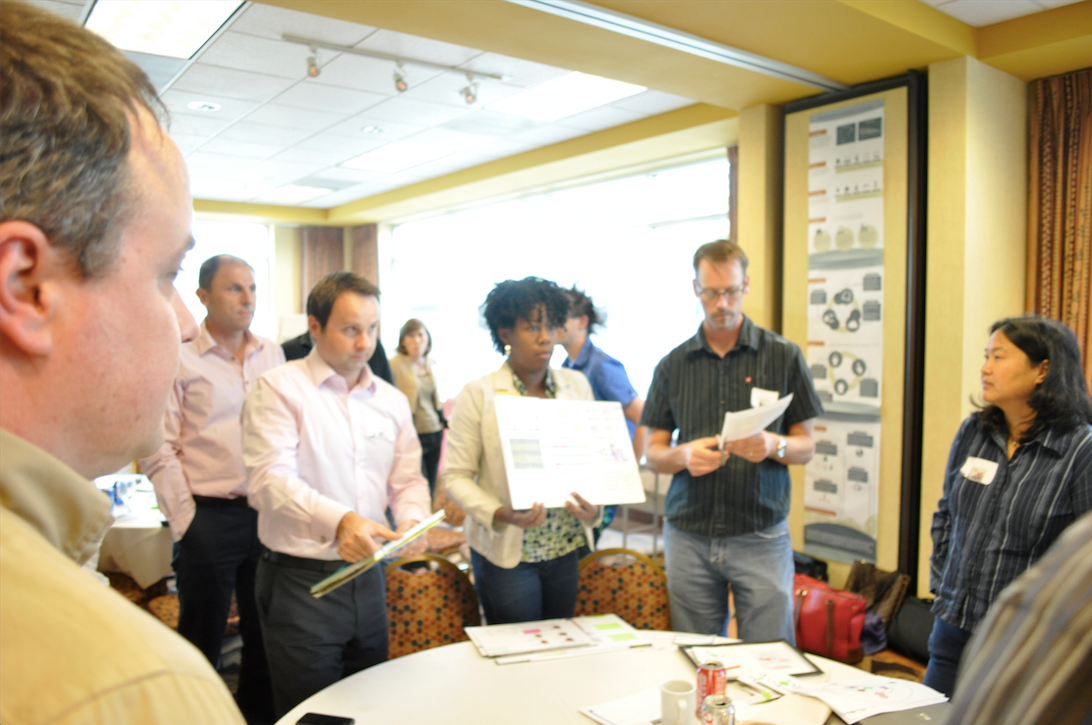
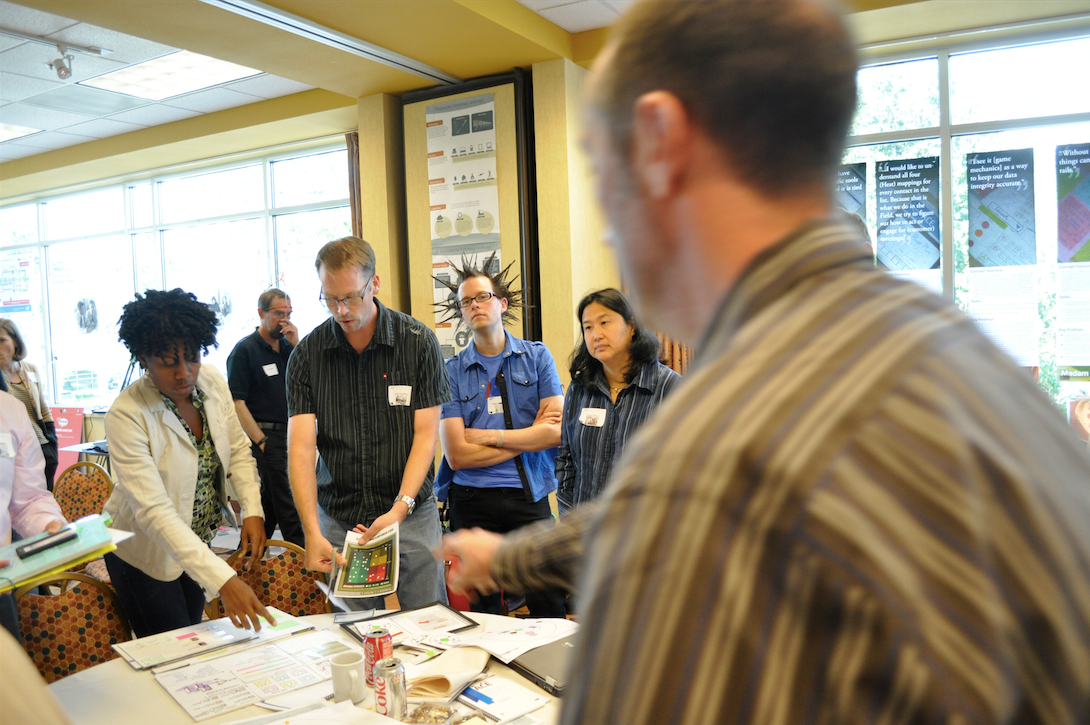
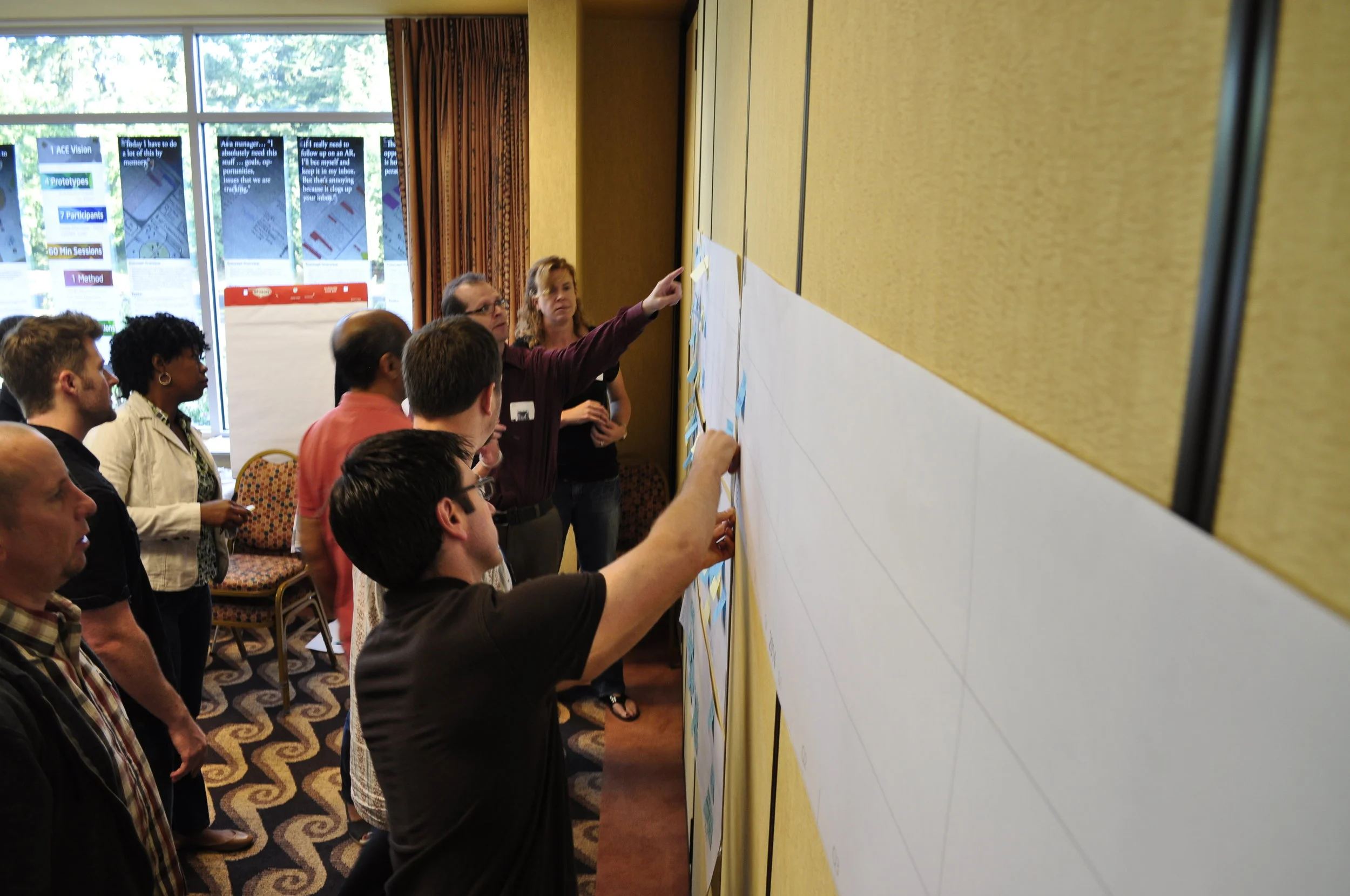
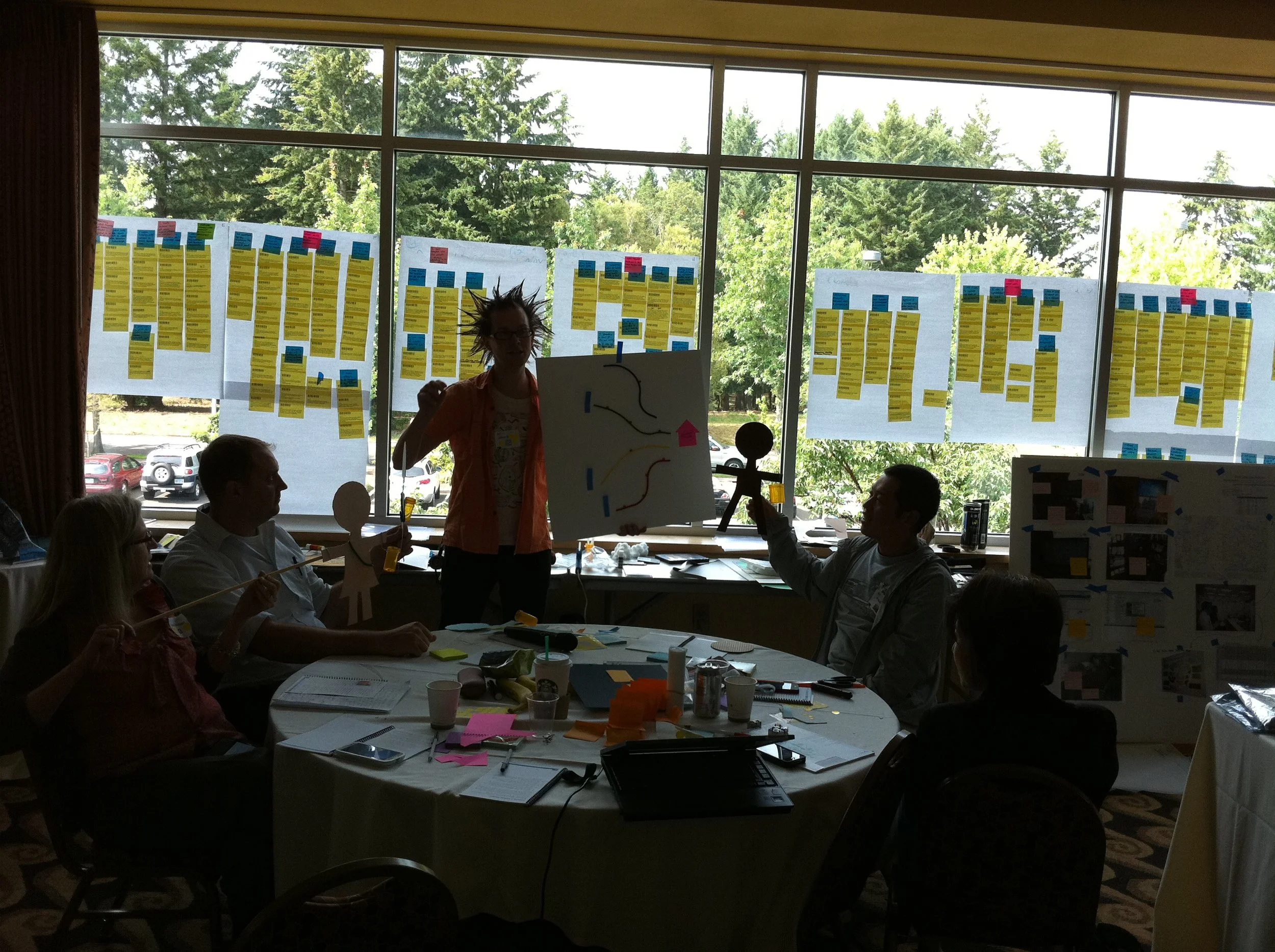
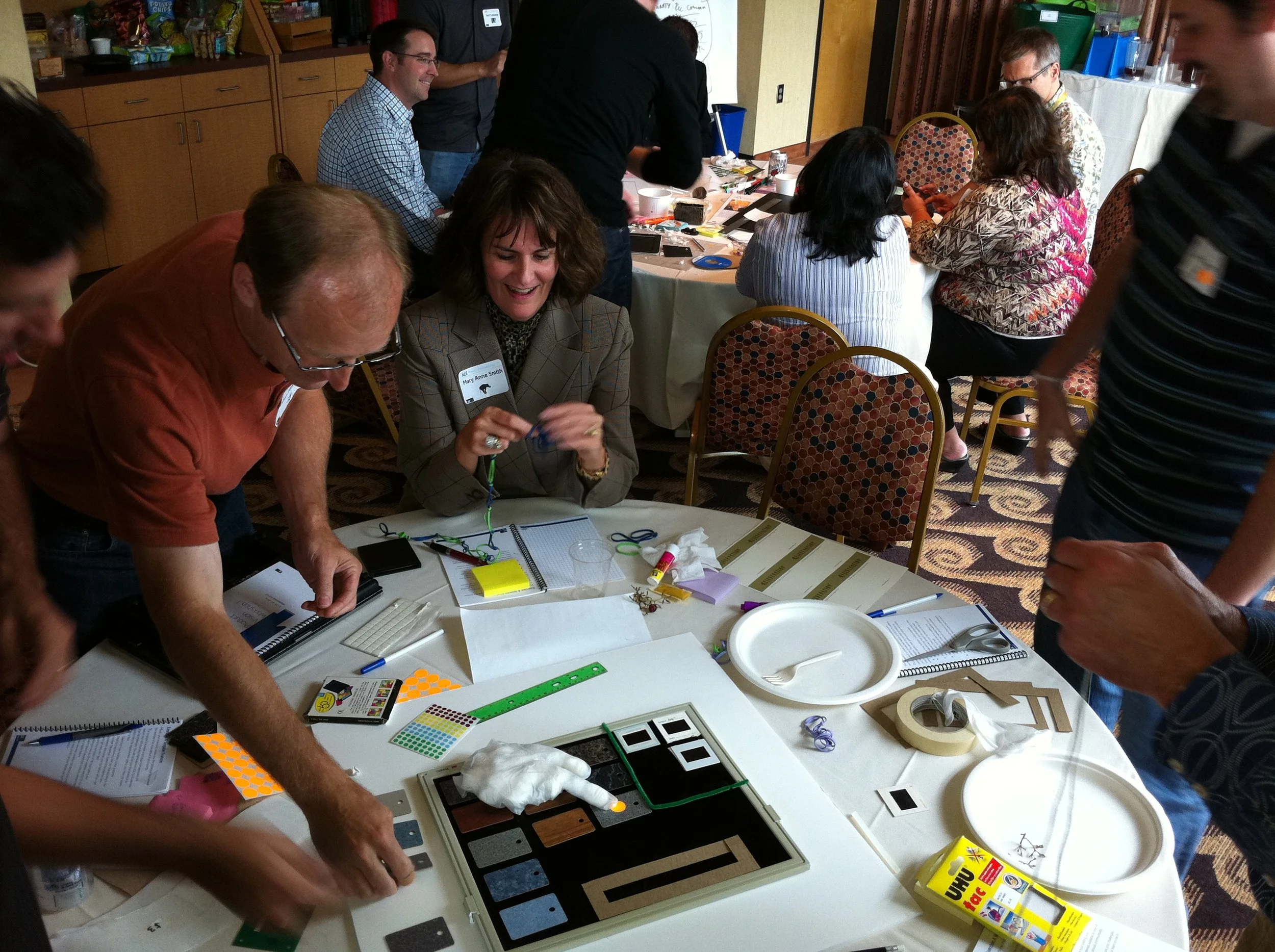
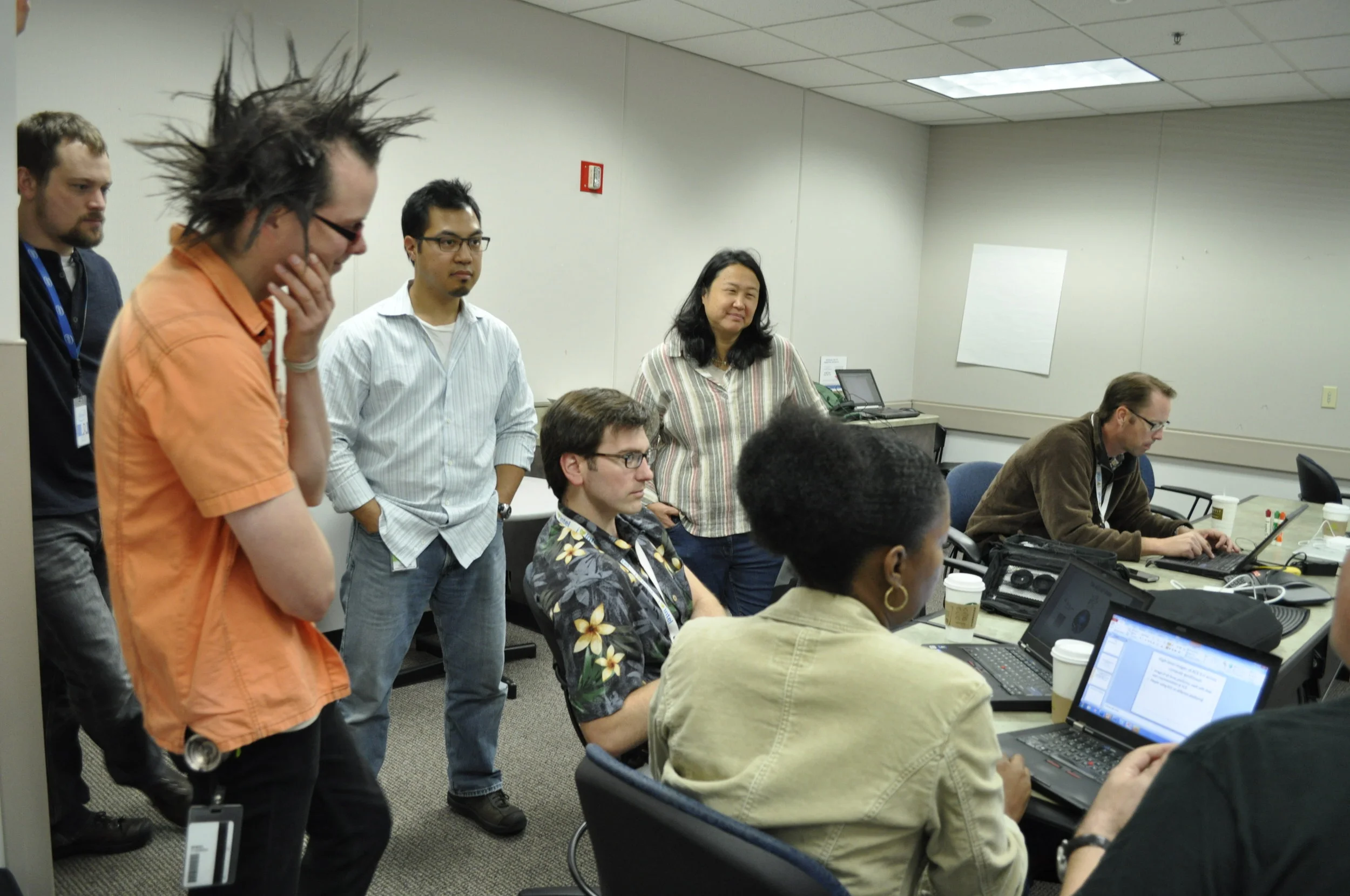
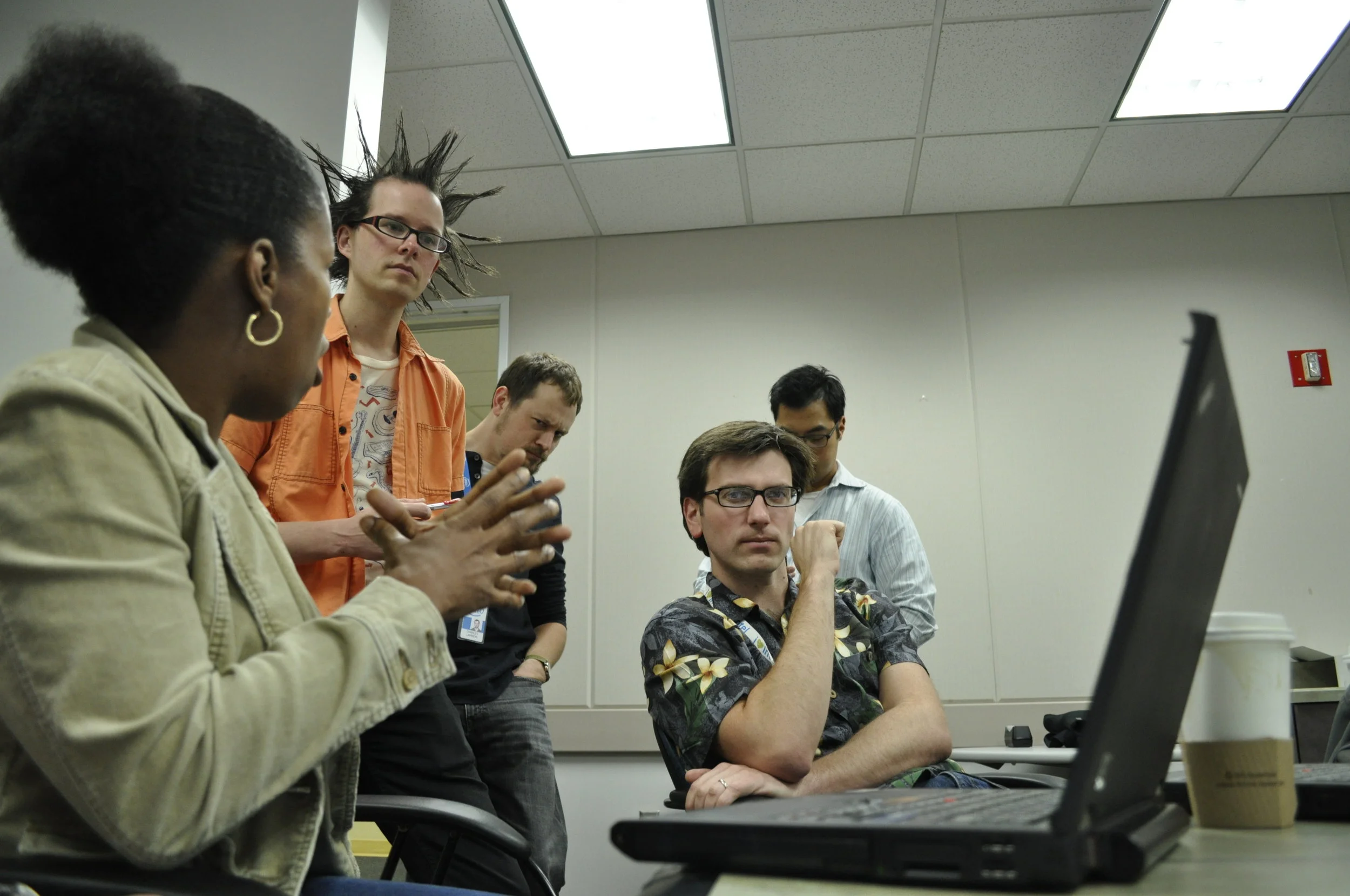
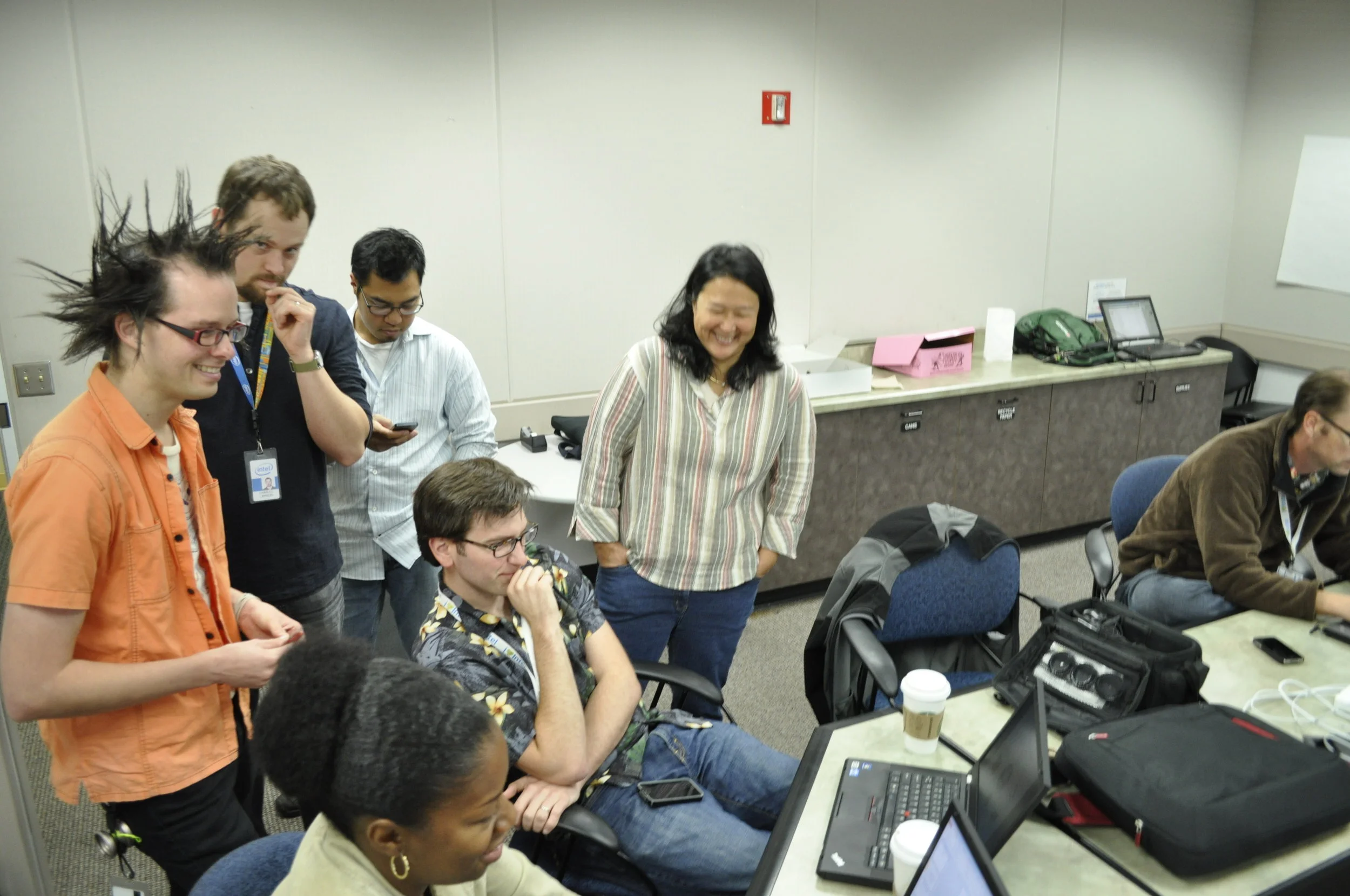
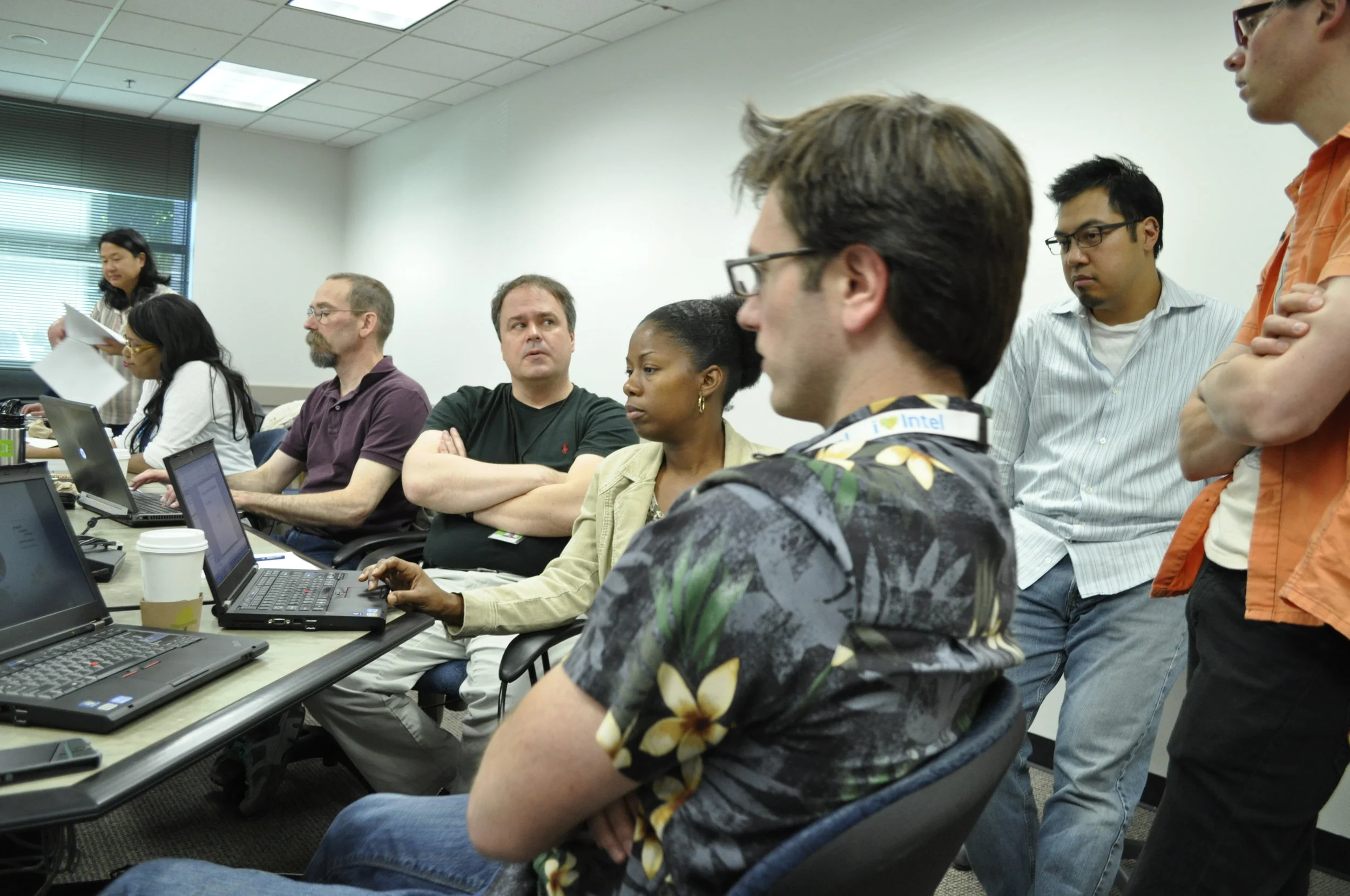
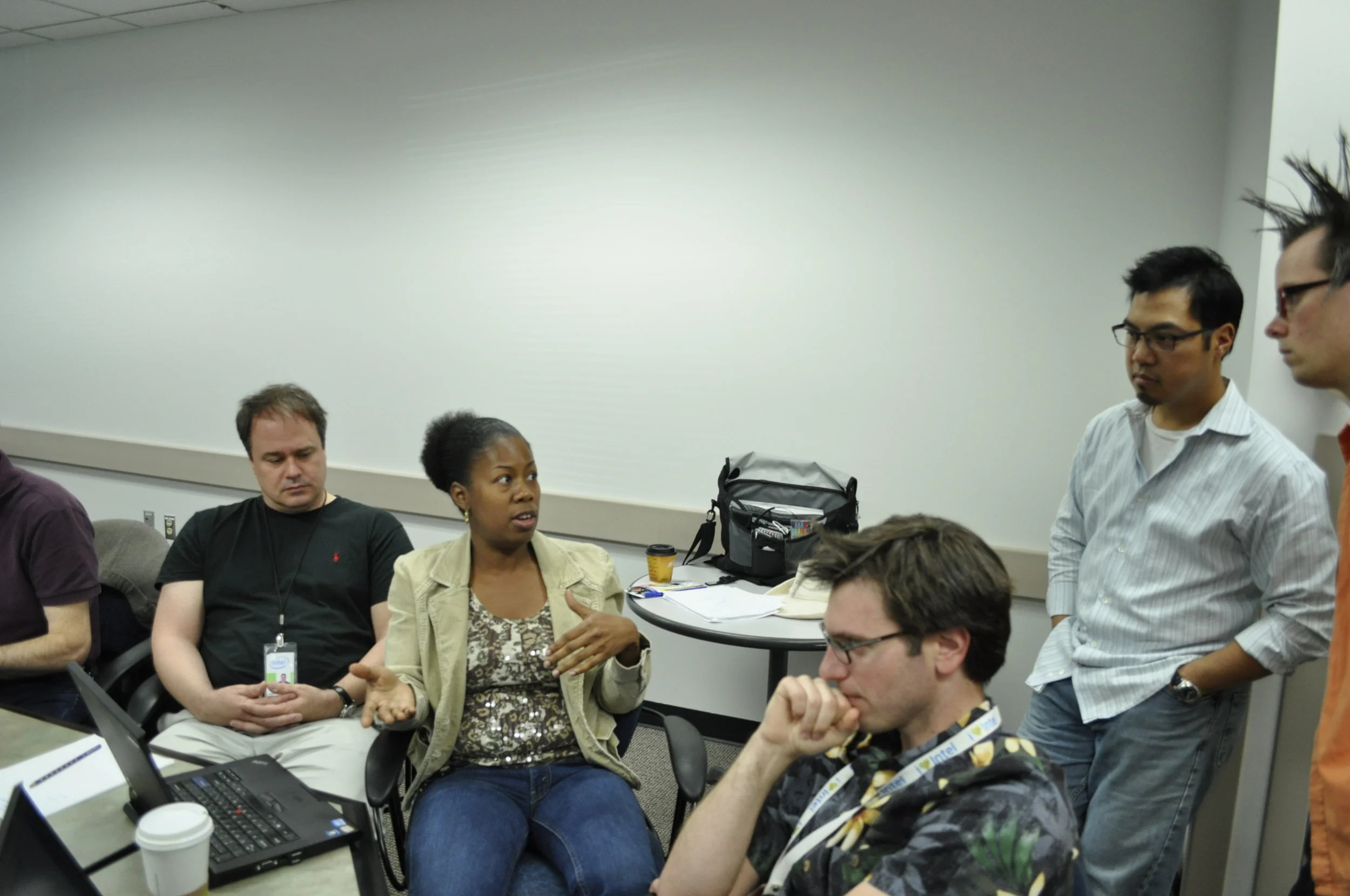
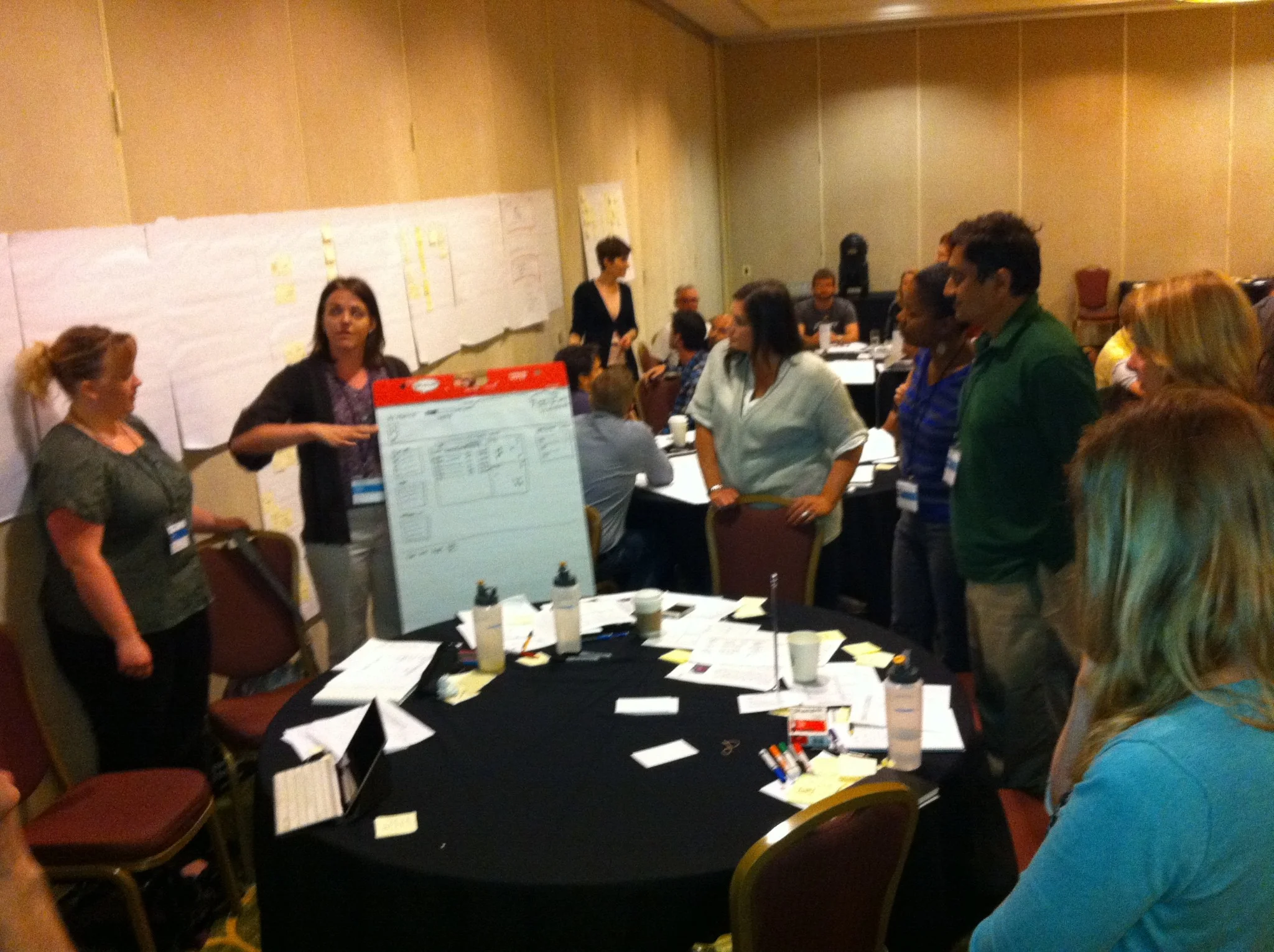
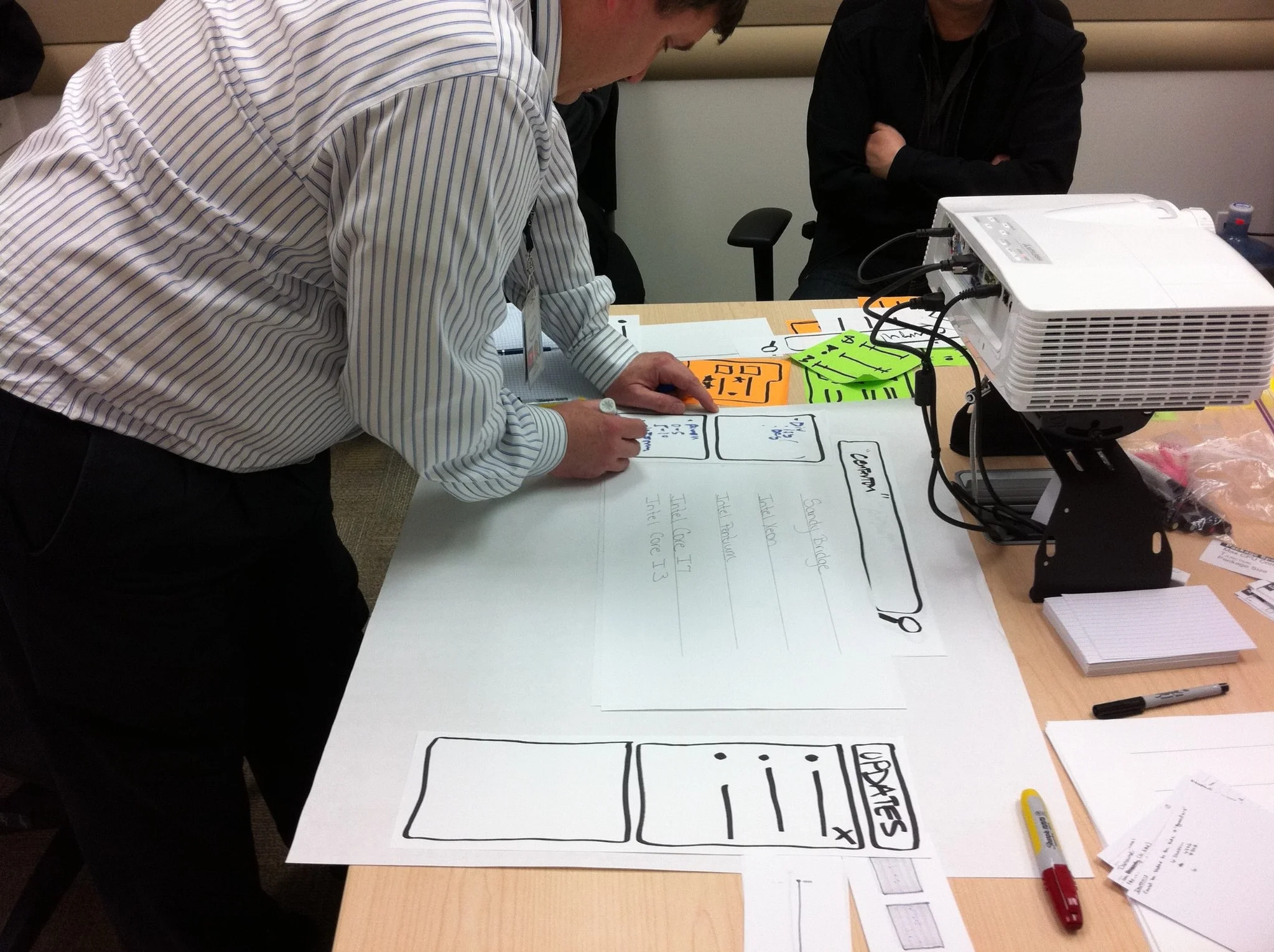
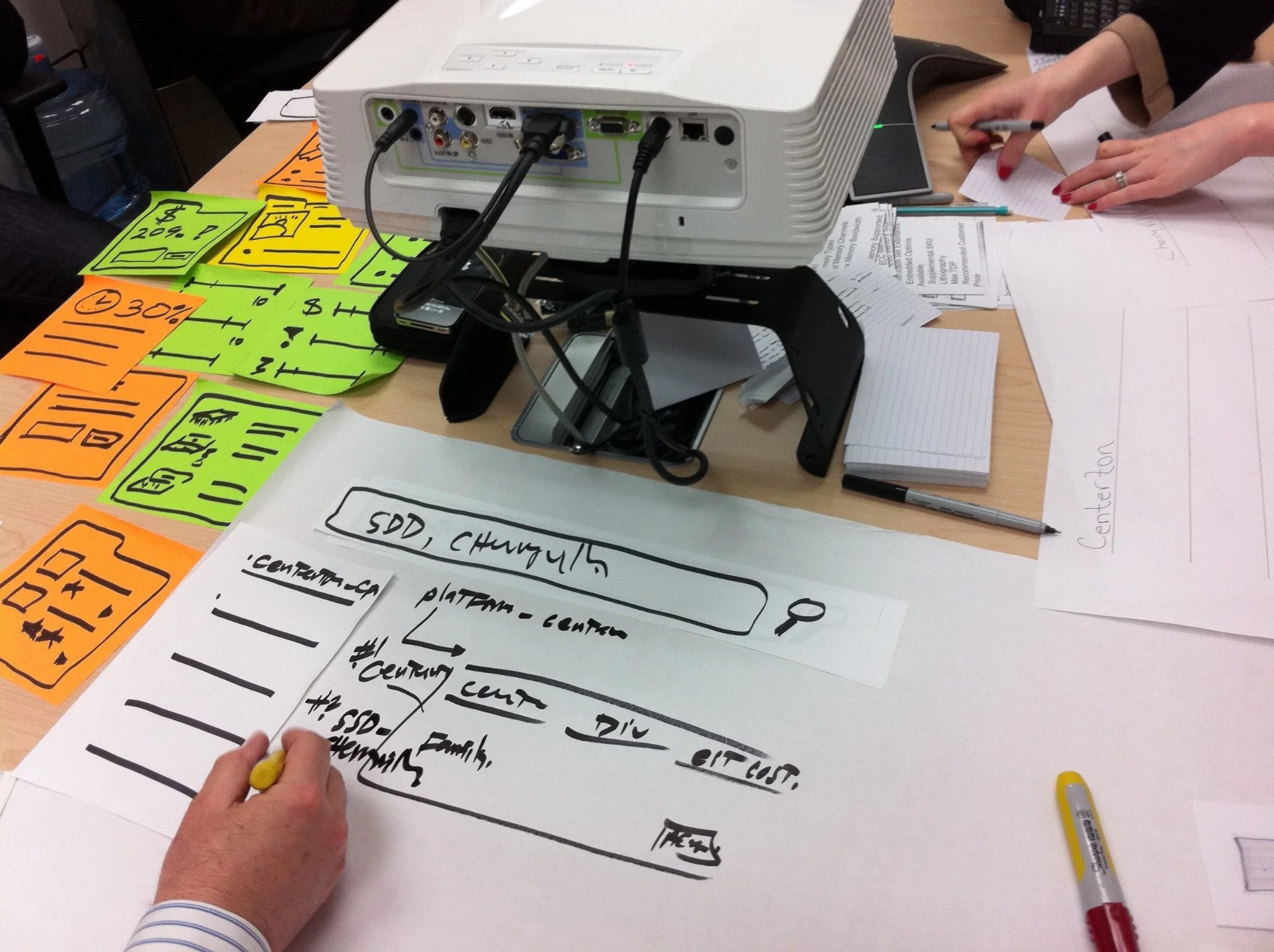
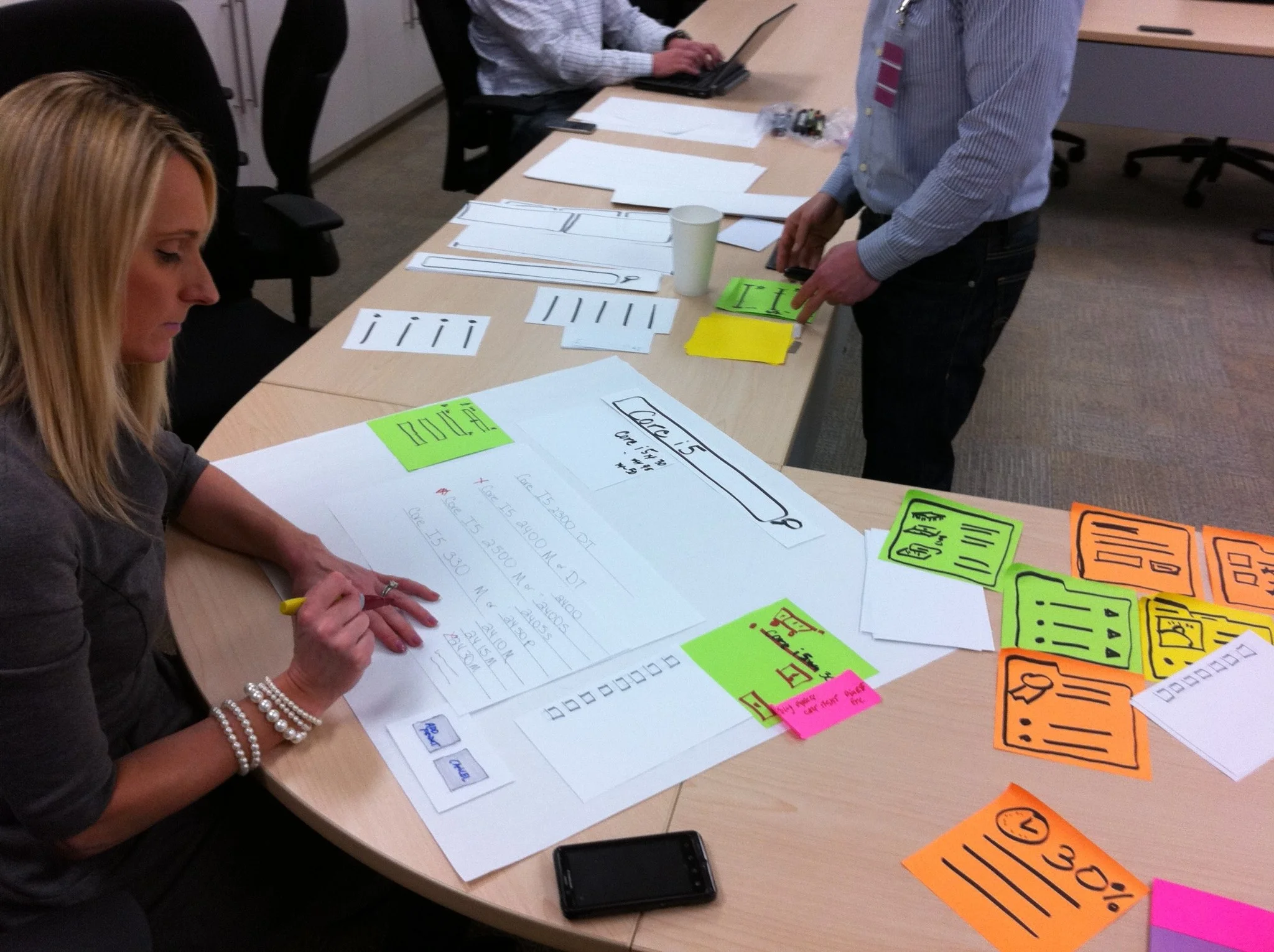
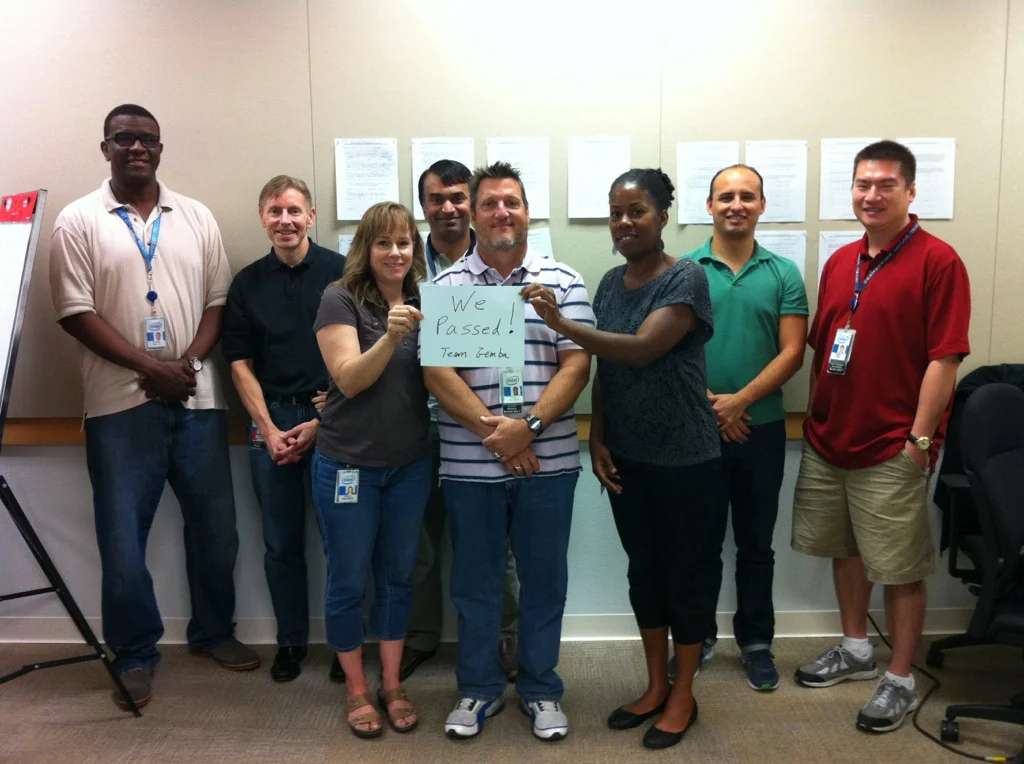
I frequently planned and facilitated design thinking workshops with multi-disciplinary, cross-functional teams.

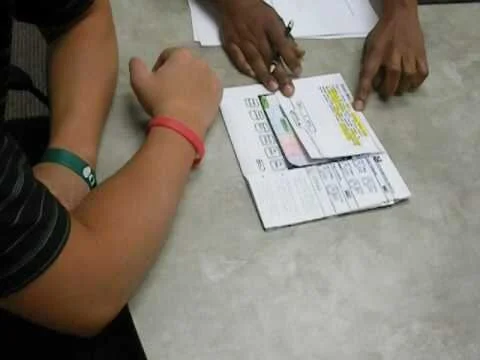
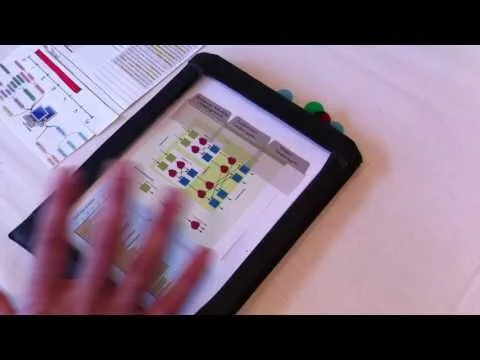
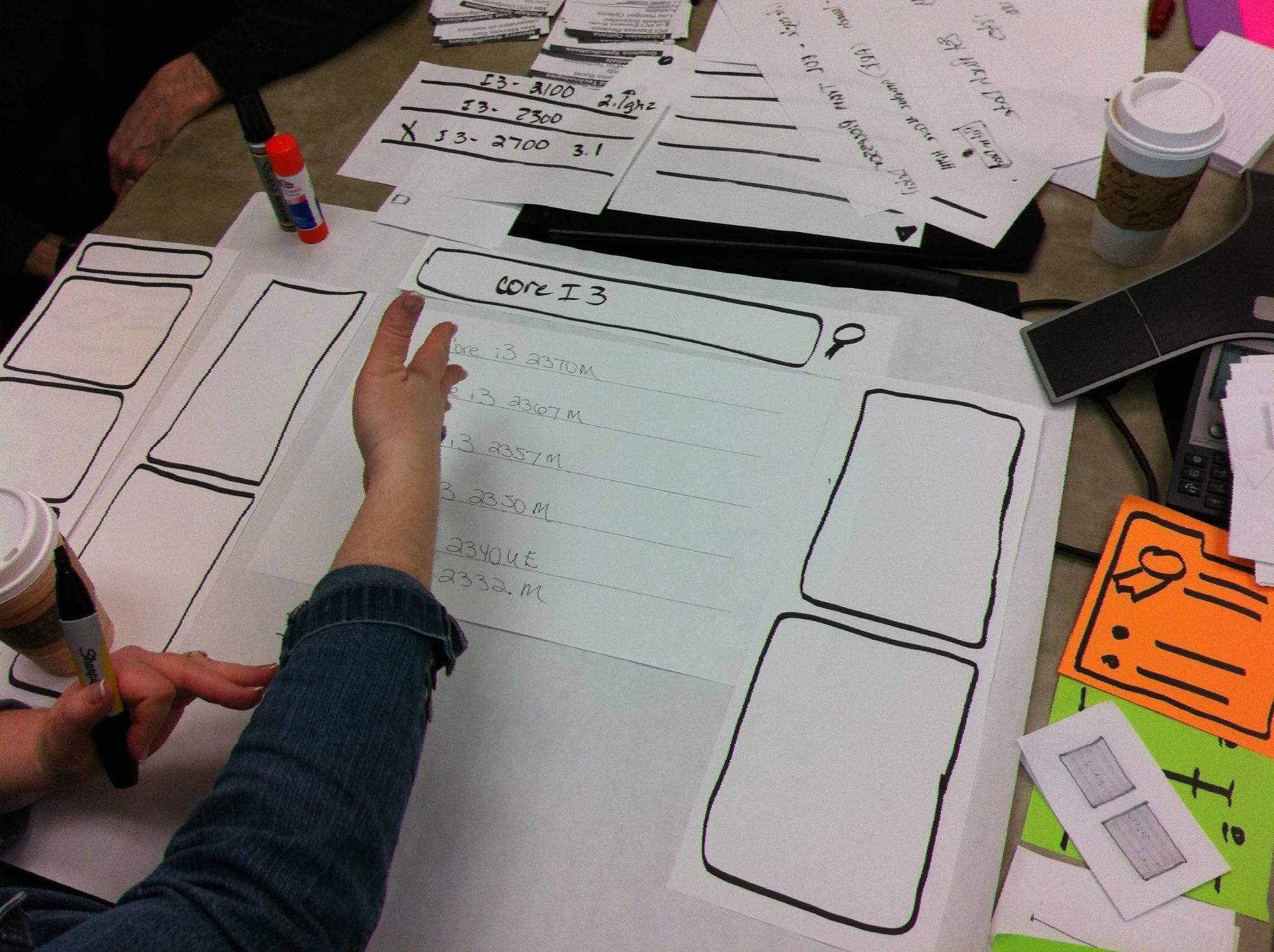
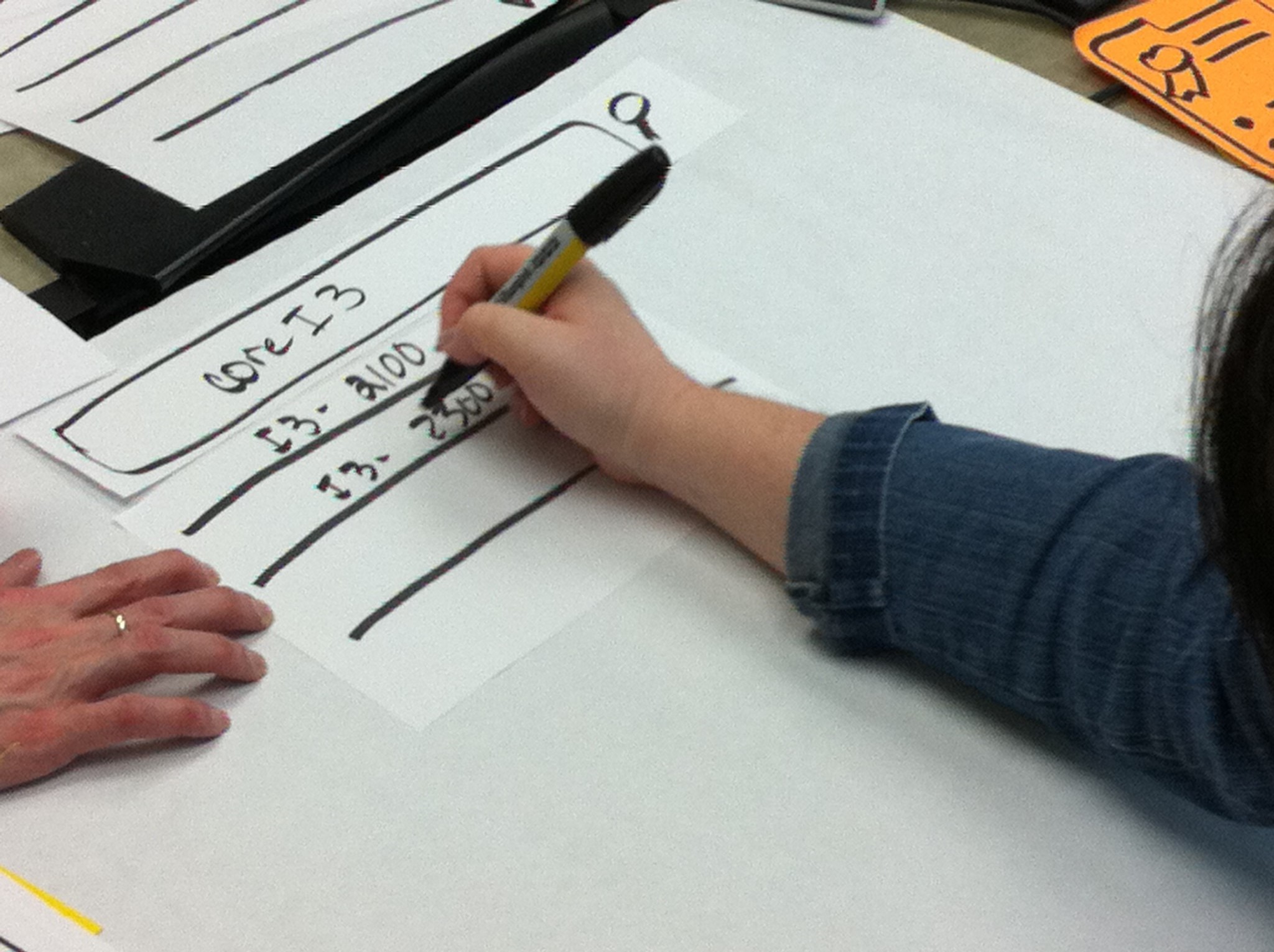
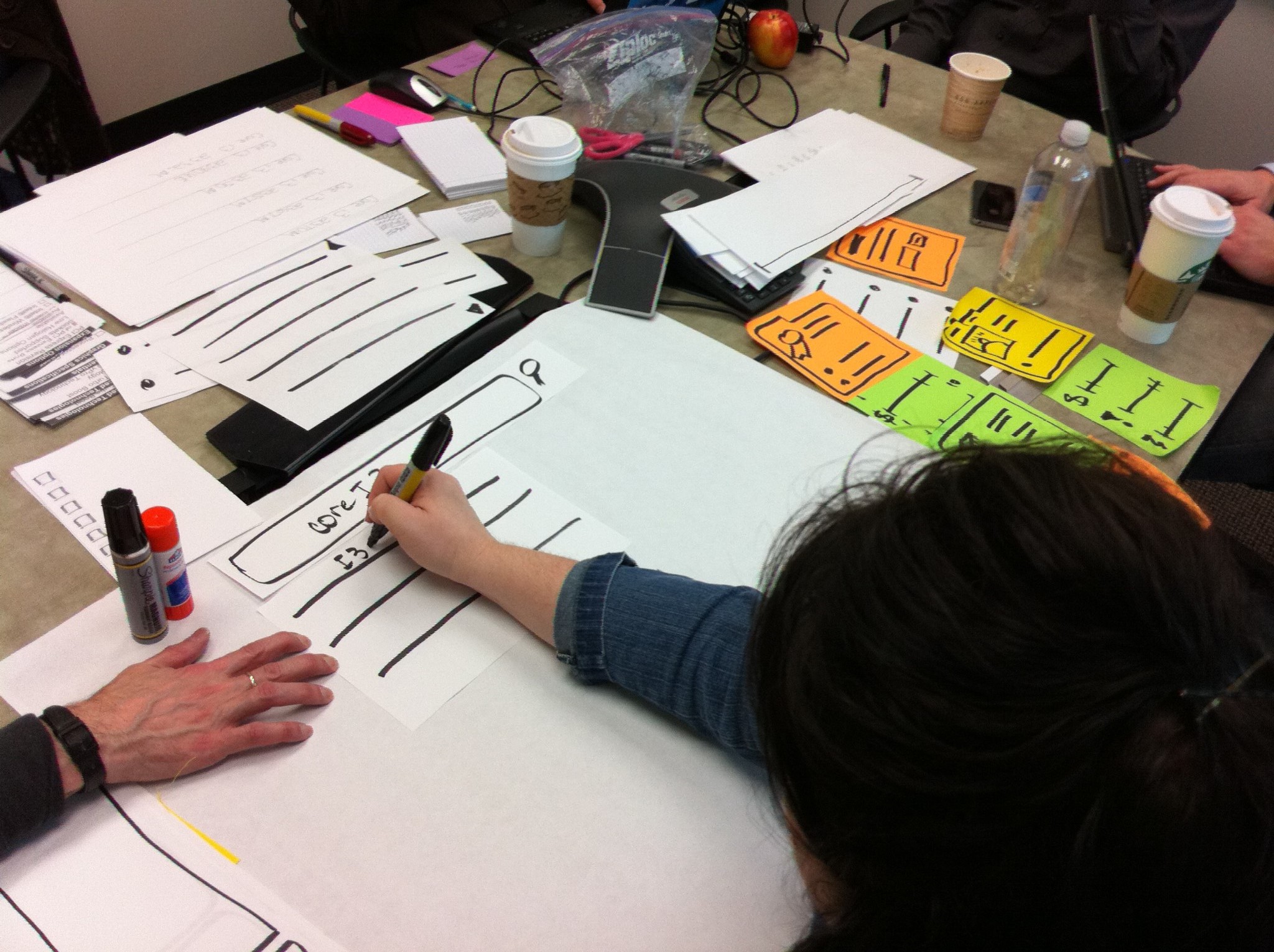
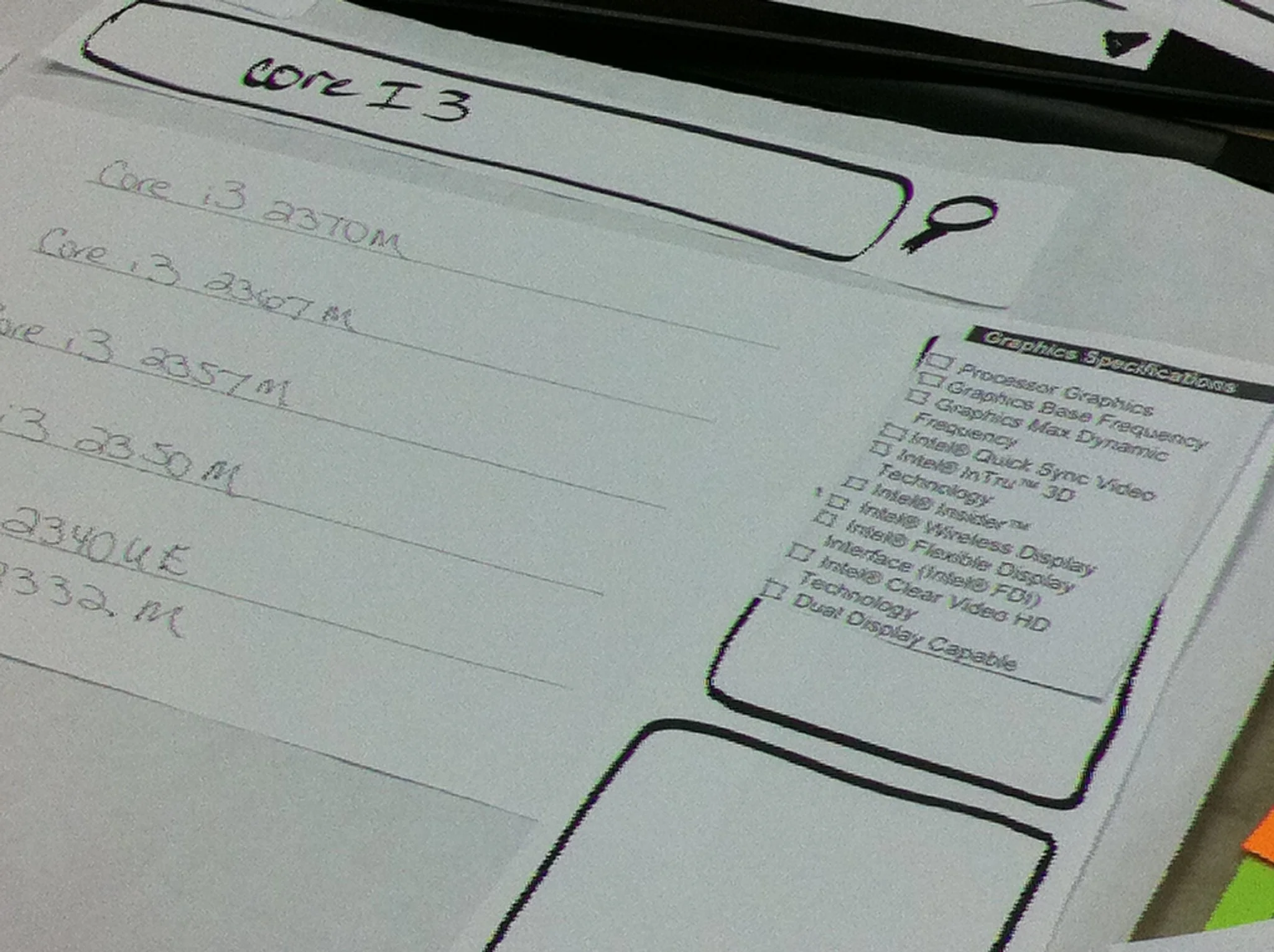
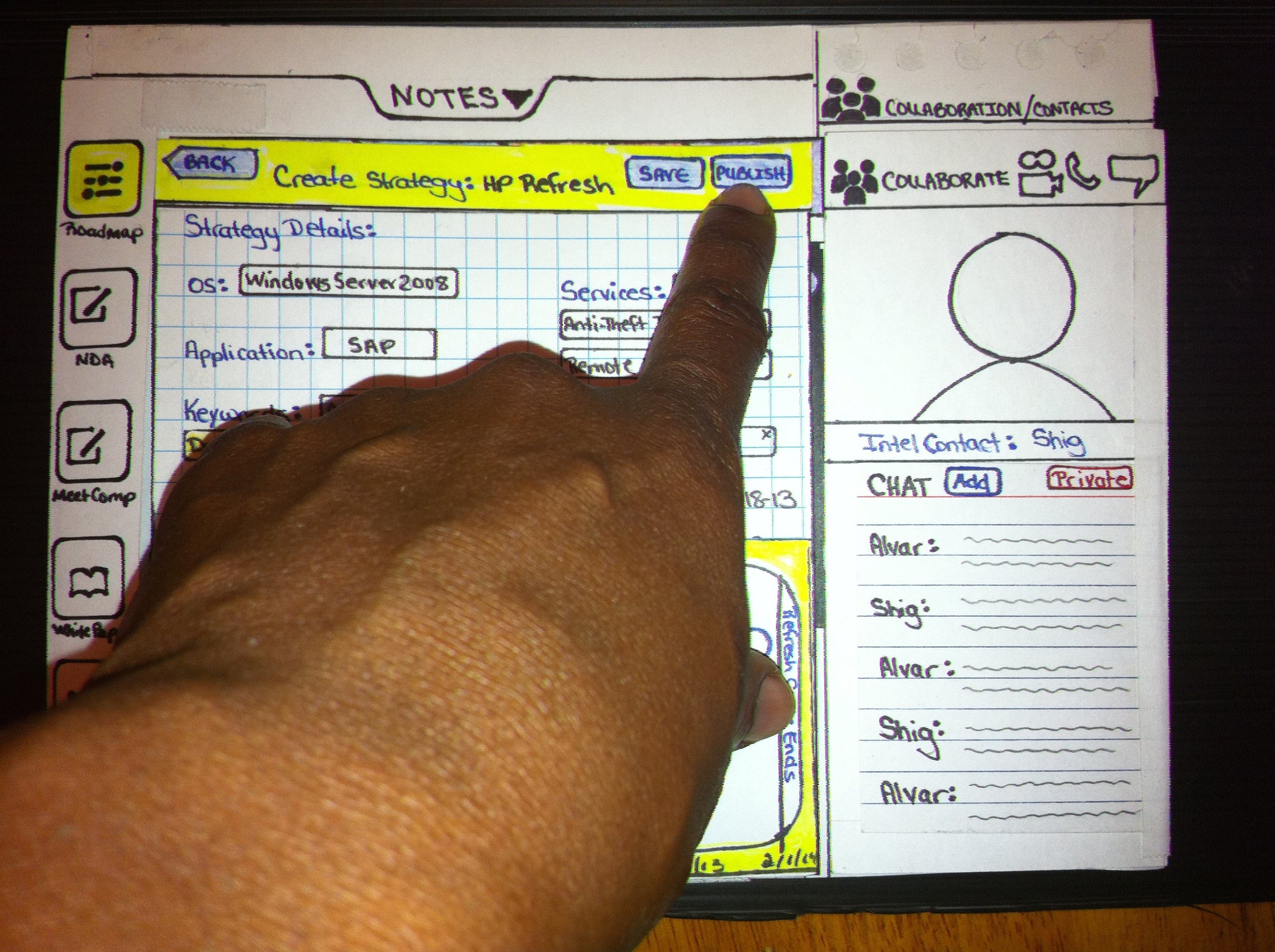
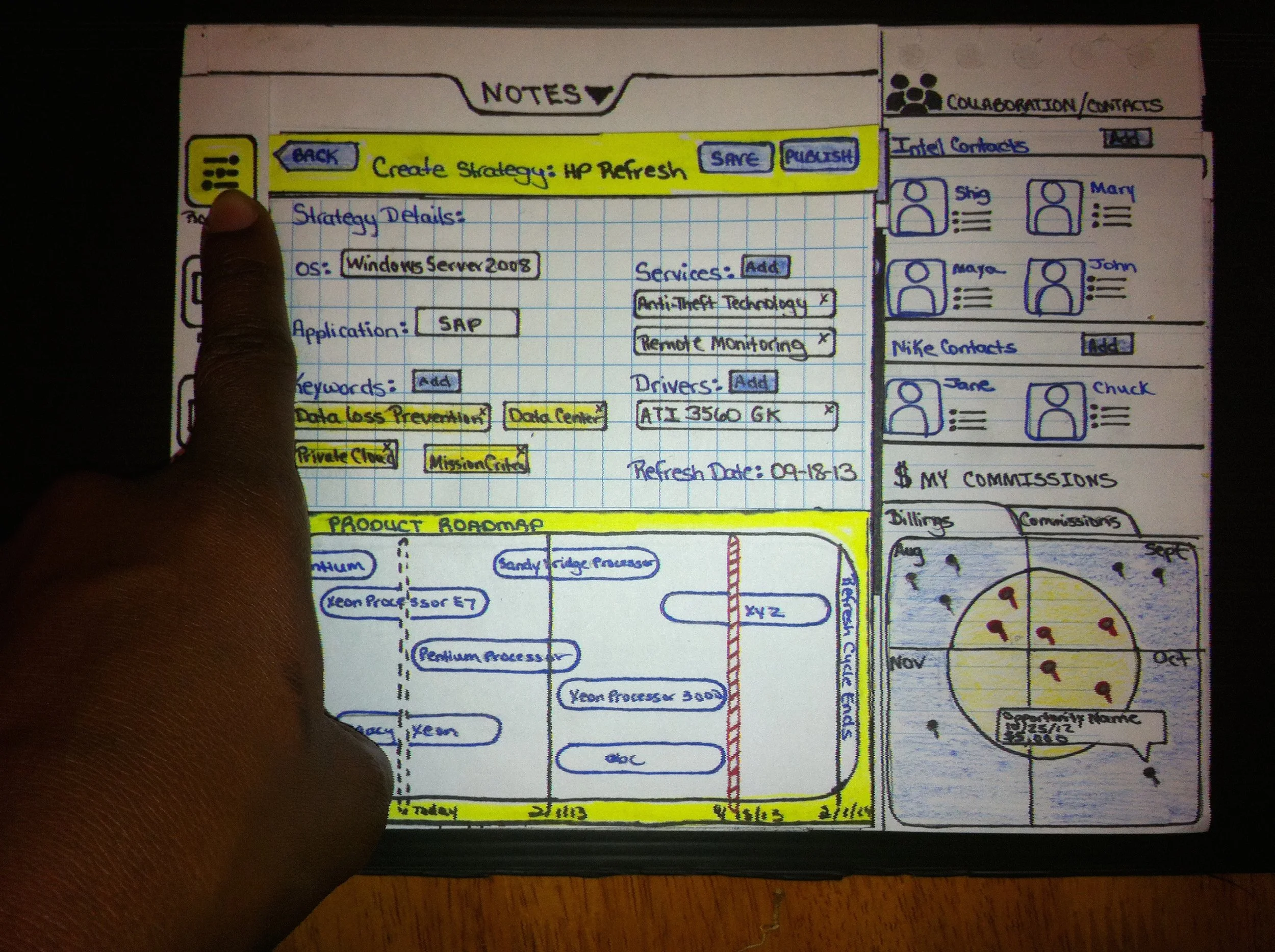
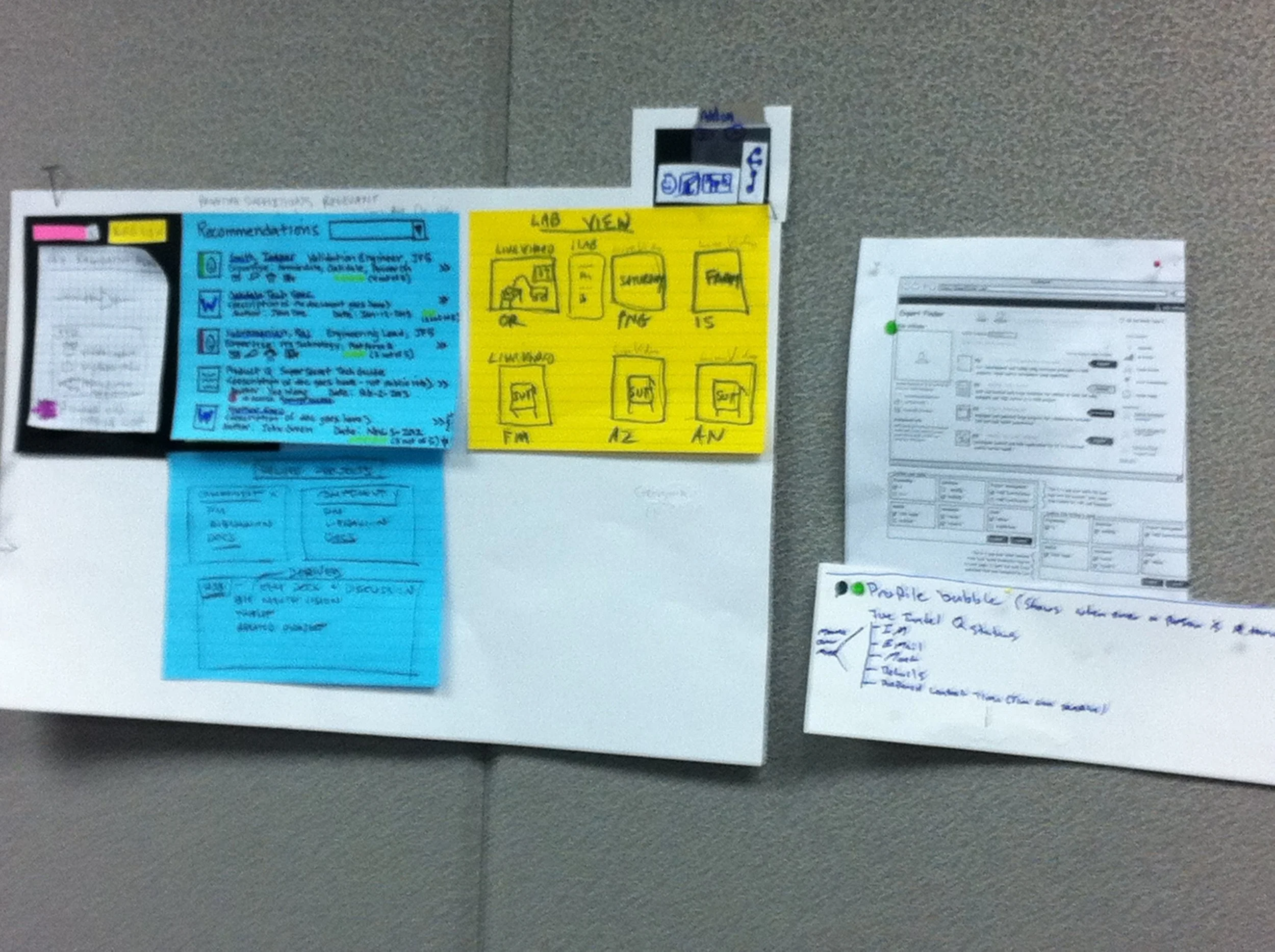
Testing paper prototype

Testing paper prototype
Daily collaboration with my UX teammates produced extraordinary results.
Research & Design
We used the Contextual Inquiry method during the Discovery phase of our design process to observe users completing sales-related tasks within the context of their workday.
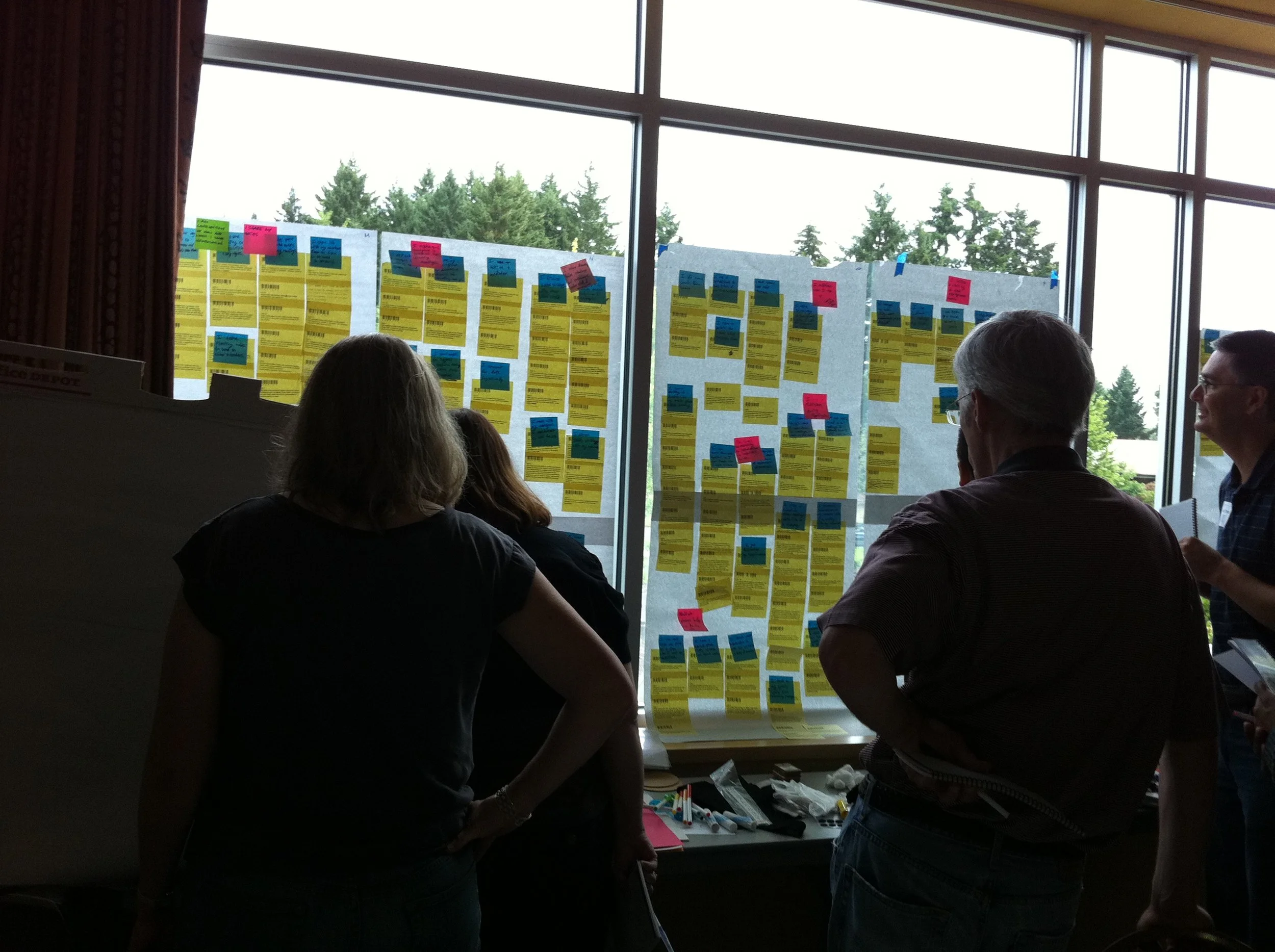
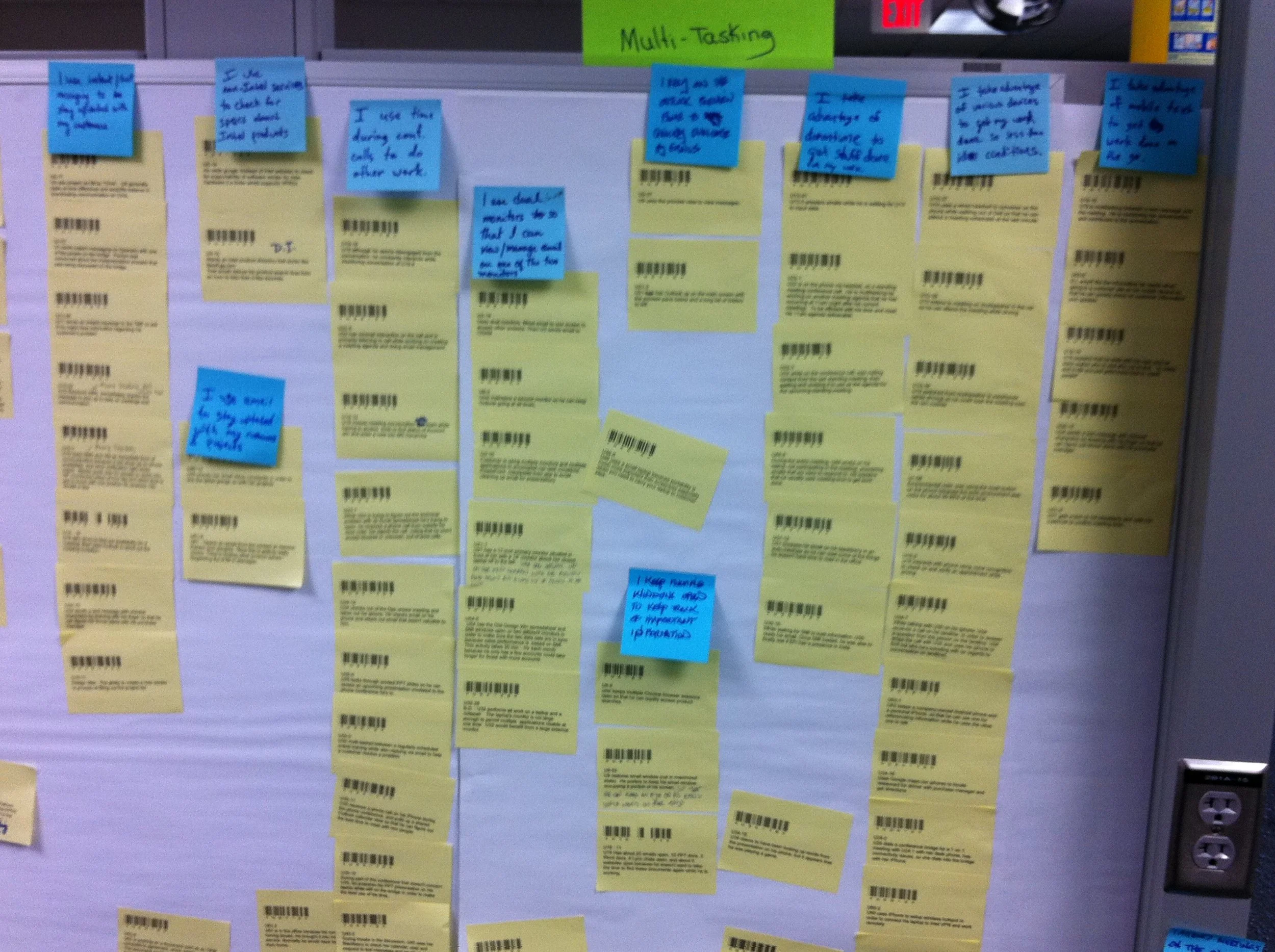
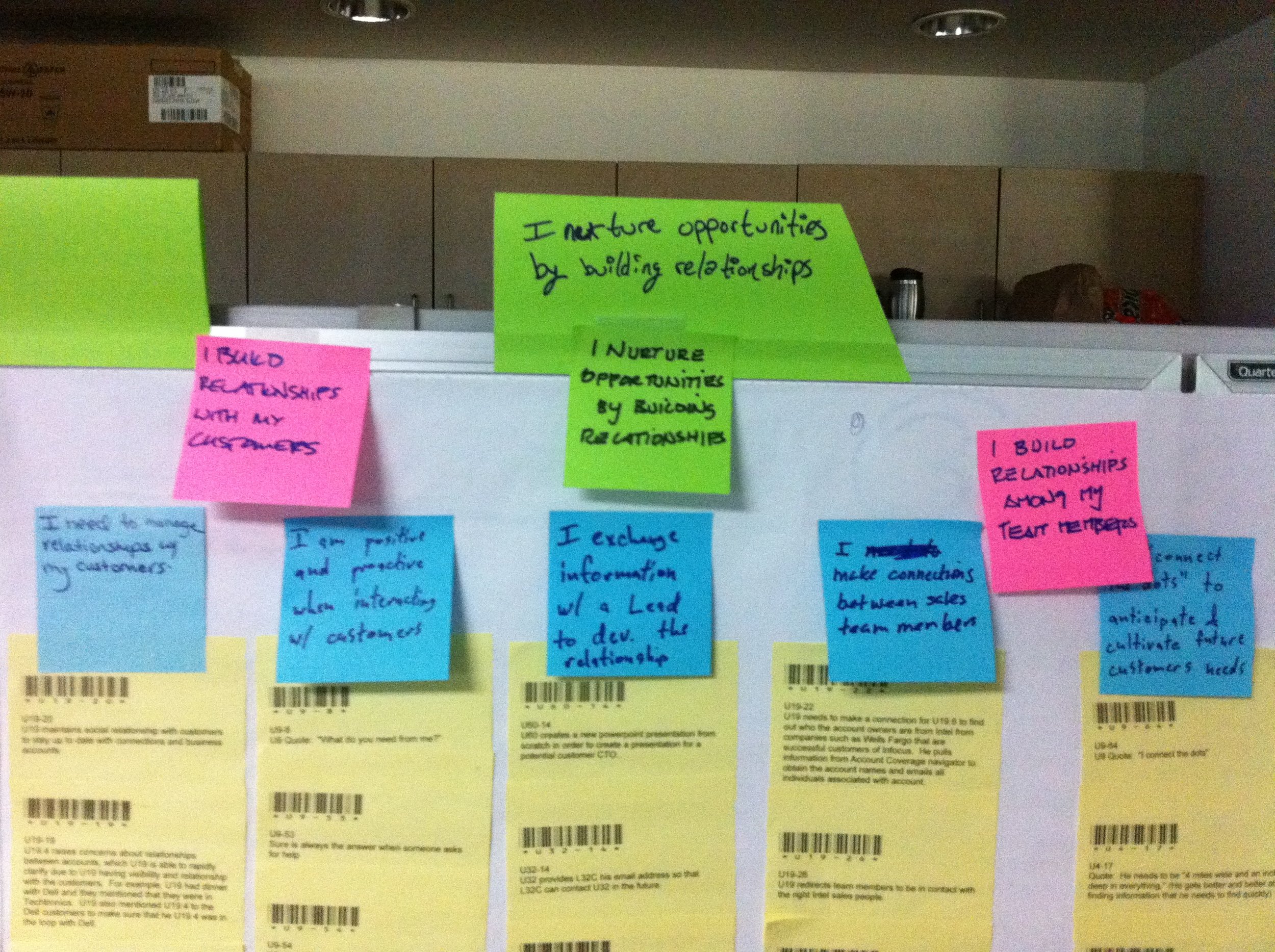
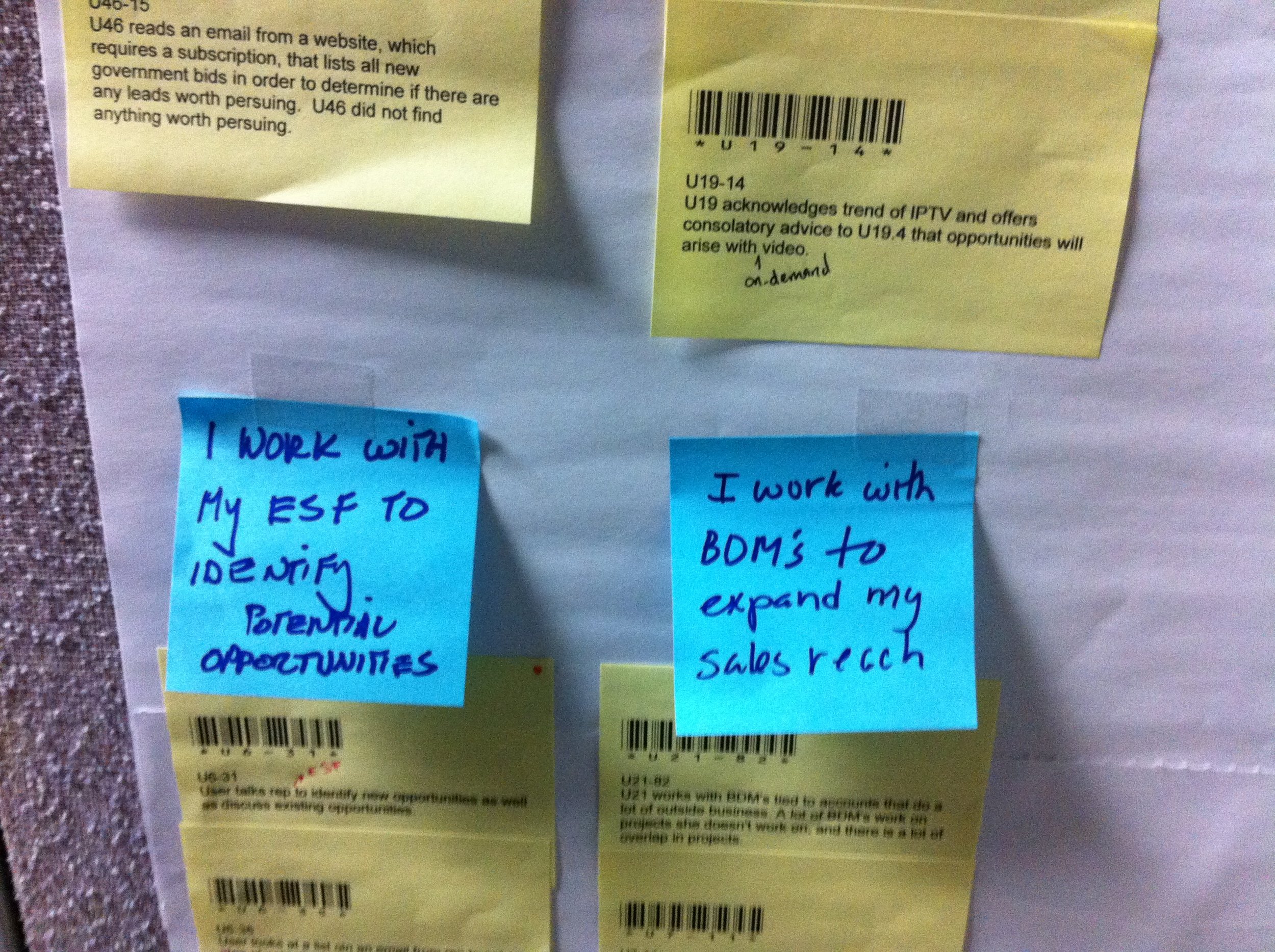
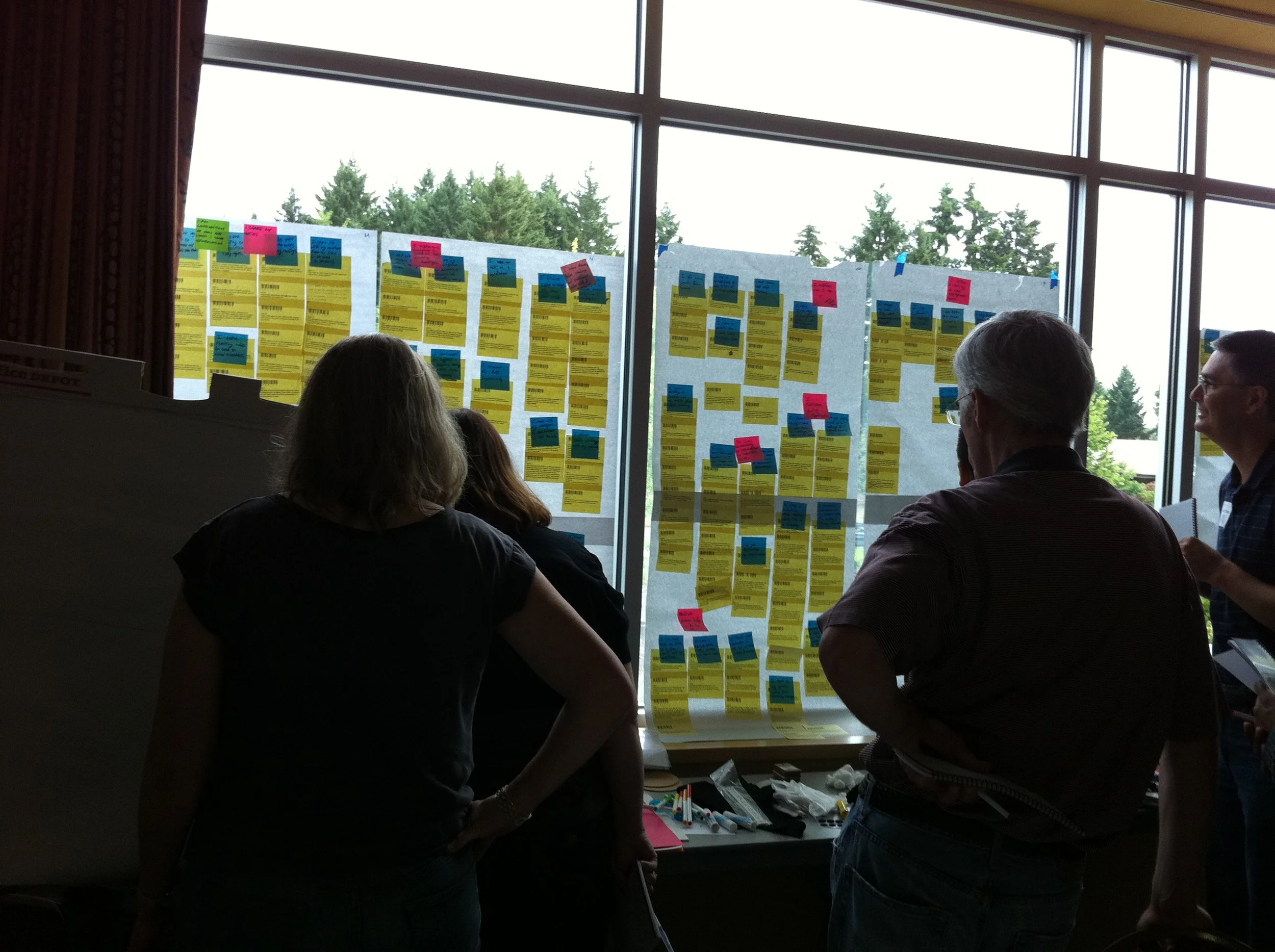
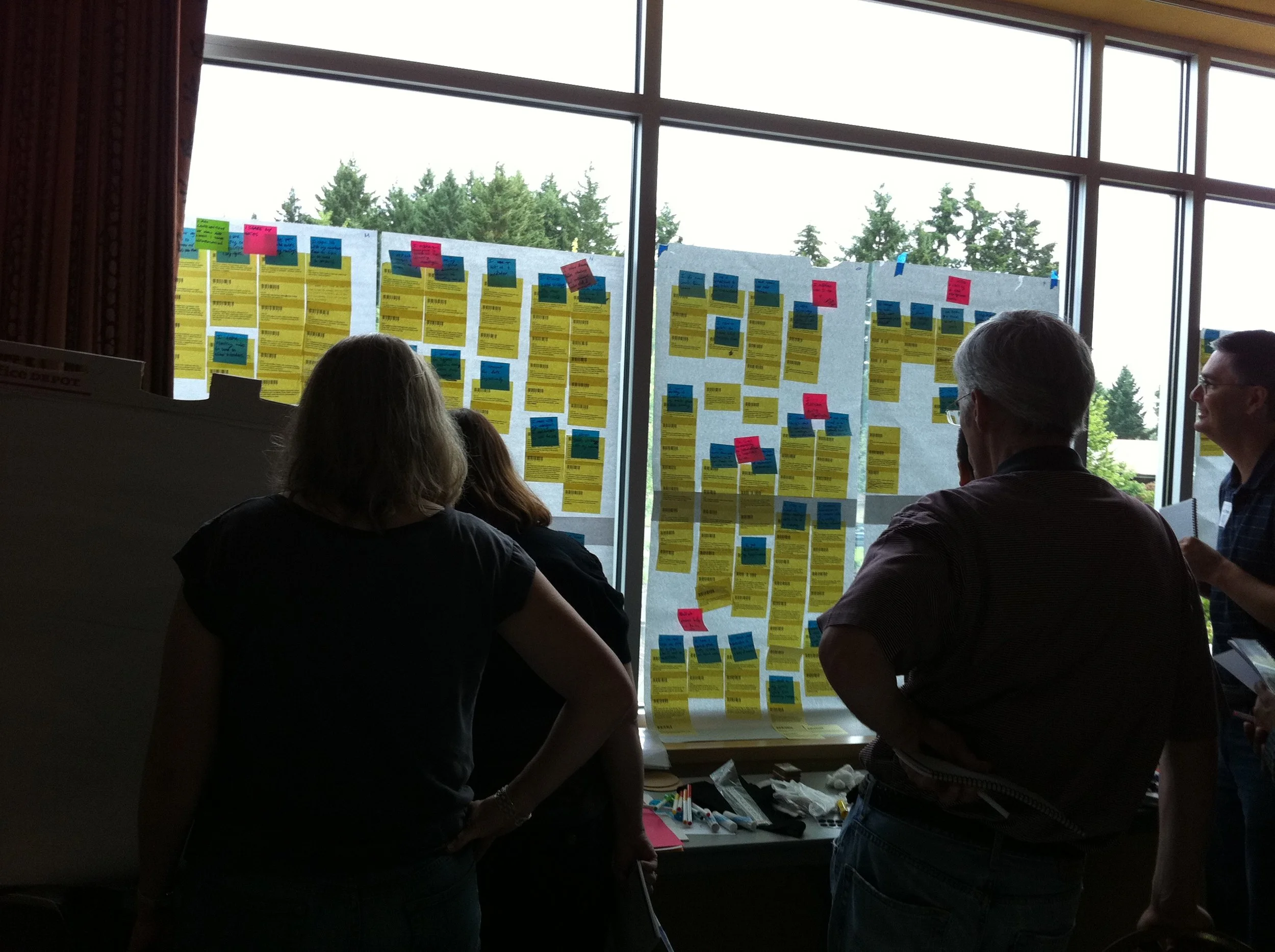
Our observational research resulted in large amounts of data . Using a collaborative team exercise called “Affinity Mapping”, we synthesized the data to glean UX insights.
Notes were transcribed and printed or written onto sticky notes. Each sticky represented a single data point. Through synthesis discussion, notes with common themes were grouped into clusters.
User experience themes emerge based on the way affinity data point cluster on the map. The map is a useful aid for product design and funding discussions.
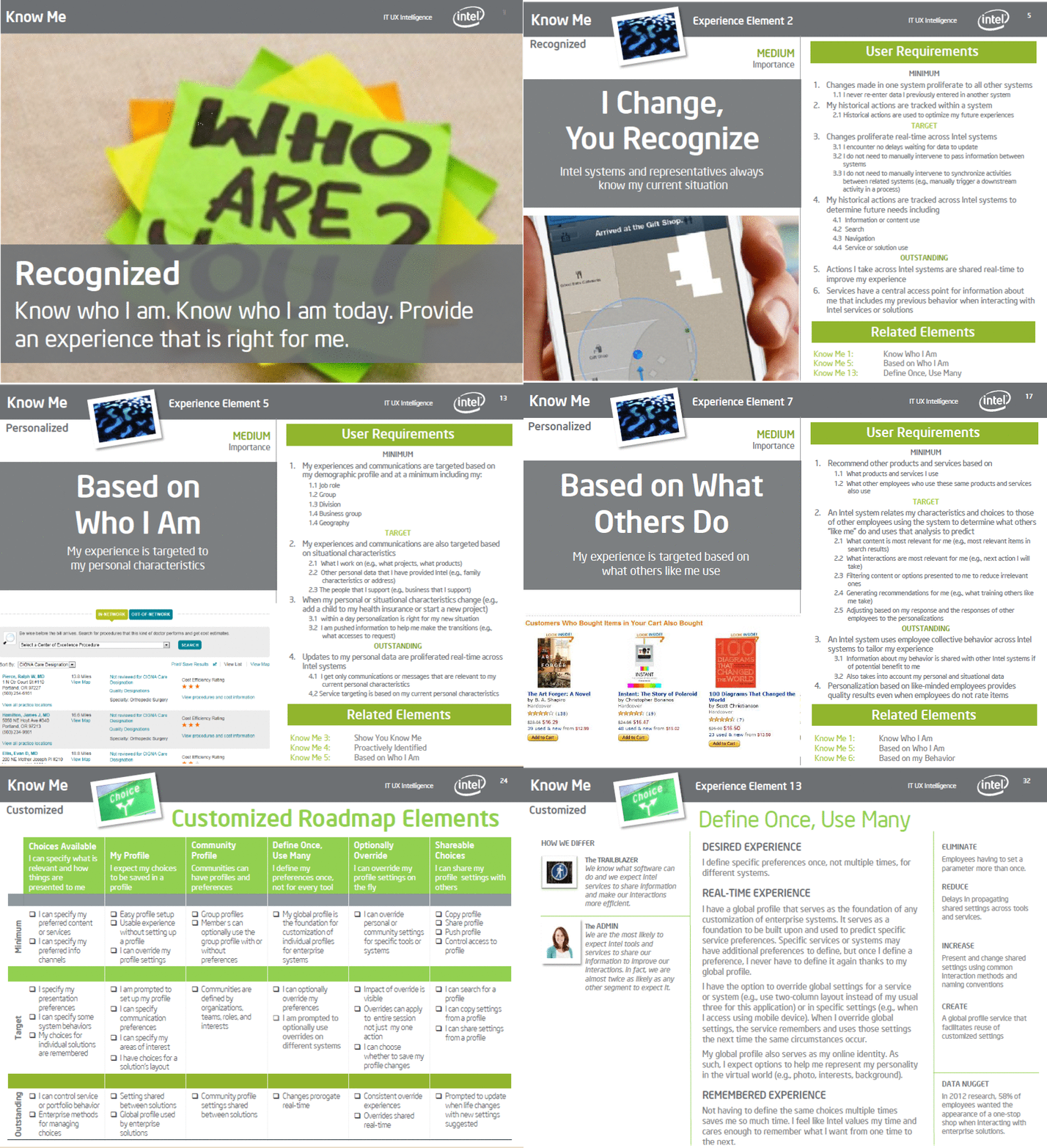
Affinity map cluster were further codified into a collection of ‘Experience Themes which helped the product team better understand user’s expectations for the product experience.
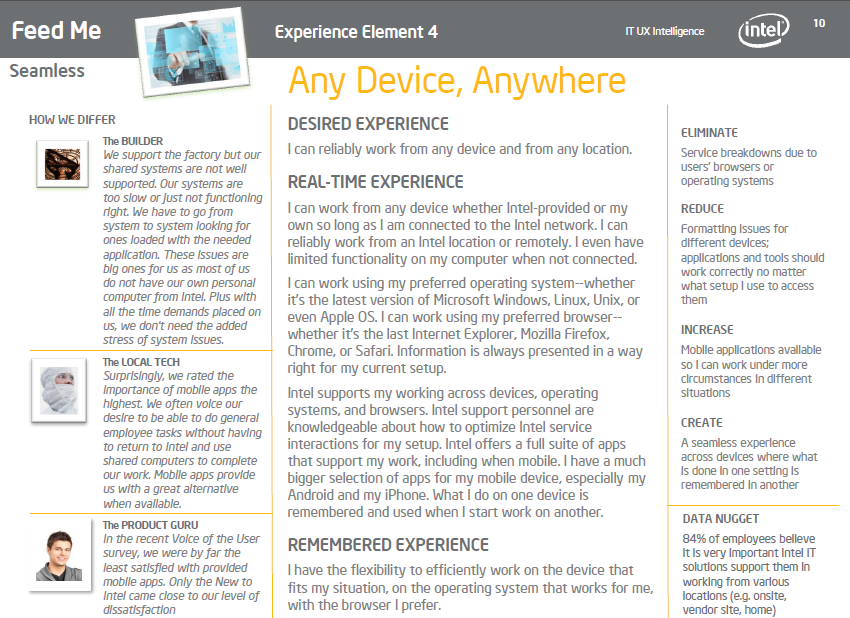
The themes were further broken down into four 'experience qualities' which captured key capabilities that might satisfy the high-level user expectation. Qualities helped inform product direction.
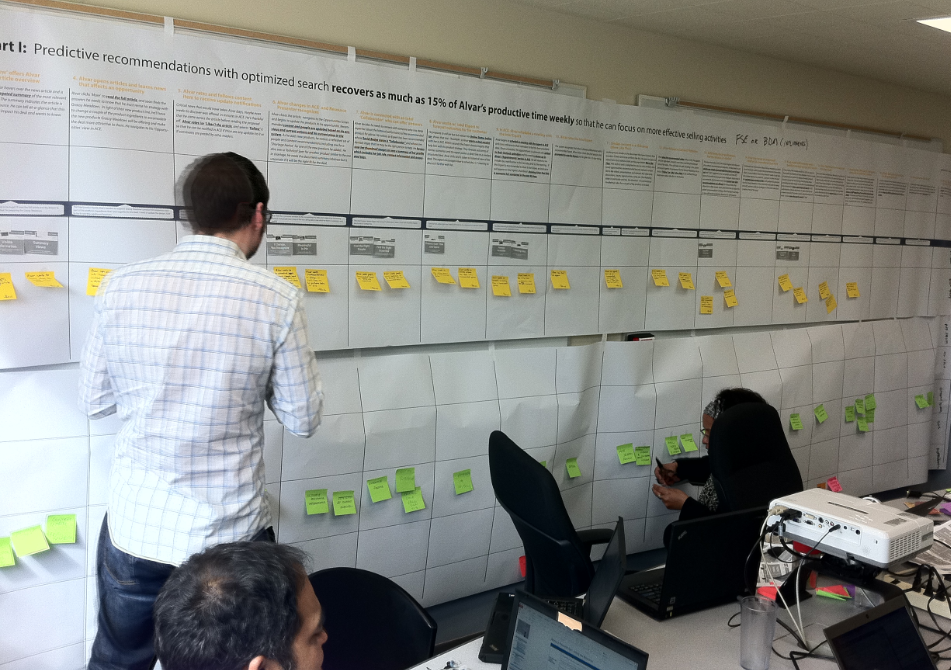
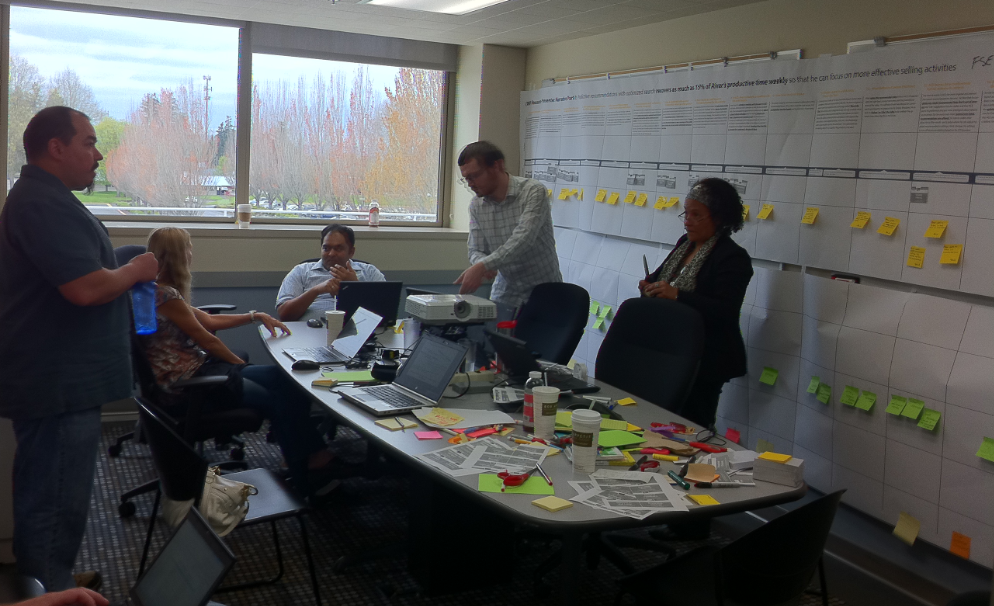
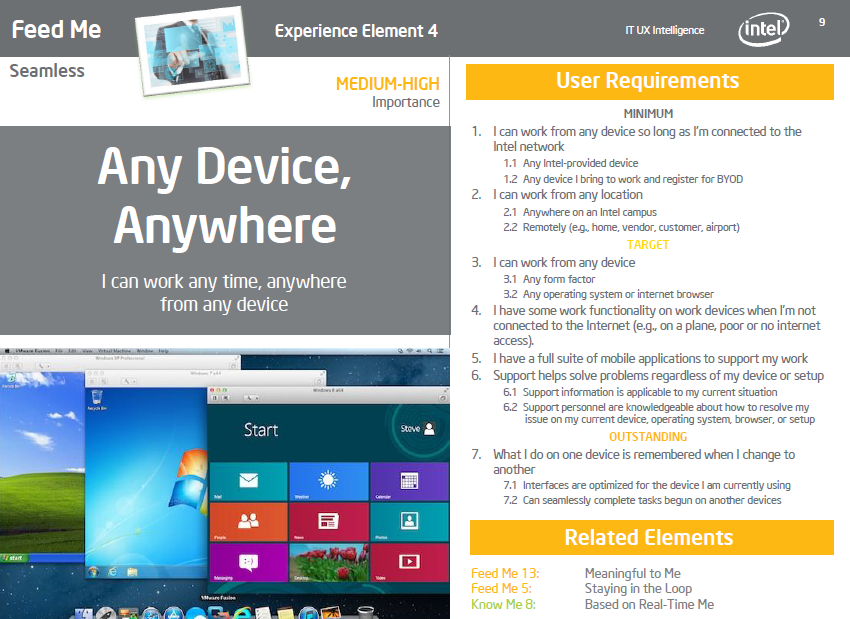
Experience qualities were further broken down into 'experience elements'. Each element captures the critical user journeys (CUJs) that comprise the theme .
Taking a thematic approach to defining our Design Strategy had the added advantage of giving us a common/shared language across UX, PM and Eng which helped us to streamline design and planning discussions.
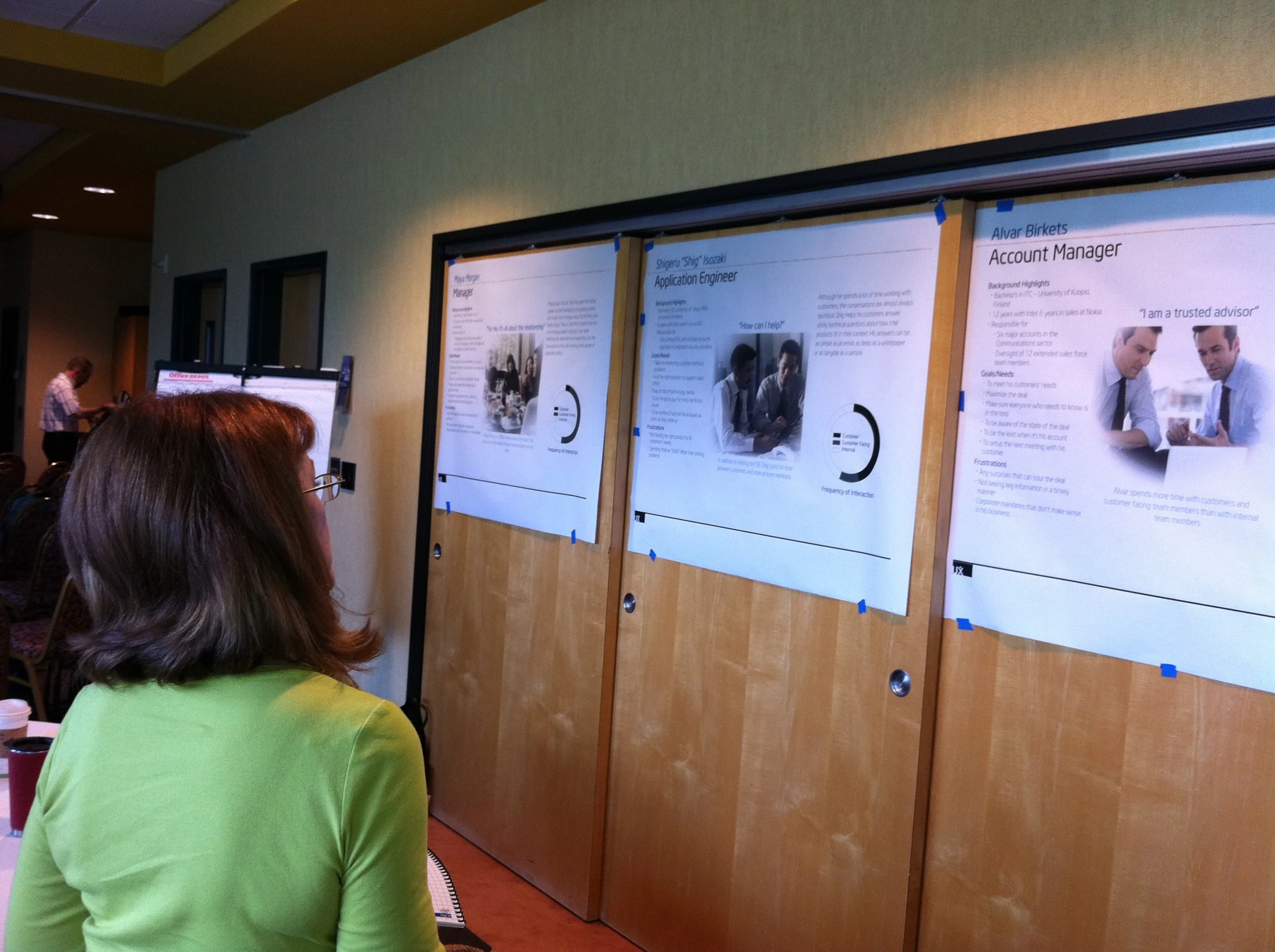
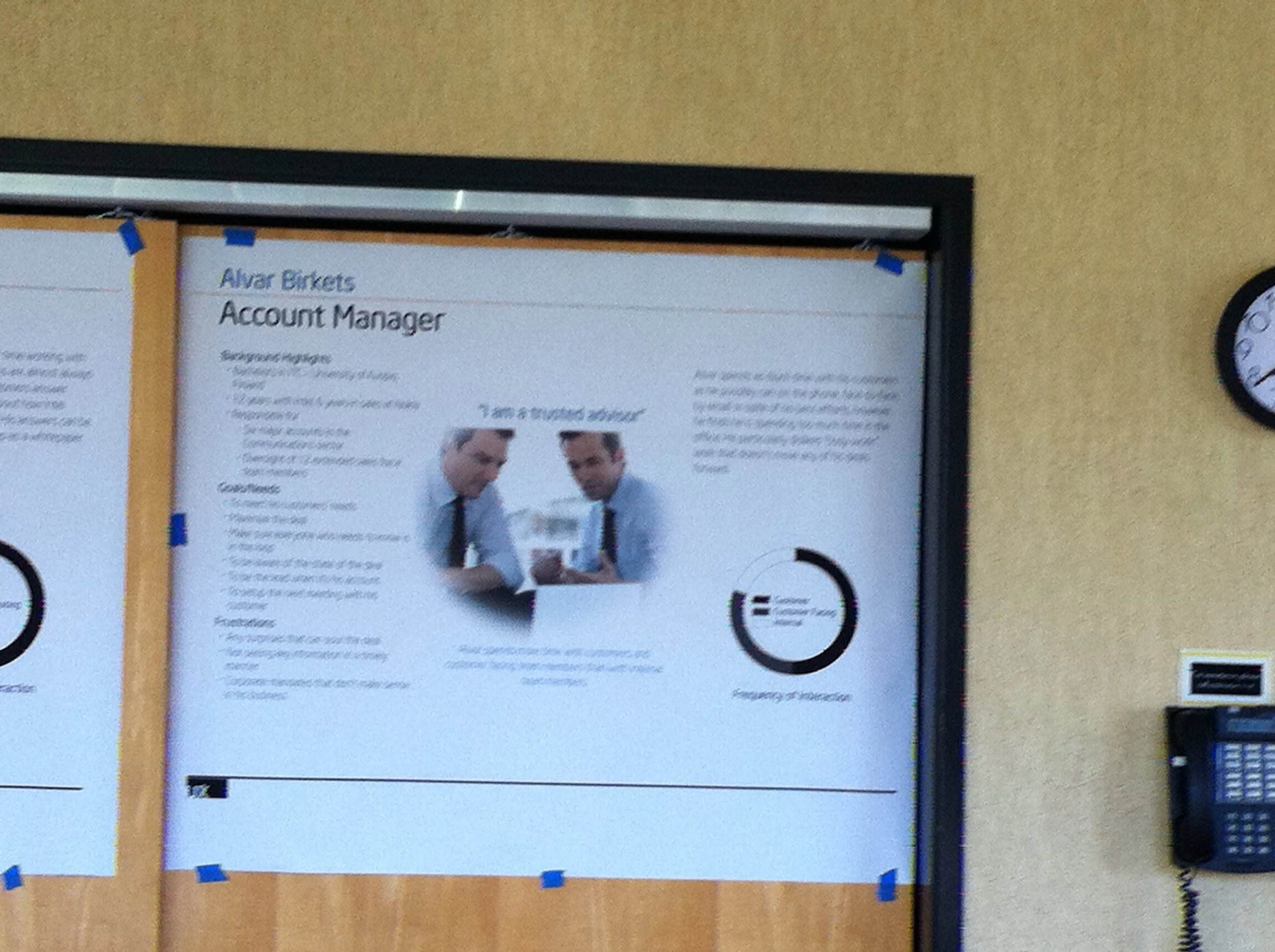
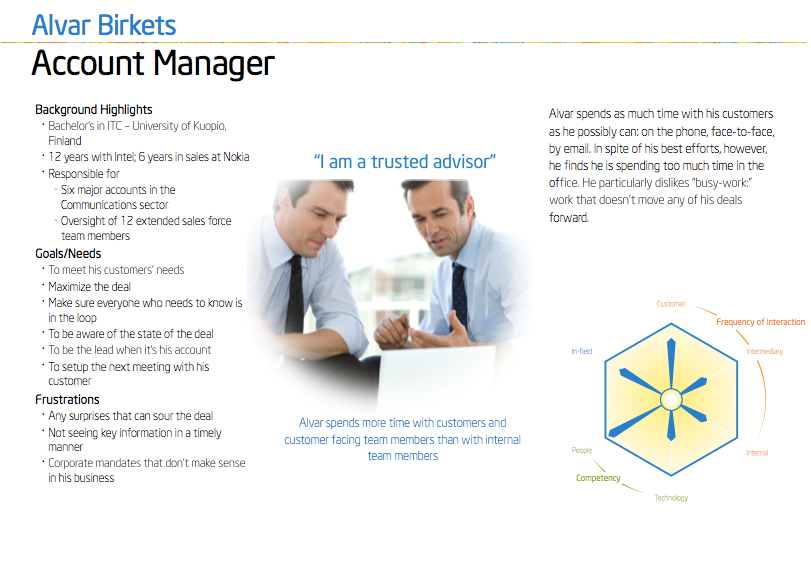
Personas were derived from research insights and the guidance provided within each of our experience themes. Alvar was one of two primary persona for the product. Secondary and tertiary personas were also identified. Persona expectations and pain points were used to inform the product’s information architecture.
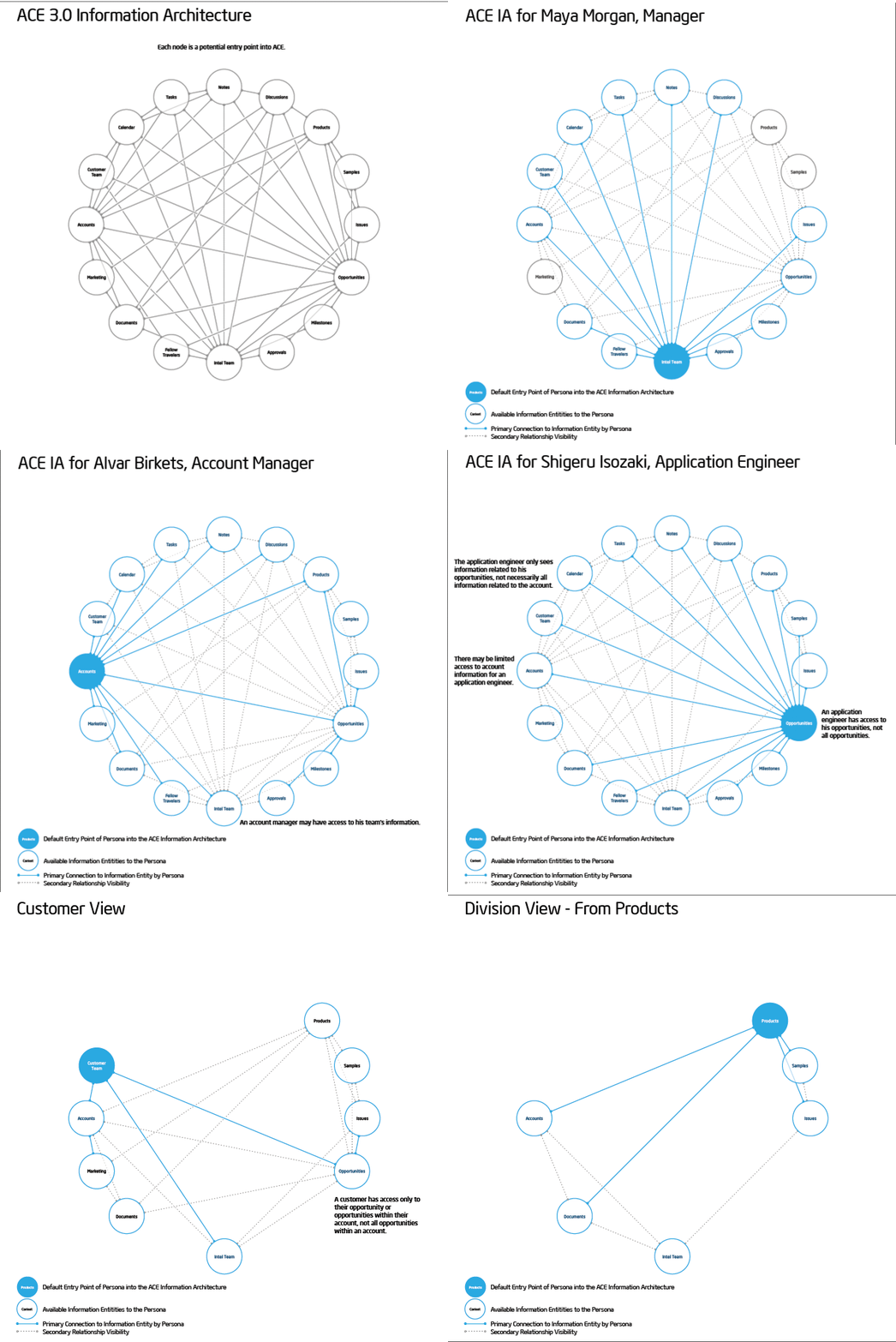
Information architecture (IA) was part of my role. IA was structured to be contextual and role-based (flexible IA).
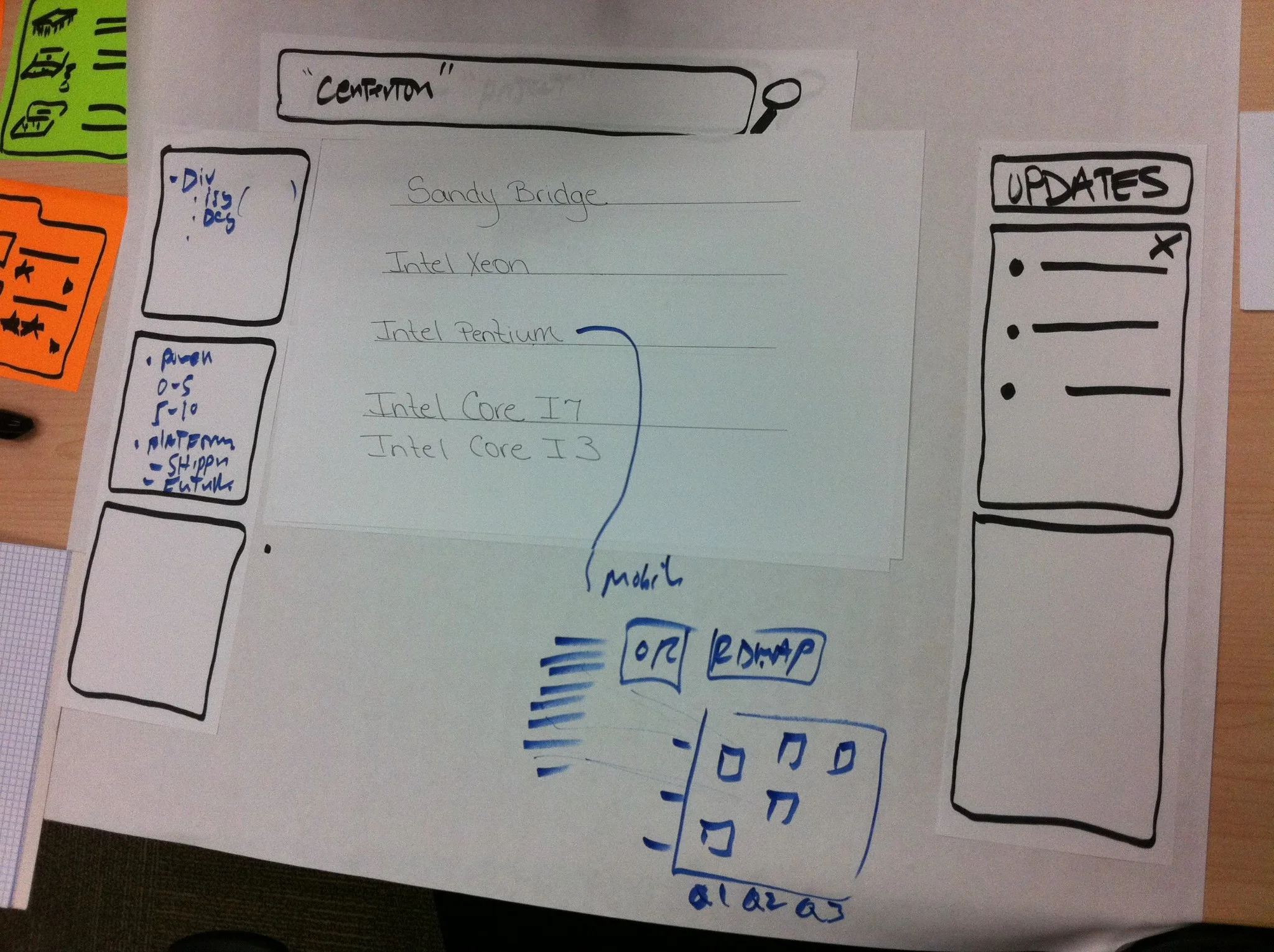
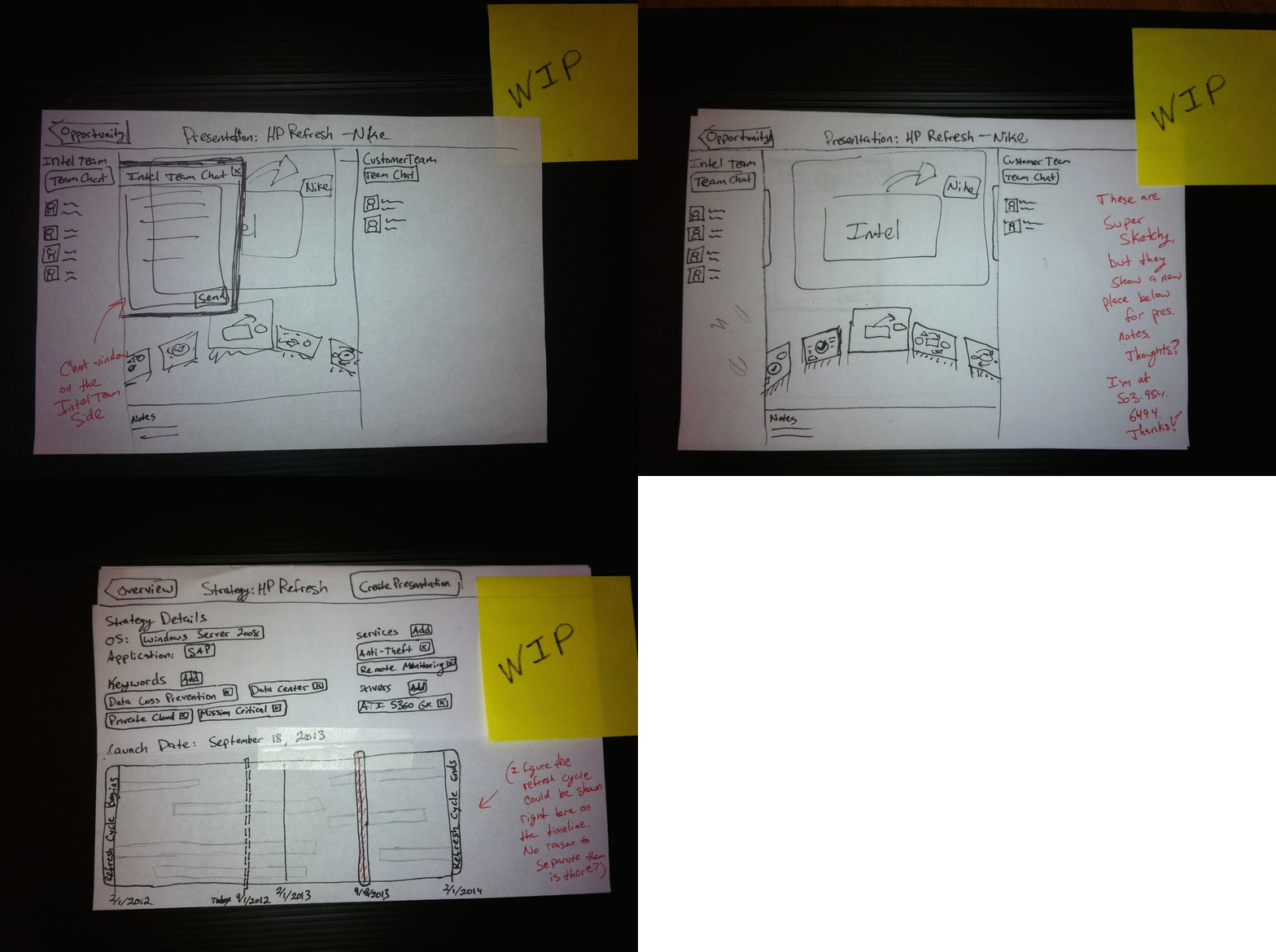
As UX Product Owner, I was involved in both the tactical aspects of design (sketching, etc,) and strategic feature planning. A sketch like this one would typically be the output of design jams and brainstorming sessions.
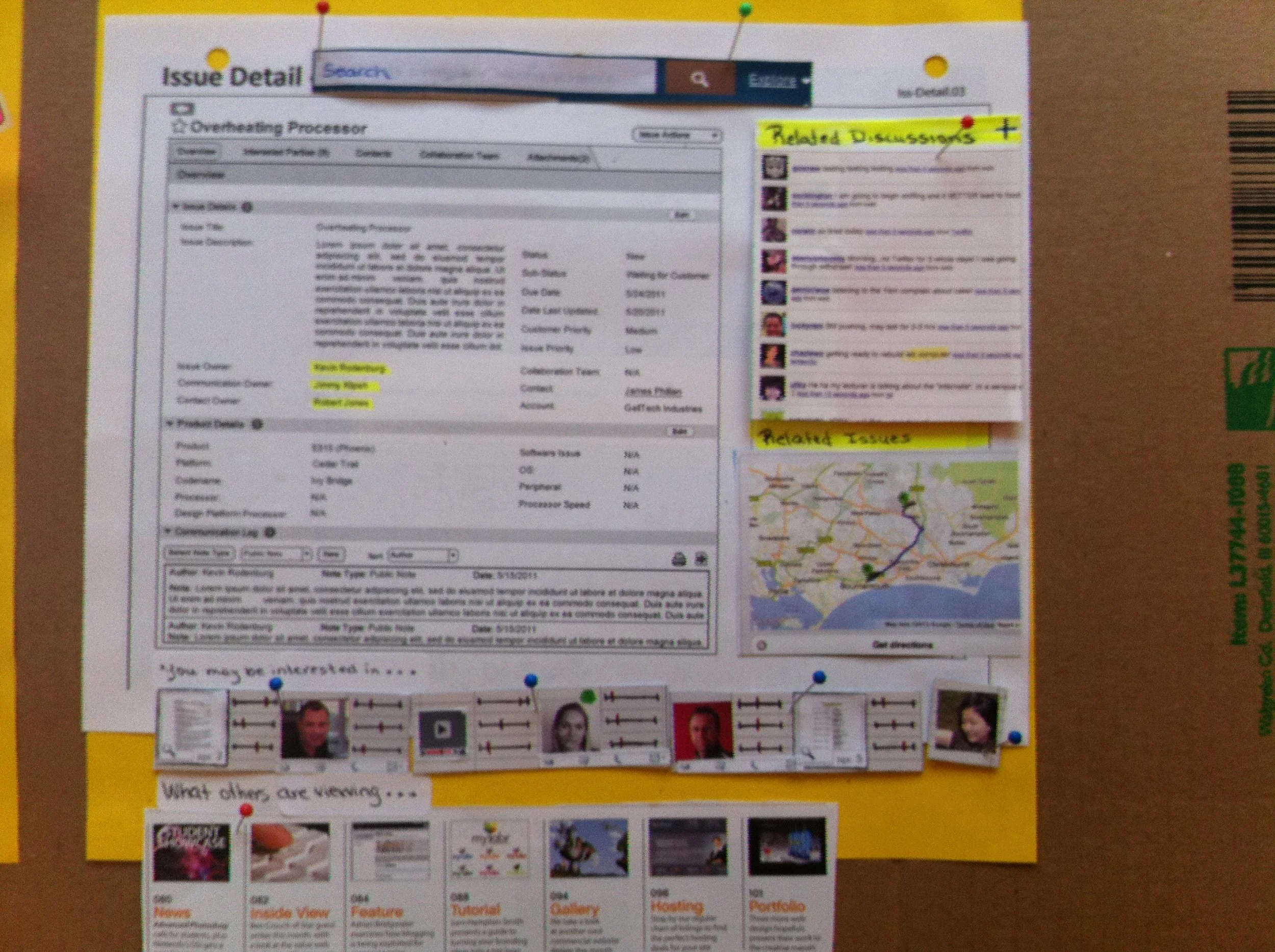
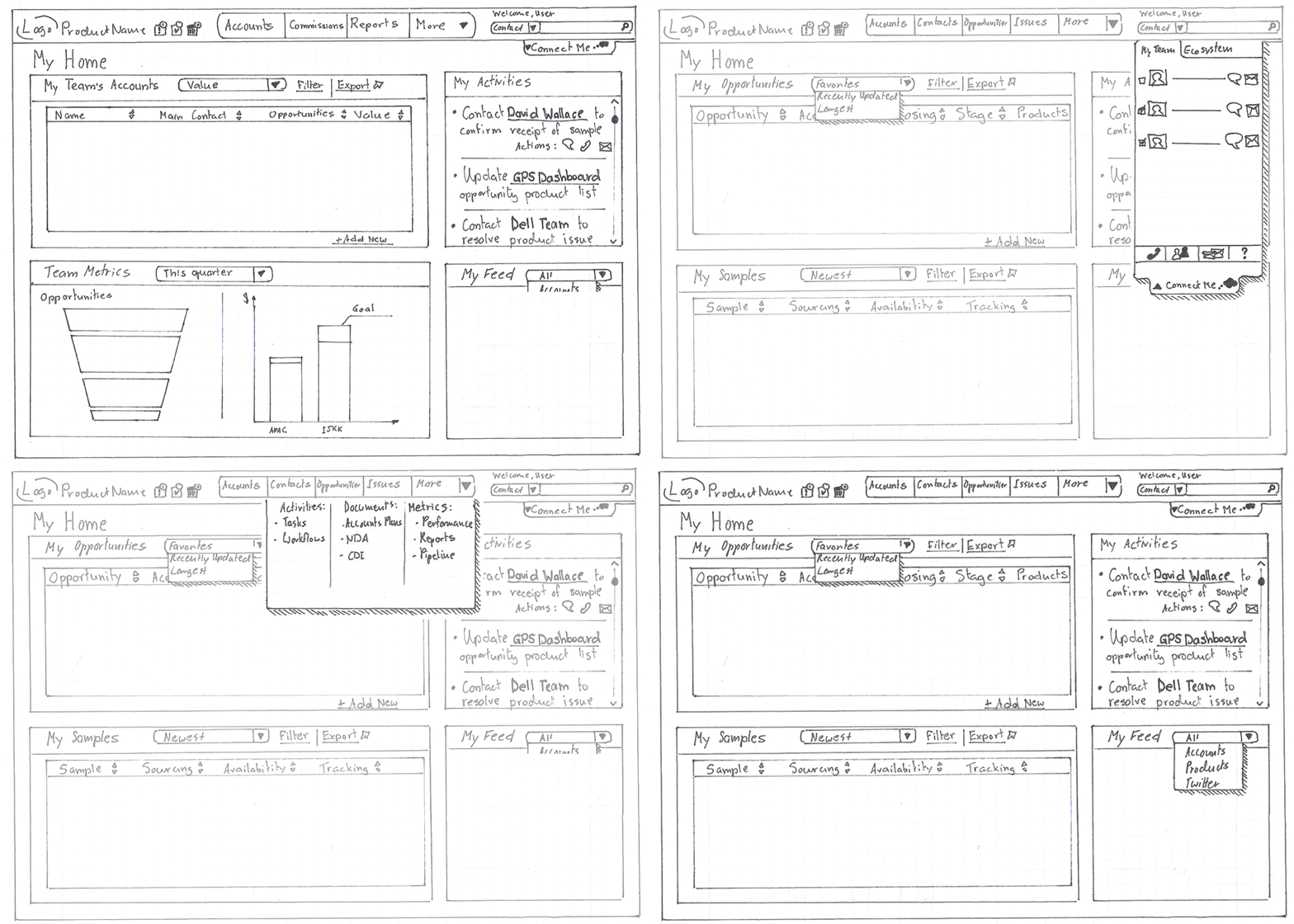
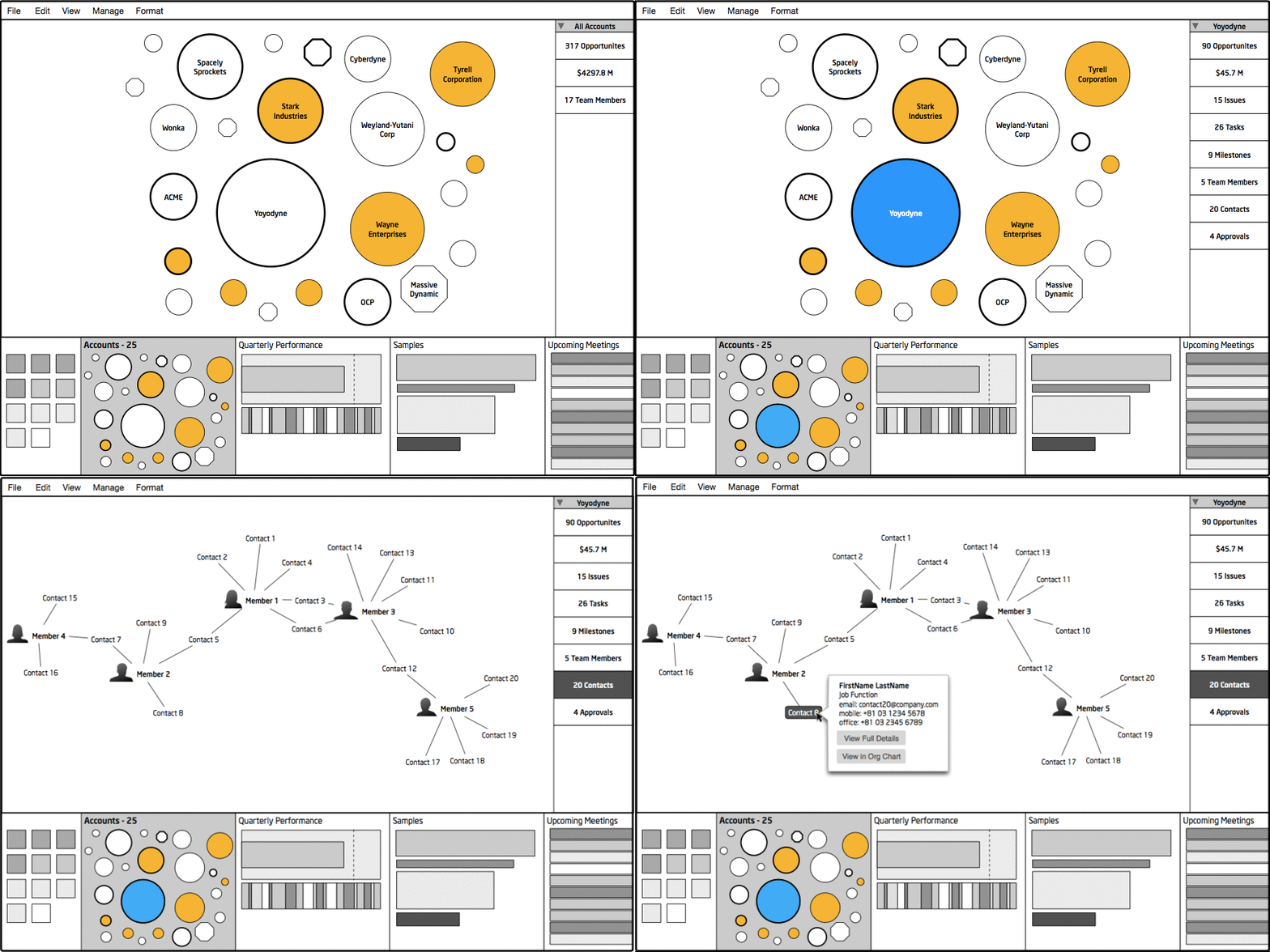
The fidelity of rough sketches evolved over time. Before tools like Sketch or Figma, sketching UI ideas by hand was common. As feature requirements became better defined, sketches underwent several rounds of iteration and were often sequenced into rough screen flows
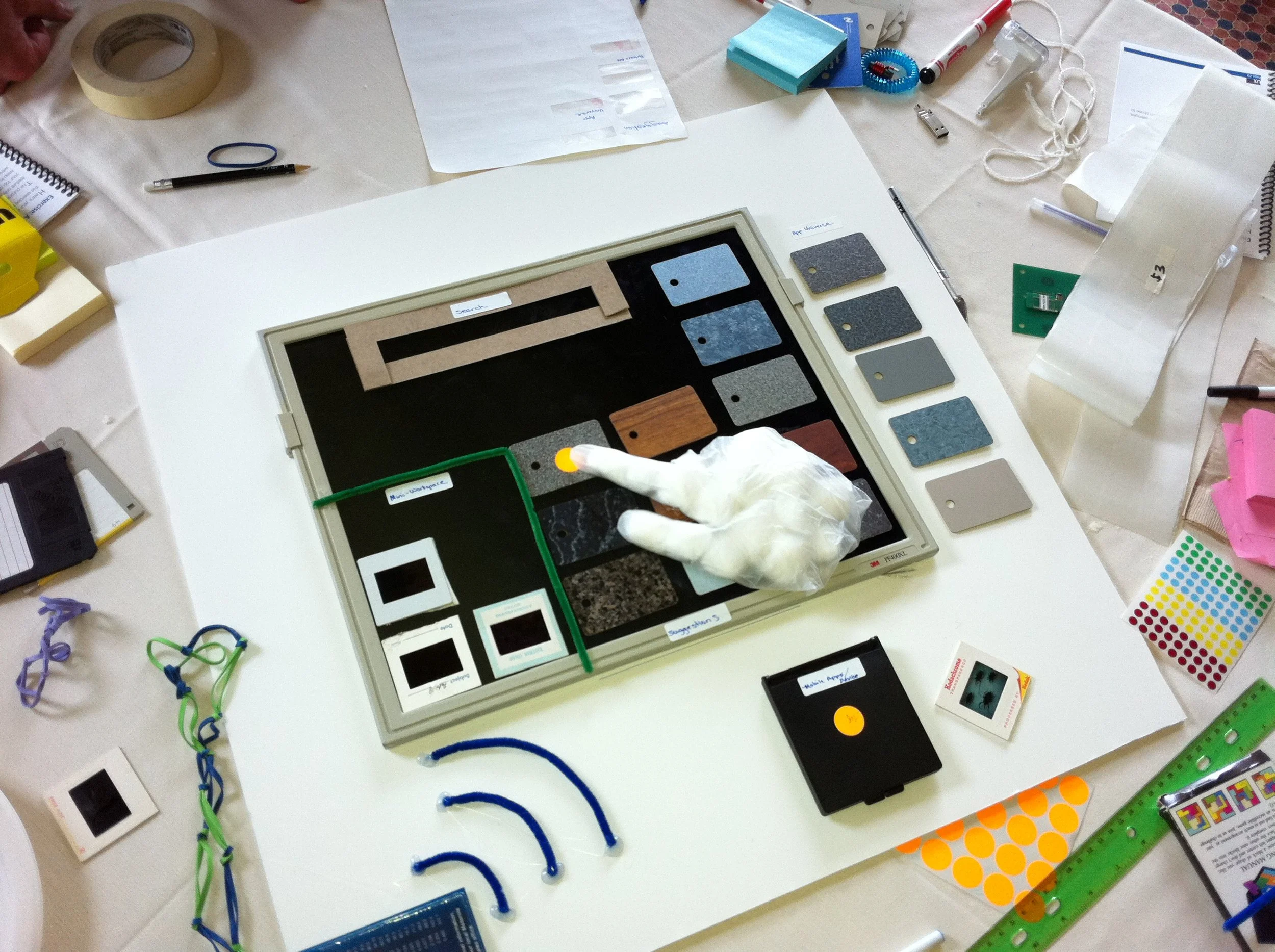
When I paper prototype, I map research experience themes to key proposed features in the prototype. My technique was featured in the 2014 HCI International Conference Proceedings held in Heraklion, Crete, Greece and in the 2014 proceeds of the IEEE - International Conference on Collaboration Technologies and Systems held in Minneapolis, MN.
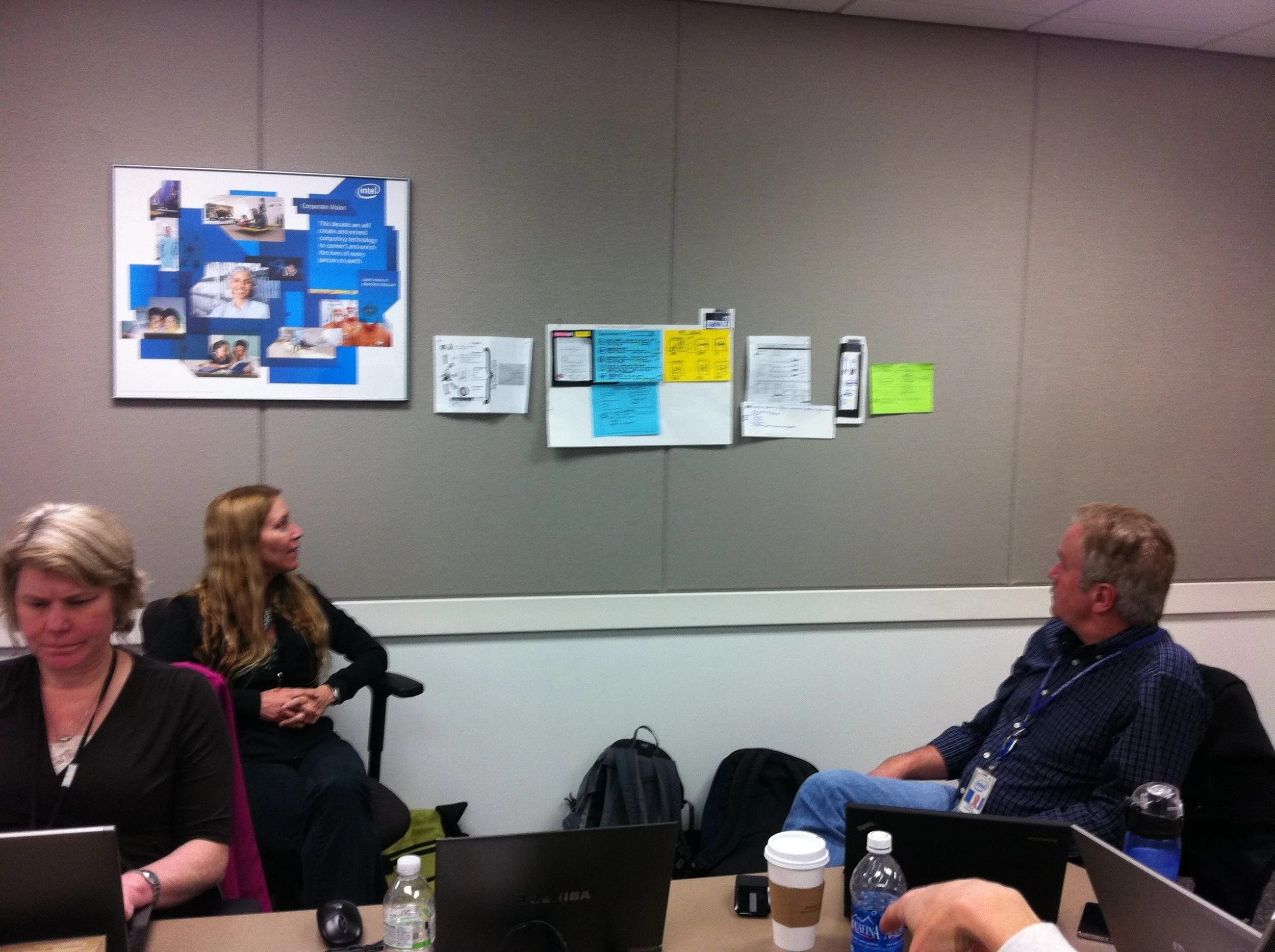
Sketches or paper prototypes were further iterated upon using design tools like Balsamic, Axure, or Proto.io which allowed me to better communicate interaction design and add annotations about the design rationale. For design workshops, often mockups were printed in a large format and displayed in sequential order on the walls for collaborative discussion.
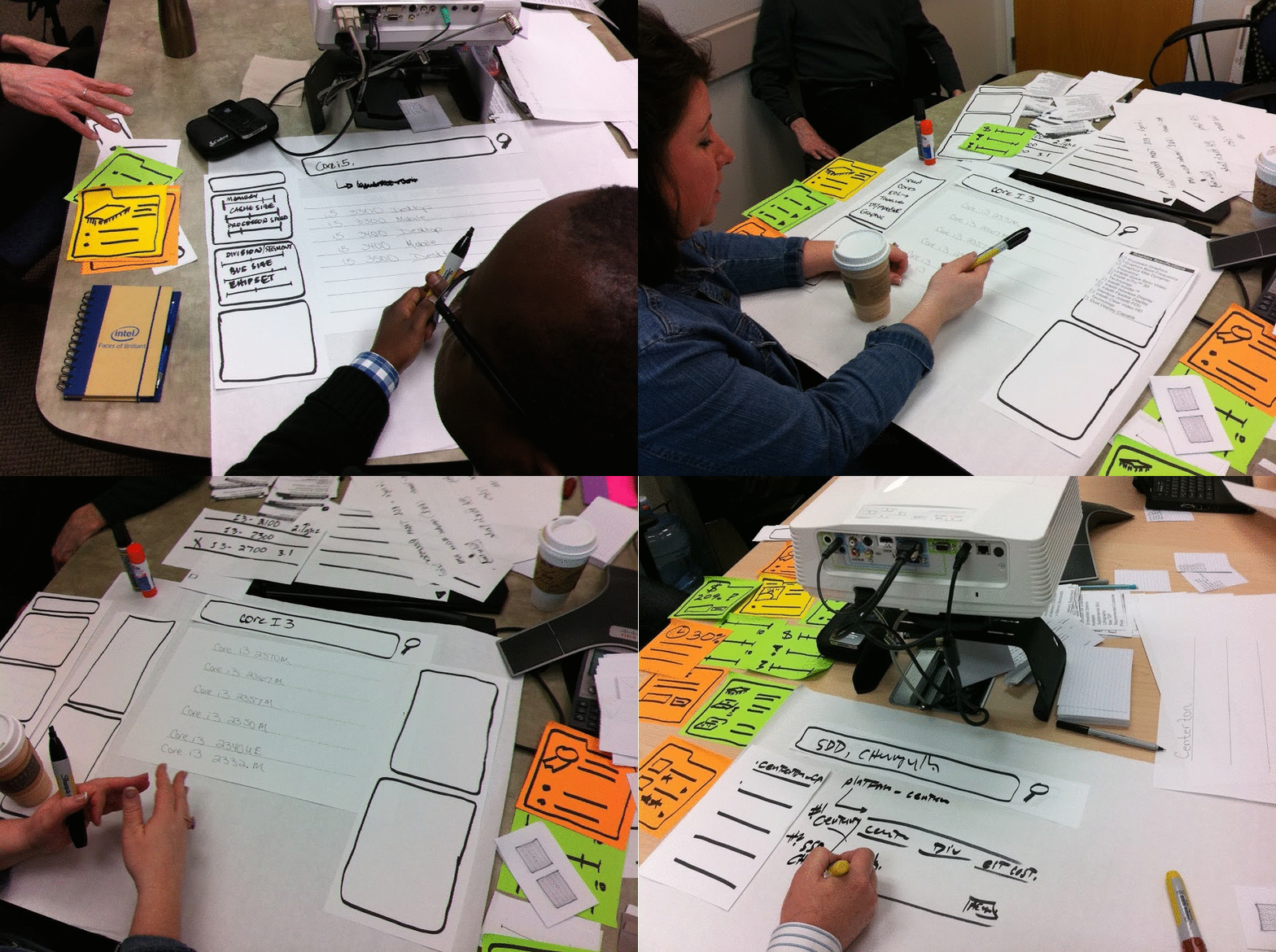
I frequently planned and led participatory design (Design Thinking) workshop with stakeholders and members of the larger product team (users, Product Managers, Engineers, etc). In this example, users (sales team members) asked to sketch out their ideas for improving a critical user journey of searching for specific Intel products to add to a customer offer.
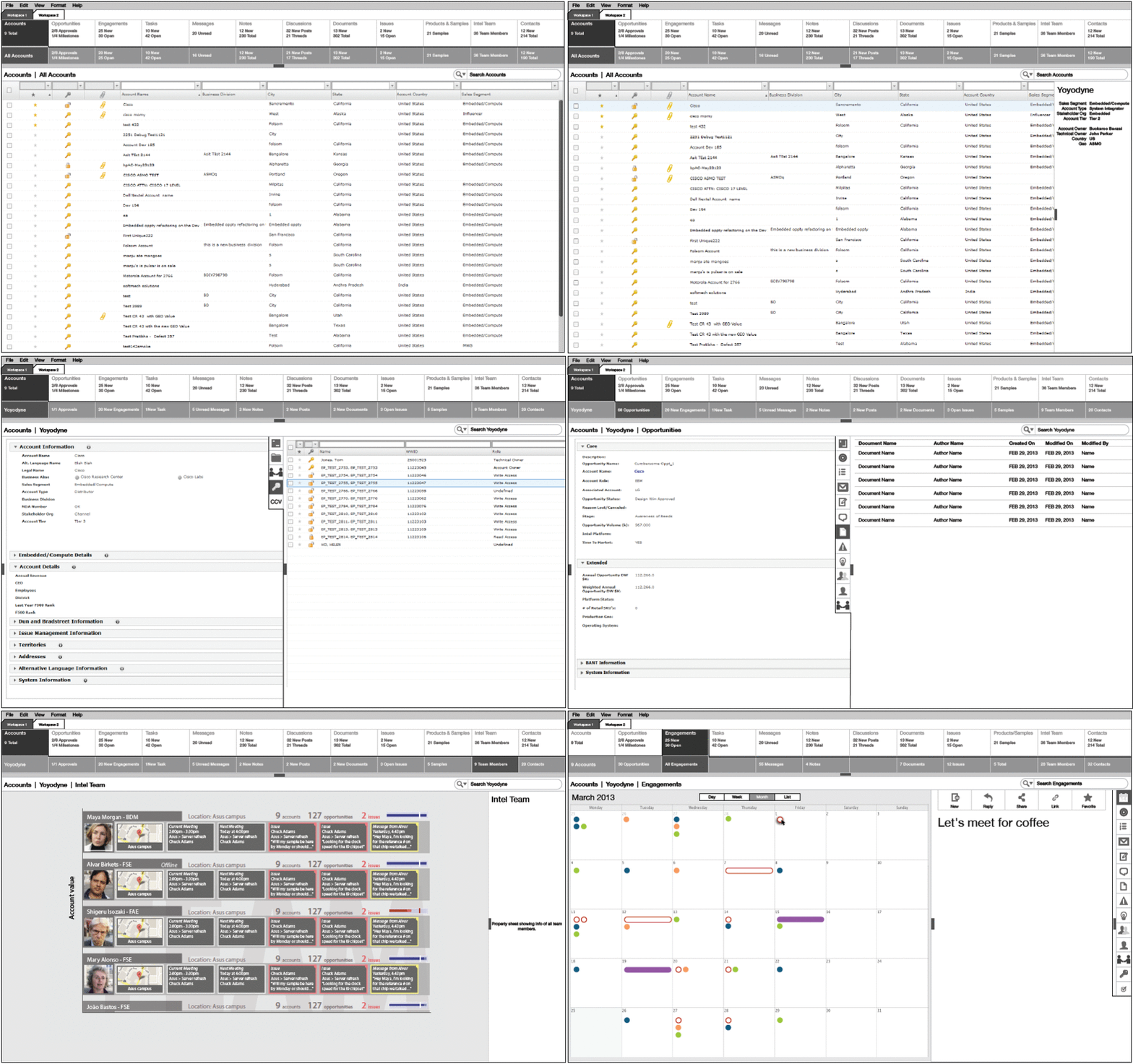
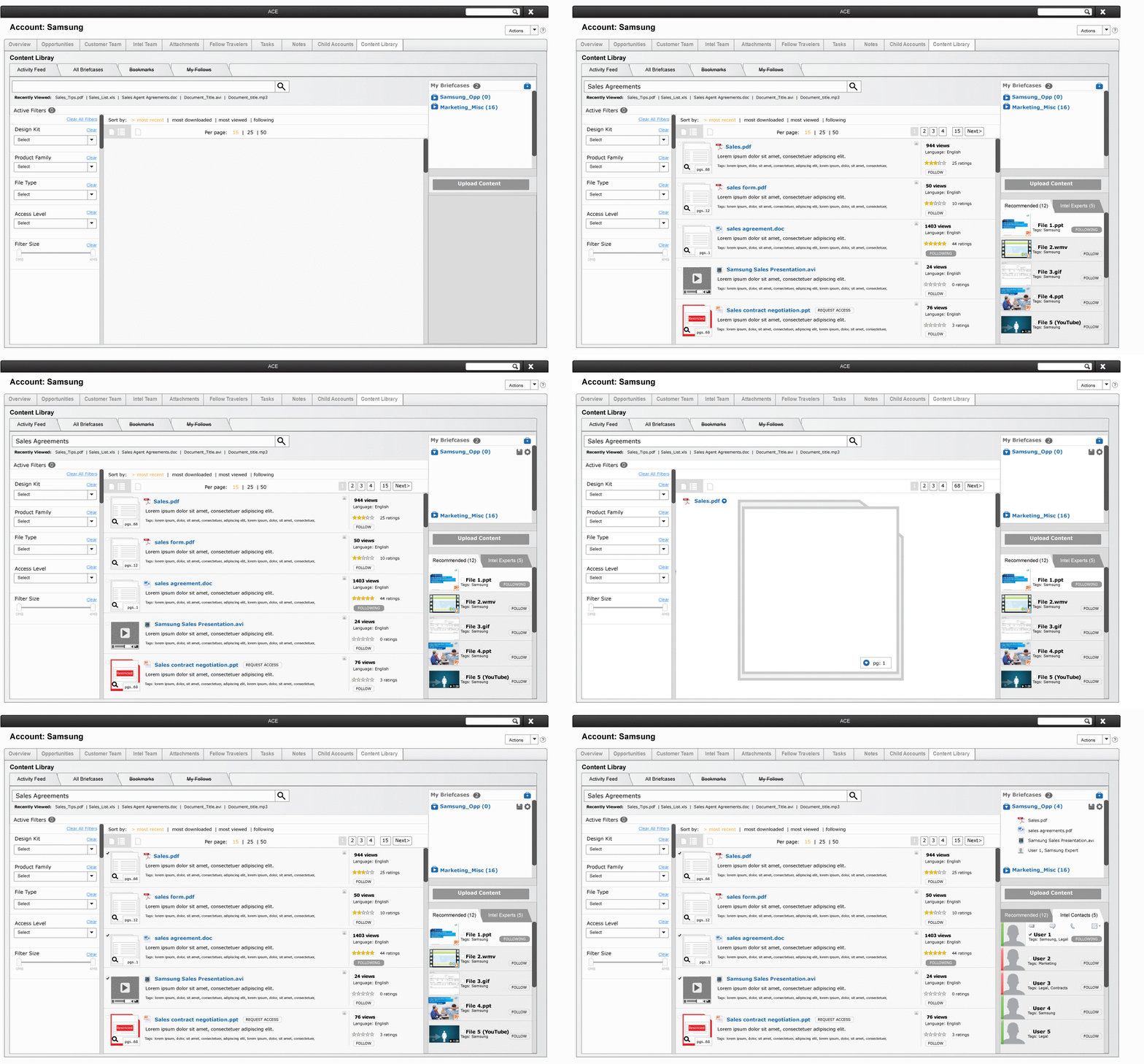
I converged ideas generated from Design Thinking workshops and insights gained from testing paper prototypes to create detailed high-fidelity wireframes which communicated the next level of design detail. Wireframes were shared electronically and I often presented increments of the emerging Design Vision to C-Suite senior leadership and to our engineering partners for review and feedback.
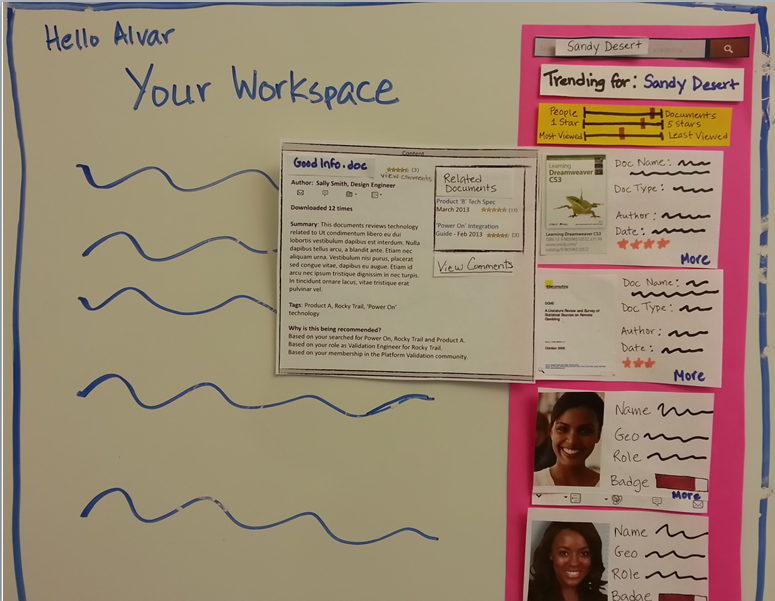
Users desired the capability to be presented with in context recommendations of enterprise content and resources based on their role and on the task they were attempting to complete in the UI. I led the design of a predictive analytical capability known as ‘Resource Presenter’ which satisfied this requirement. I designed both the API plug in installation interface as well as all instances of how the plugin surfaced in the UI.
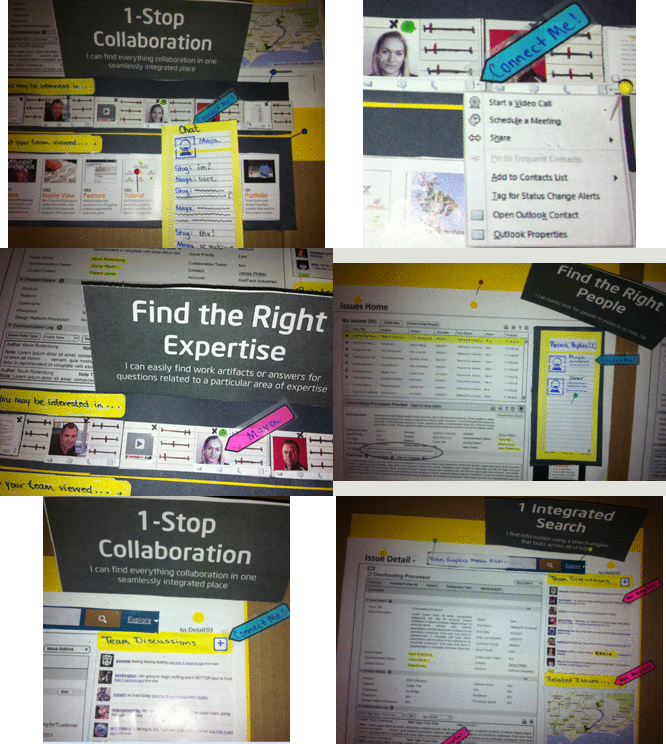
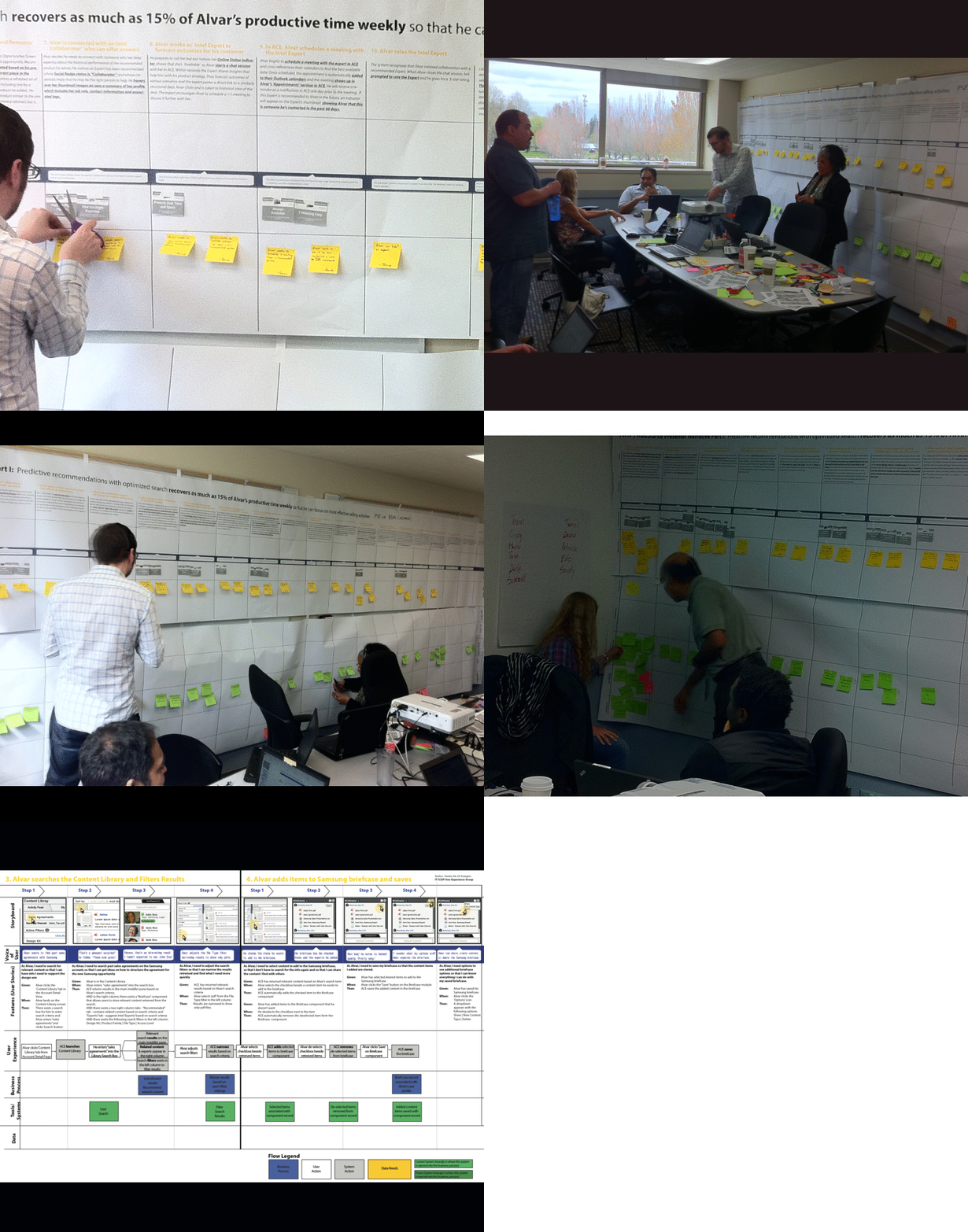
Printed storyboards were a great alternative to slide presentations for presenting the end-end design vision to stakeholders in a group setting. The artifact was printed in large format and displayed on the wall. I guided participants as they “walked-the-walls” to understand key proposed features and interactions.
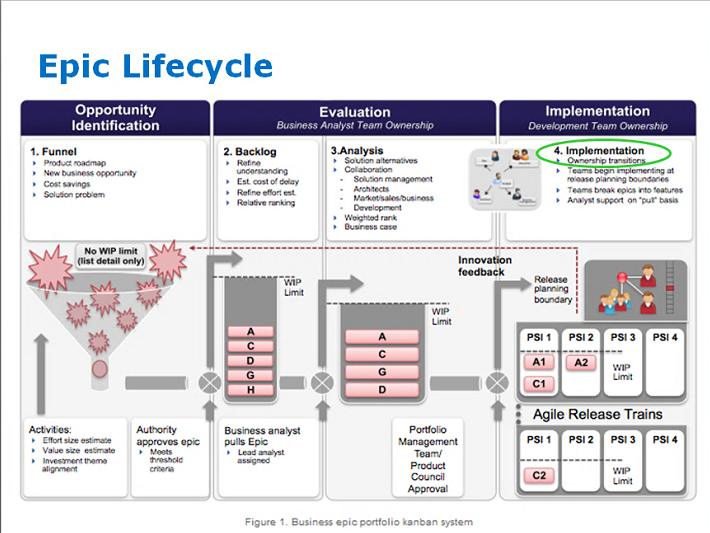
We worked within the SAFe framework which enables large enterprises to apply Lean-Agile best practices to software development. As an Agile + Lean certified professional, I contributed to release and sprint planning. I was also a member the leadership team that was responsible for transitioning the product team’s traditional waterfall process to Agile.
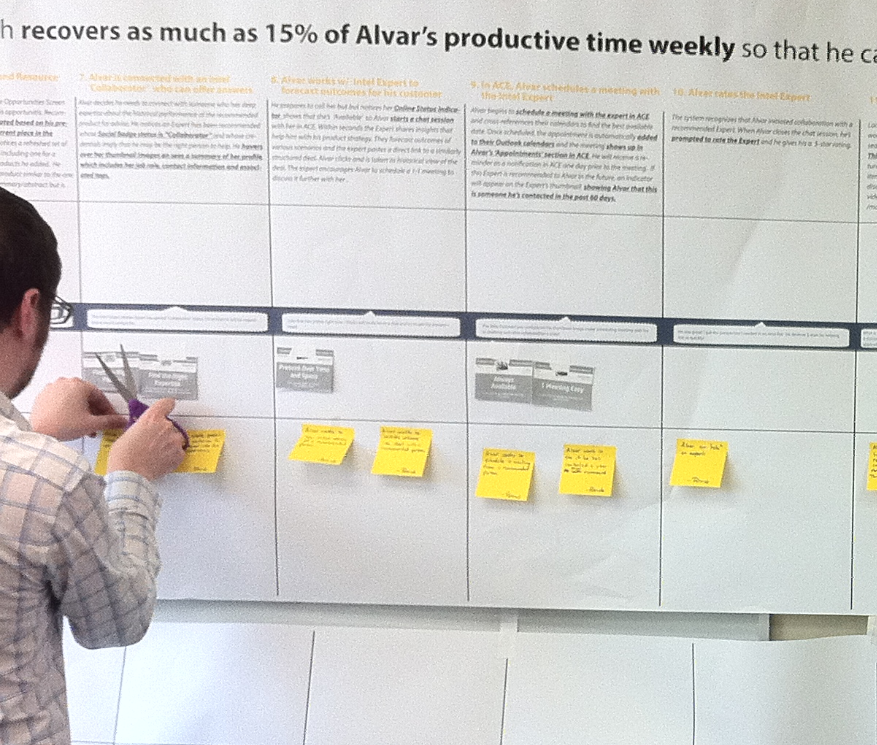
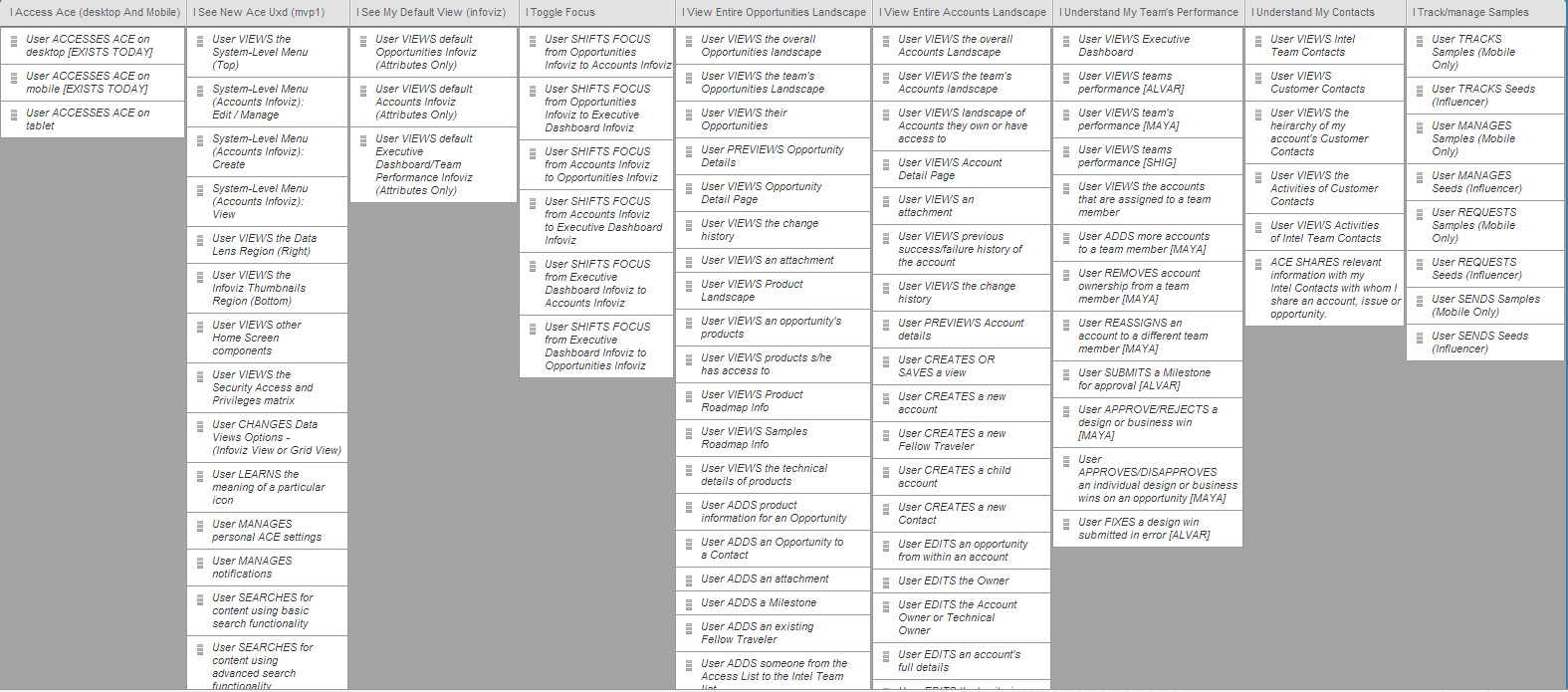
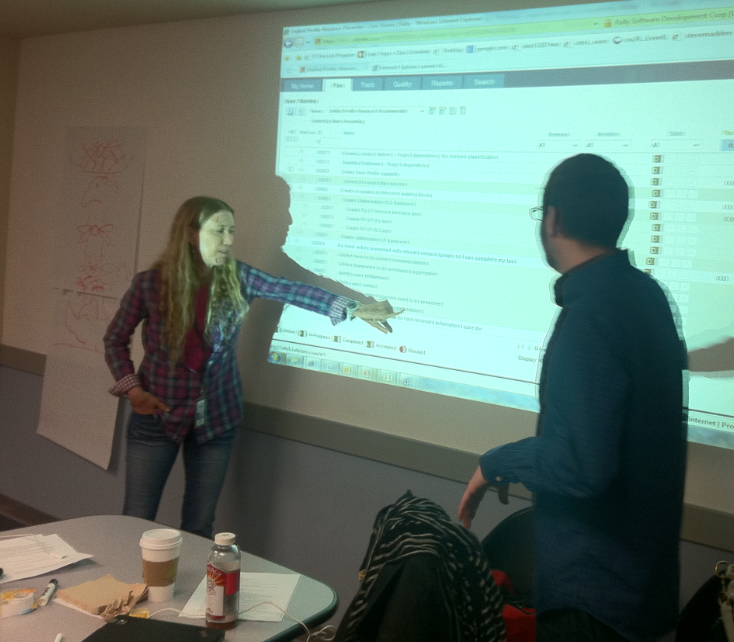
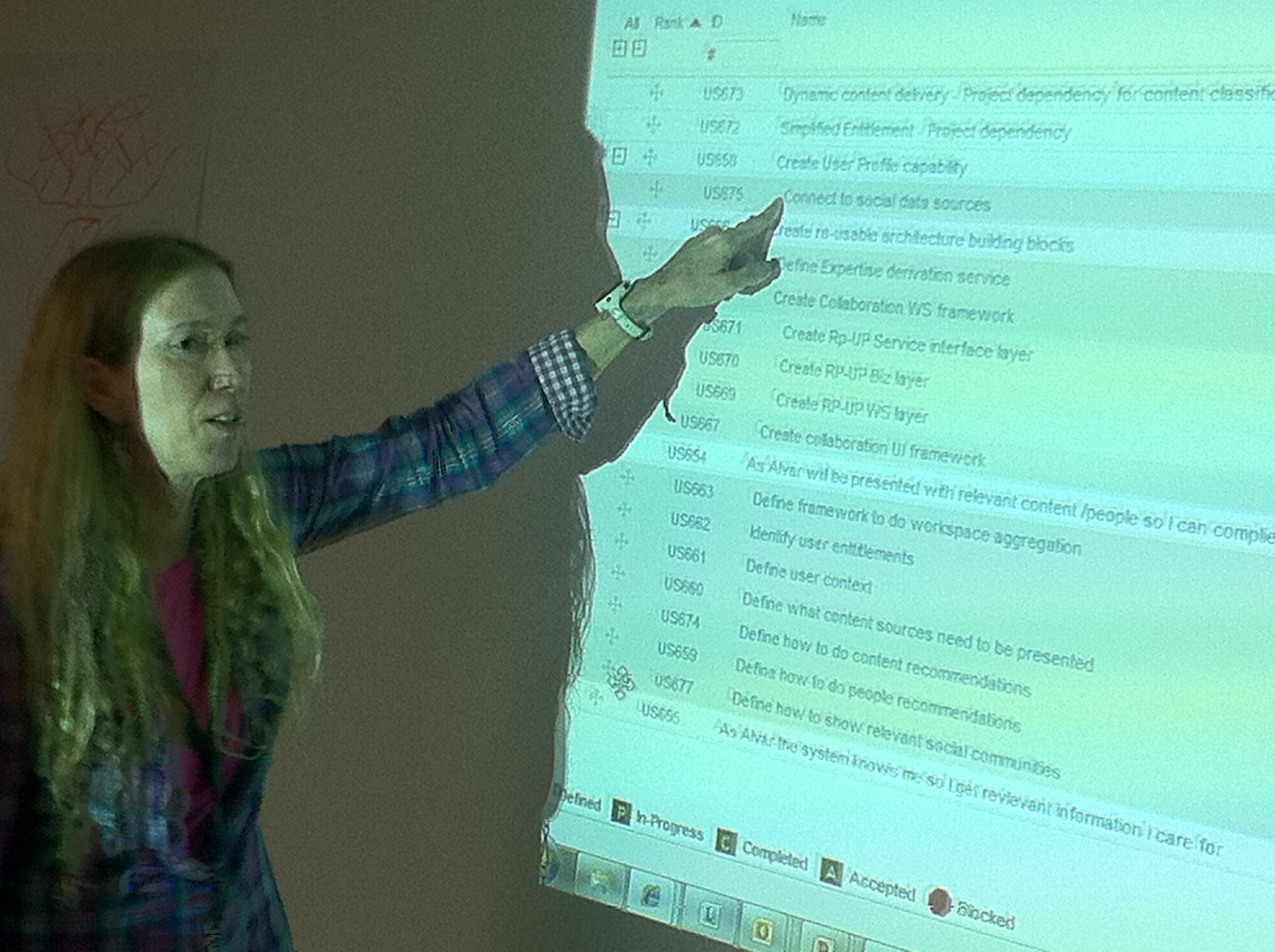
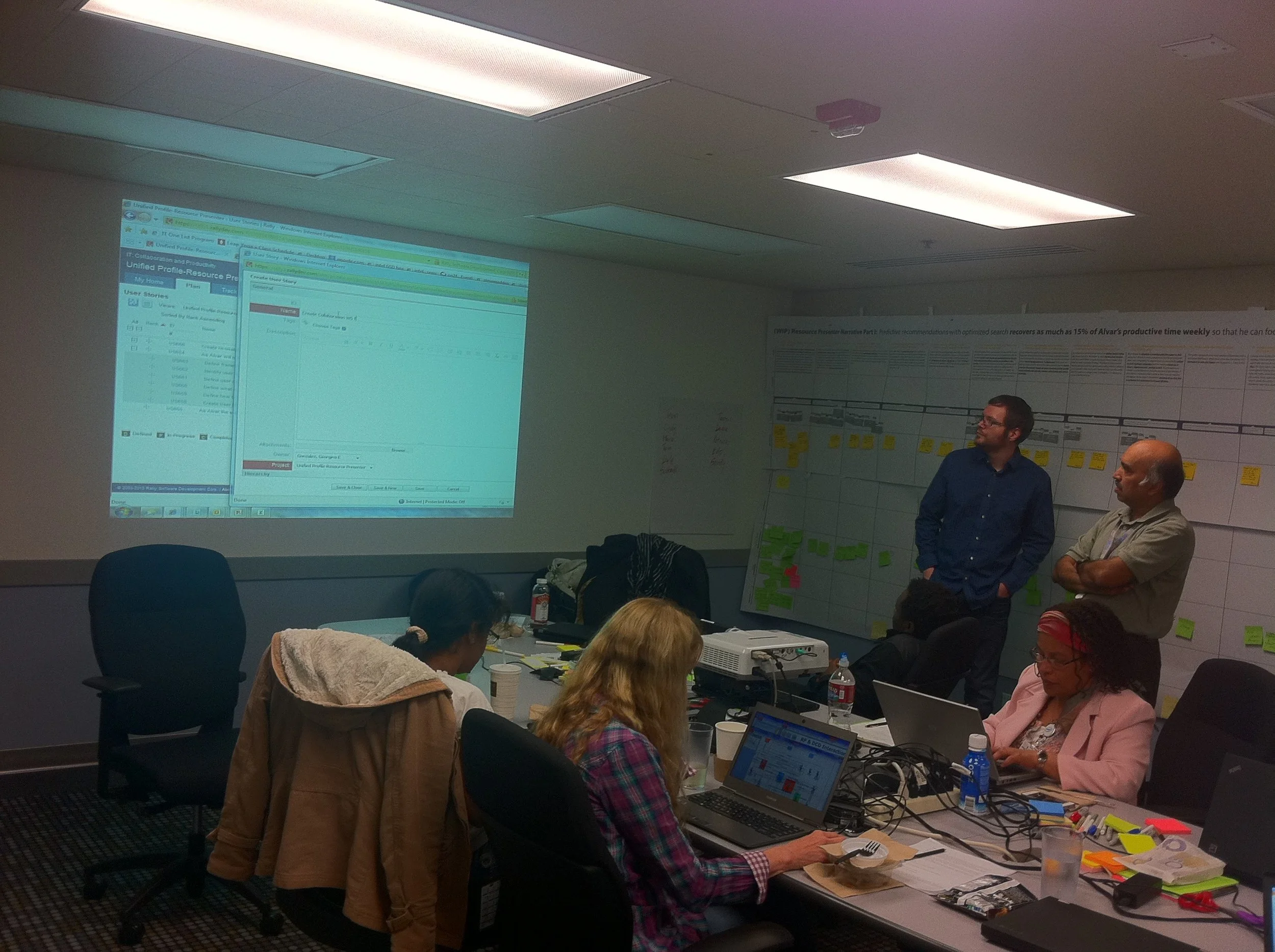
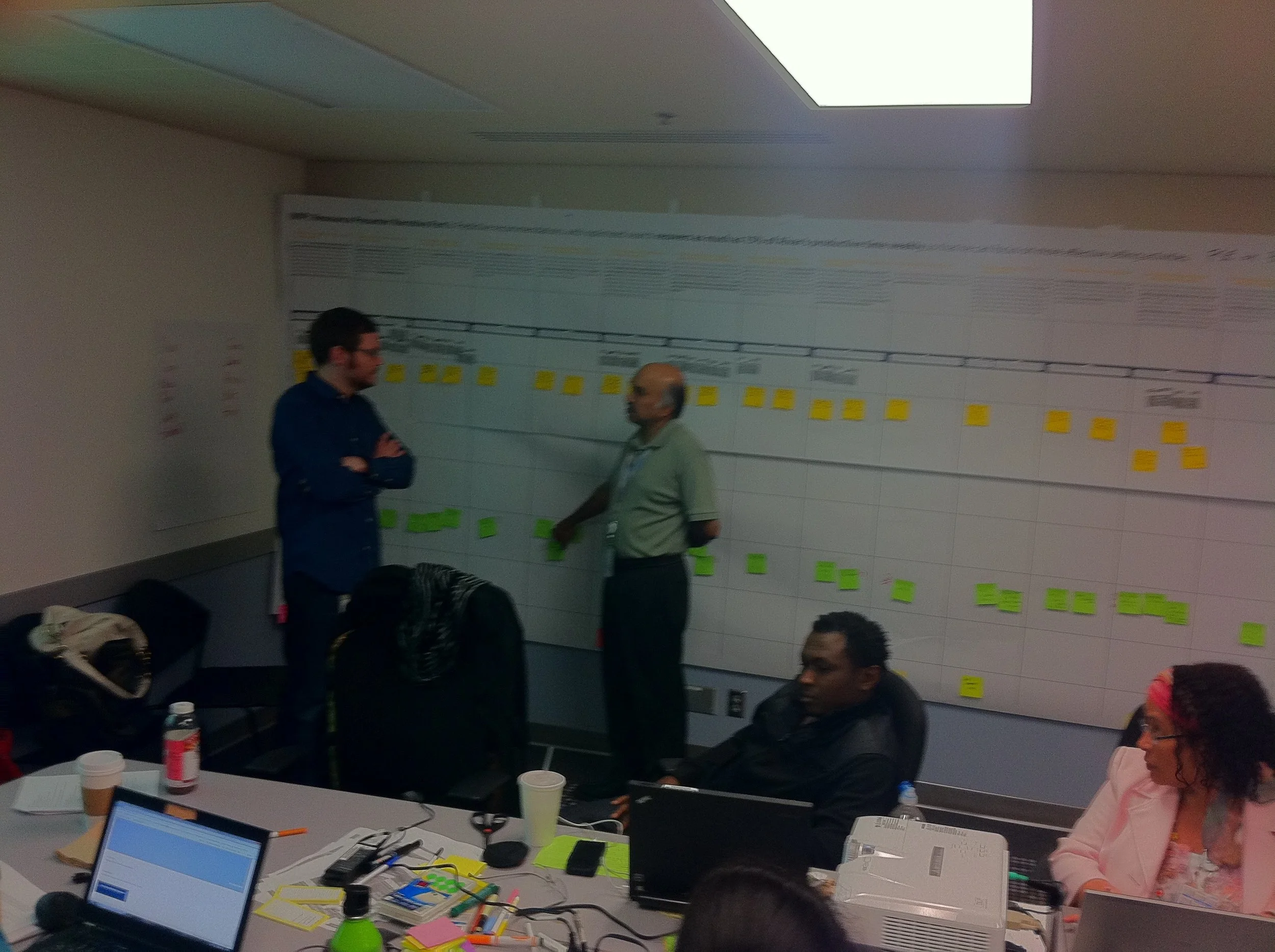
As UX Product Owner, I was responsible for managing the Agile backlog of UX features. To structure my backlog of user stories, I adopted Jeff Patton’s technique of User Story Mapping. High-level capability themes were organized from left-to right in the desired order (priority) of implementation. And below each theme, were epics of features required to fulfill the high-level capability. I planned and led Agile rituals like daily stand ups, group story sizing activities, iteration demos, and sprint retrospectives.
Presentation
360° Feedback
Leadership
"Deidre drove the design of a user experience to aid in discovering relevant people, content, and other content based on the context of what the user is doing as well as their history. (i.e. a predictive analytics recommendation engine). She took us through visioning, contextual inquiry and presumptive design iterations - from low fidelity sketches to interactive prototypes that were validated with our intended audience (users). She is skilled at pulling the different perspectives of software developers, architects, analysts and product owners together and map them to user stories and other design artifacts. Very professional, she moves rapidly and get valuable work done!" -Principal/Staff Engineer
“Deidre is tenacious, persistent, and savvy in ways of people and organizations. I have found her work to be thorough, well conceived, clearly written and of the highest caliber. She has demonstrated excellence in a variety of professional settings. She is both results oriented and capable of meeting challenging goals. I see her as a motivated self-starter, able to be proactive when needed; yet, pleasant to work with and a team player. She is one of the most competent professionals with whom I have had the pleasure to work and I recommend her highly and without reservations. I encourage you to take the time to talk with her yourself.” --Principal UX Designer/Architect
Teamwork & Developing People
"Deidre was instrumental in setting the direction of the project we are working on. She did a great job communicating a new process to the team and explaining why we were going through the process. While the team understood user experience design on a base level, implementing a large scale project was something new to the team where we started with a UX process. She was very patient with the team, listened to the concerns but ultimately kept the team on track with a vision. I believe Deidre showed strong leadership and obviously strong UX skills. On top of her skillset, she was also very fun to work with and seemed to care about the people she was working with." - Business Analyst
Simplifying Complexity
“Deidre is a dedicated professional who I could always depend on to drive best practices perspectives into methods and practices. I leaned on Deidre a great deal for her creativity and willingness to roll up her sleeves and drive clarity and structure out of a horde of ambiguity.” -Customer Data Manager
“Deidre is quick to identify possible mismatches between desired state and the reality and she offers avenues for resolving gaps.” -Product Design Manager
“Deidre asks the right questions to drive clarity and in the end is able to help our business partners clearly articulate their needs. She is very process and detailed oriented and it shows in the quality of work she presents.” -Product Manager