UX MANAGER, Data Center Infrastructure
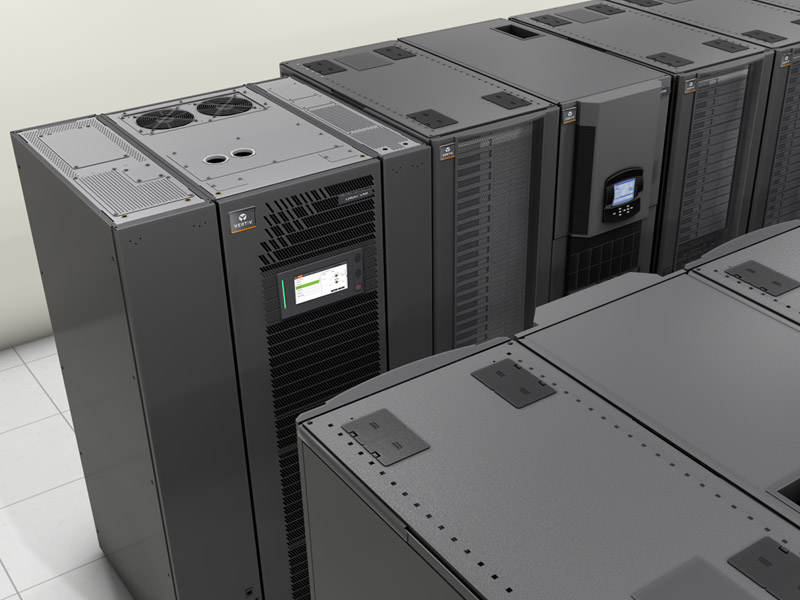
In 2016 after my departure from the company, Emerson Network Power was re-branded as Vertiv. The company is a leading manufacturer of industrial equipment, sensors, and software solutions used to connect, monitor and manage conditions in data centers around the world.
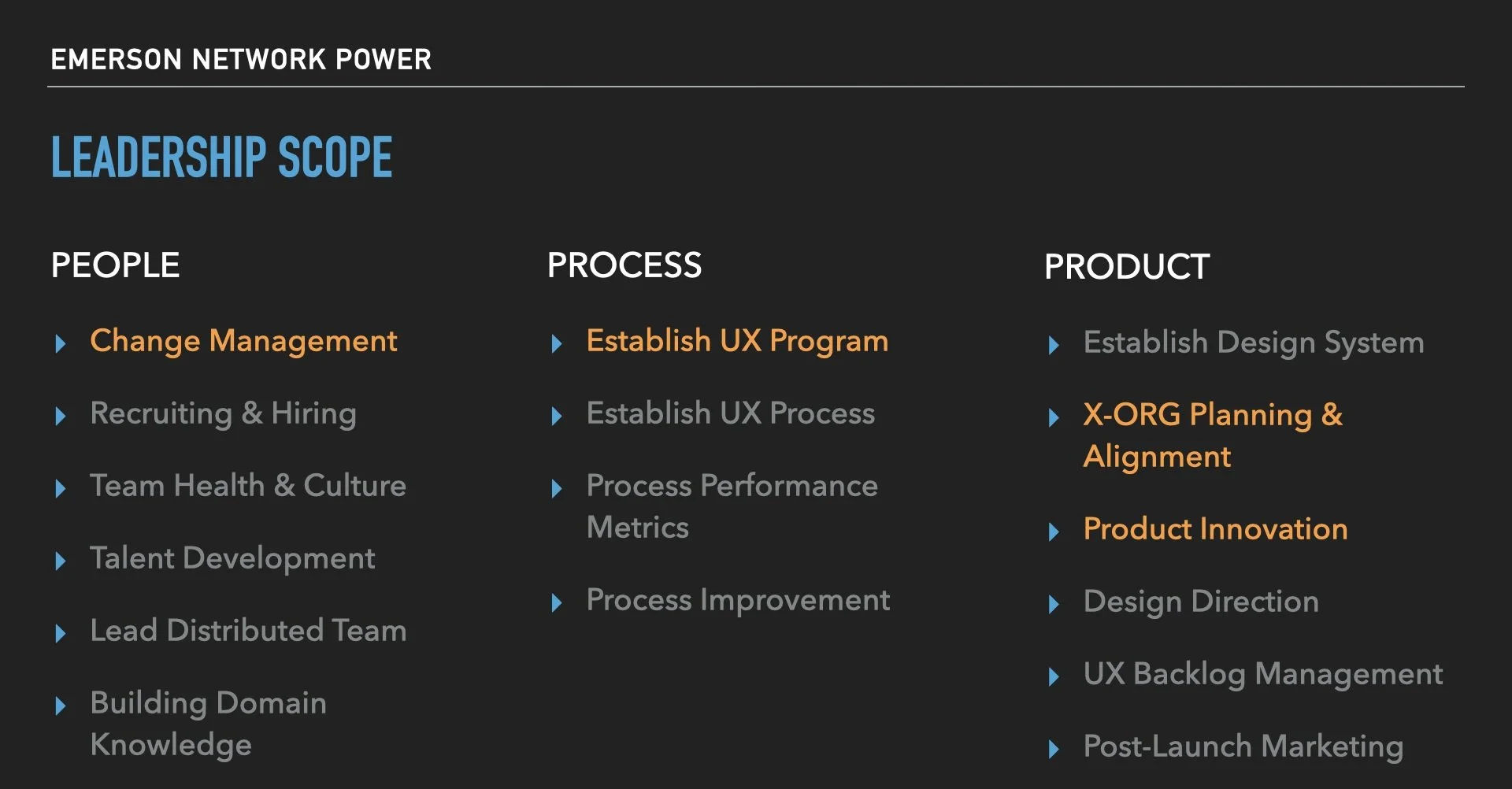
As Human-Centered Design Manager at Emerson Network Power, my team and I tackled a complex and far-reaching challenge: redefining the user experience across an extensive portfolio of products that spanned multiple product families, device types, and form factors. The scale and scope of our work were immense, impacting a diverse range of mission-critical thermal, power, and fluid management systems essential to data centers and industries worldwide. I established the UX Plan and high-level design direction for each project, ensuring strategic alignment, clarity, and consistency across all phases of execution. The UX Plan served as a critical bridge between stakeholders, designers, and engineering teams, clearly articulating project goals, user needs, and success criteria. The outlined key opportunities, constraints, and design dependencies, along with defined timelines, milestones, and deliverables.
My team’s efforts required a holistic, system-level approach to ensure a consistent, intuitive, and high-performing user experience across hardware, software, and integrated digital interfaces. By aligning UX strategy with business objectives and engineering constraints, we delivered seamless, scalable design solutions that elevated usability, optimized workflows, and improved customer engagement across Emerson’s global product ecosystem.
Hover over the slides below for more info.
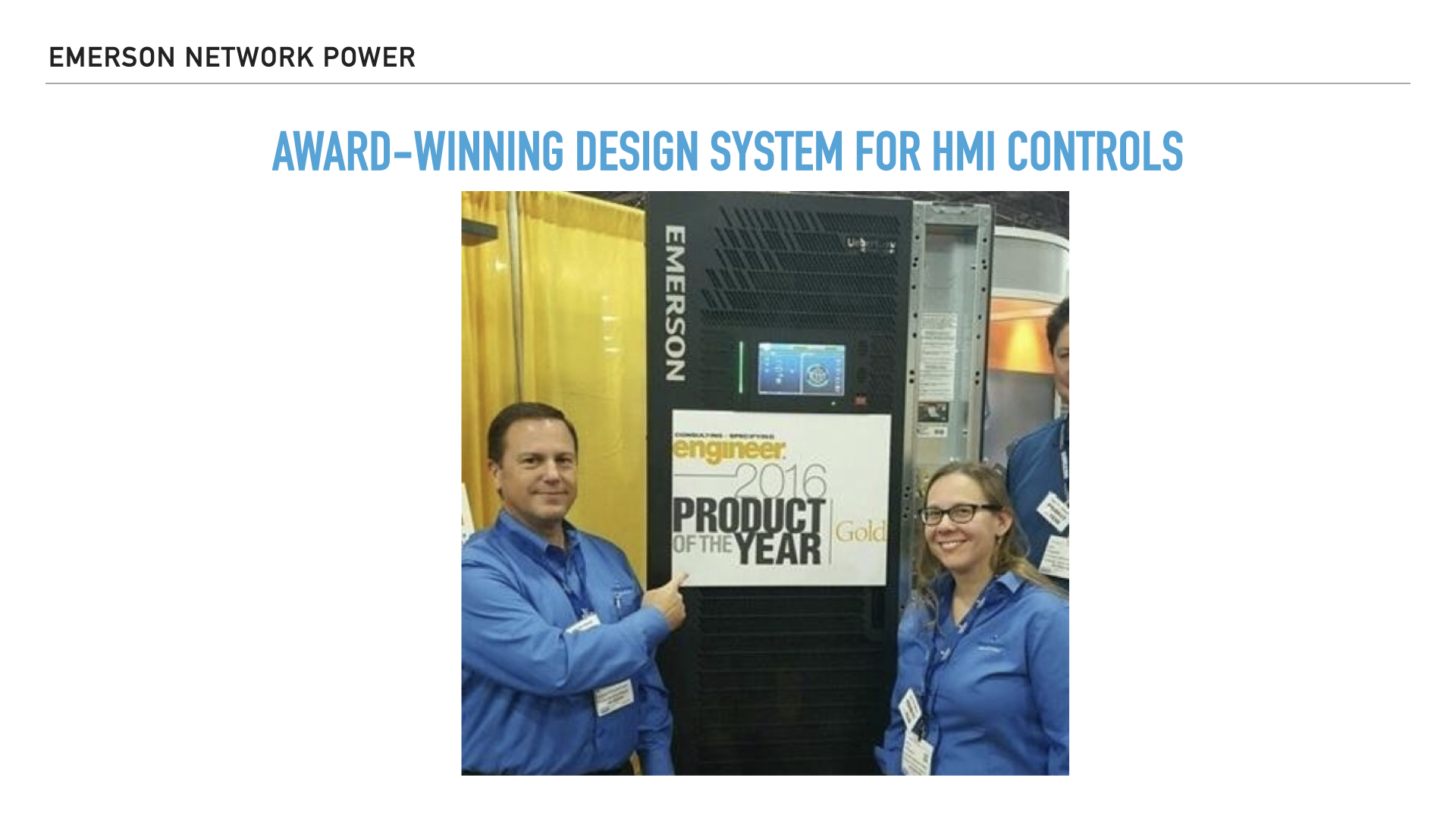
As a culmination of the UX Design Transformation I led at Emerson Network Power, I was honored with Emerson’s "Consider It Solved" Award for driving innovation and elevating the user experience. Additionally, a product line launched in 2016, featuring the human-machine interface (HMI) designed by my team, was recognized as CSE Magazine’s 2016 Product of the Year—a testament to the impact of our design leadership on product excellence and industry innovation.
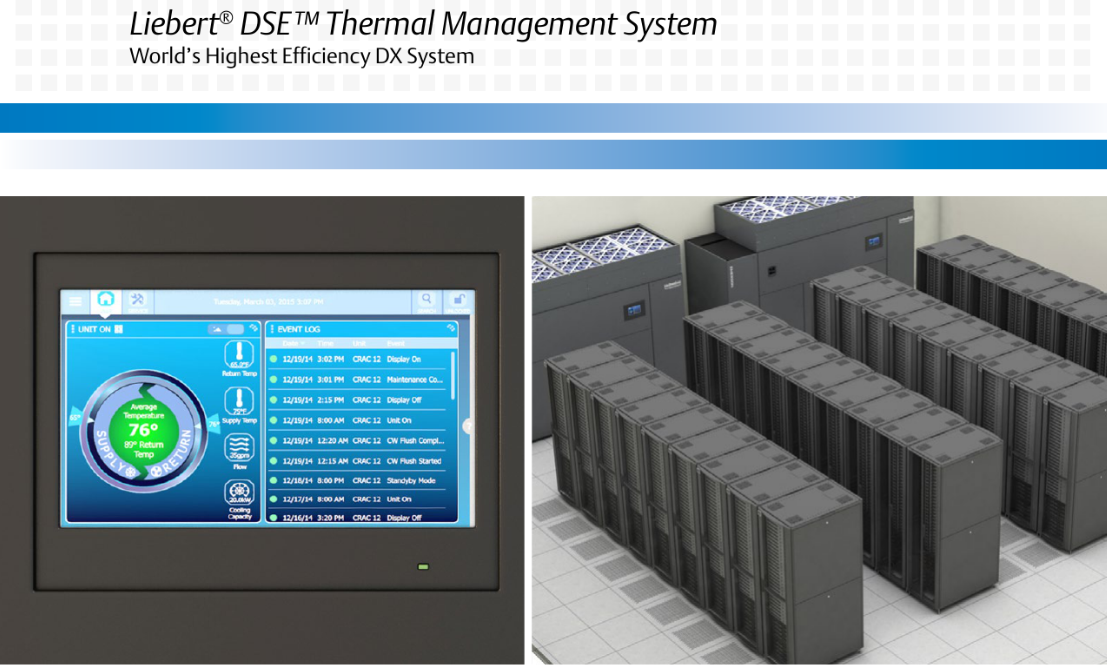
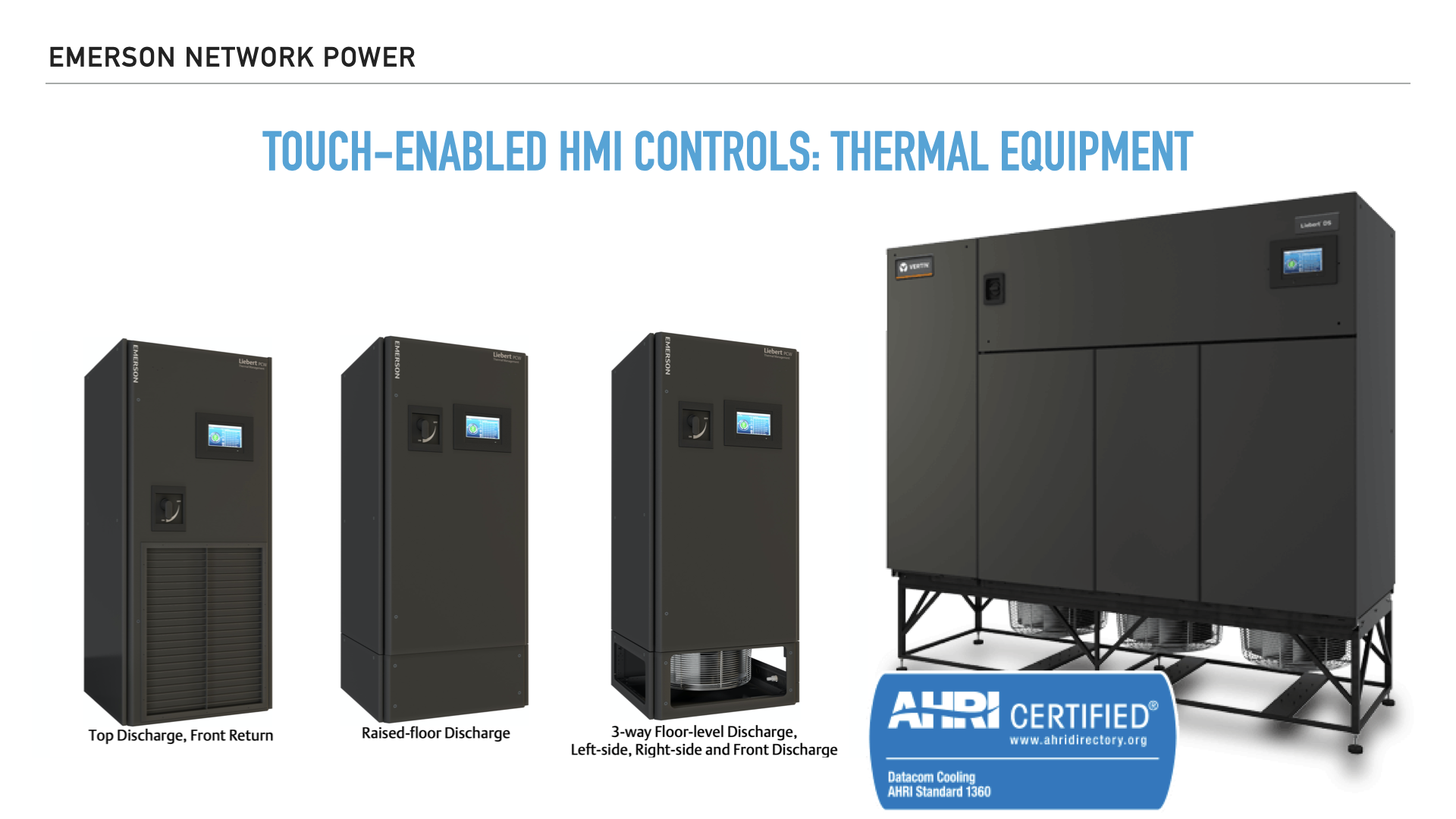
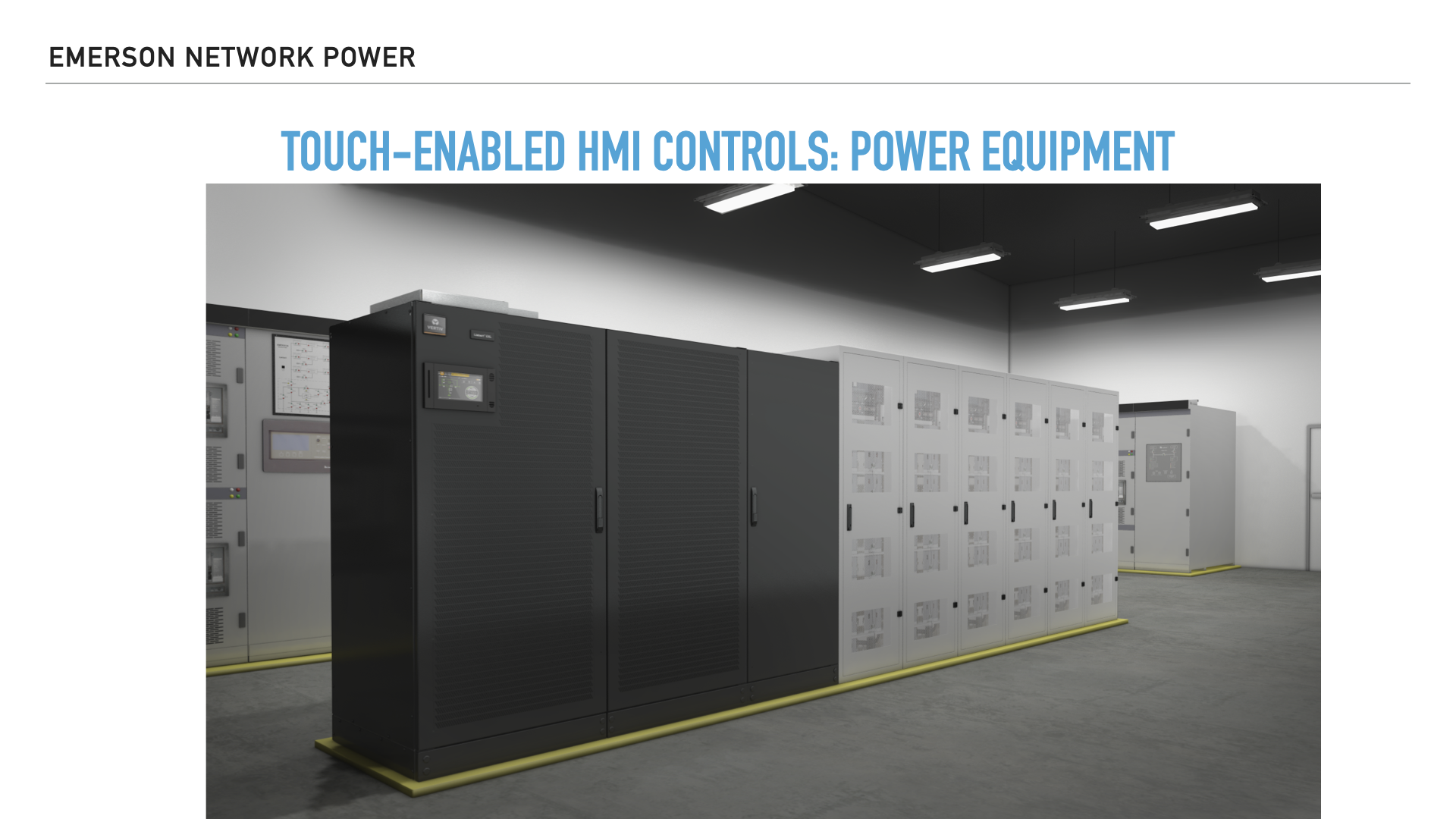
The scale and impact of our work were significant, shaping the user experience across a diverse range of mission-critical thermal, power, and fluid management systems essential to data centers and industries worldwide.
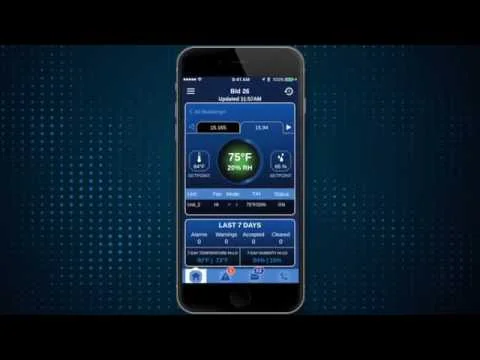
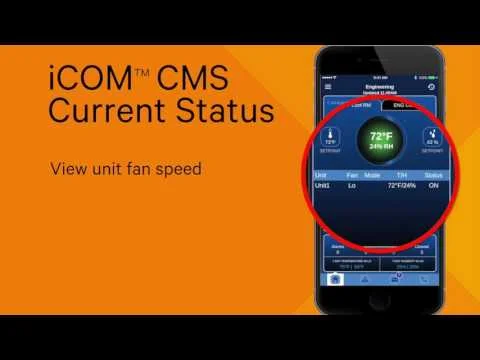
My team’s responsibilities extended beyond the human-machine interfaces (HMI) on physical data center equipment to encompass the entire ecosystem of digital interfaces used for remote monitoring and control. This included mobile and desktop applications that provided real-time insights and system management, as well as enterprise-level platforms designed for critical monitoring and control in large-scale command centers.
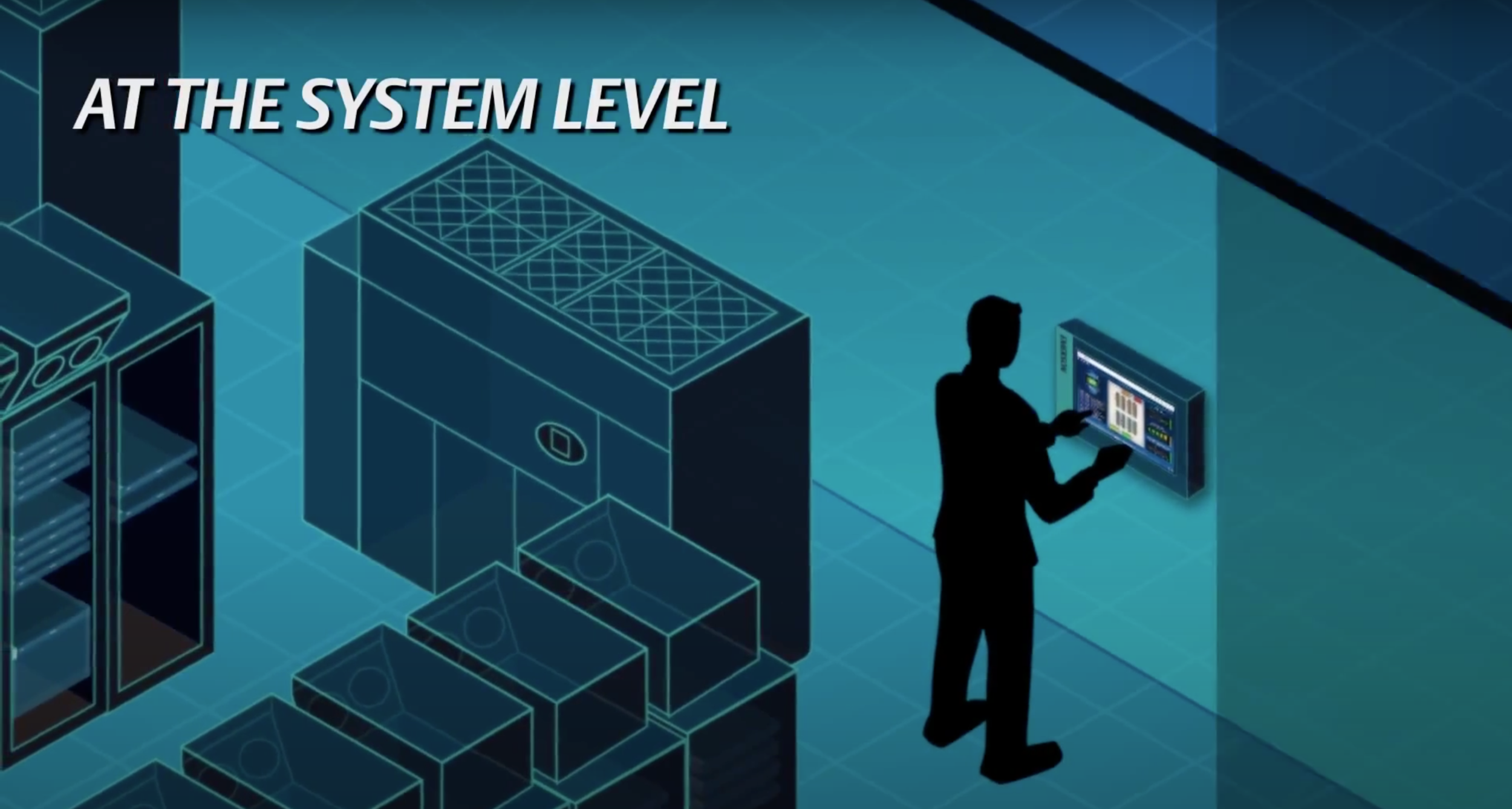
My responsibility also extended to include wall-mounted interactive LCD displays strategically placed within data centers—critical touchpoints for monitoring and managing infrastructure in real time.
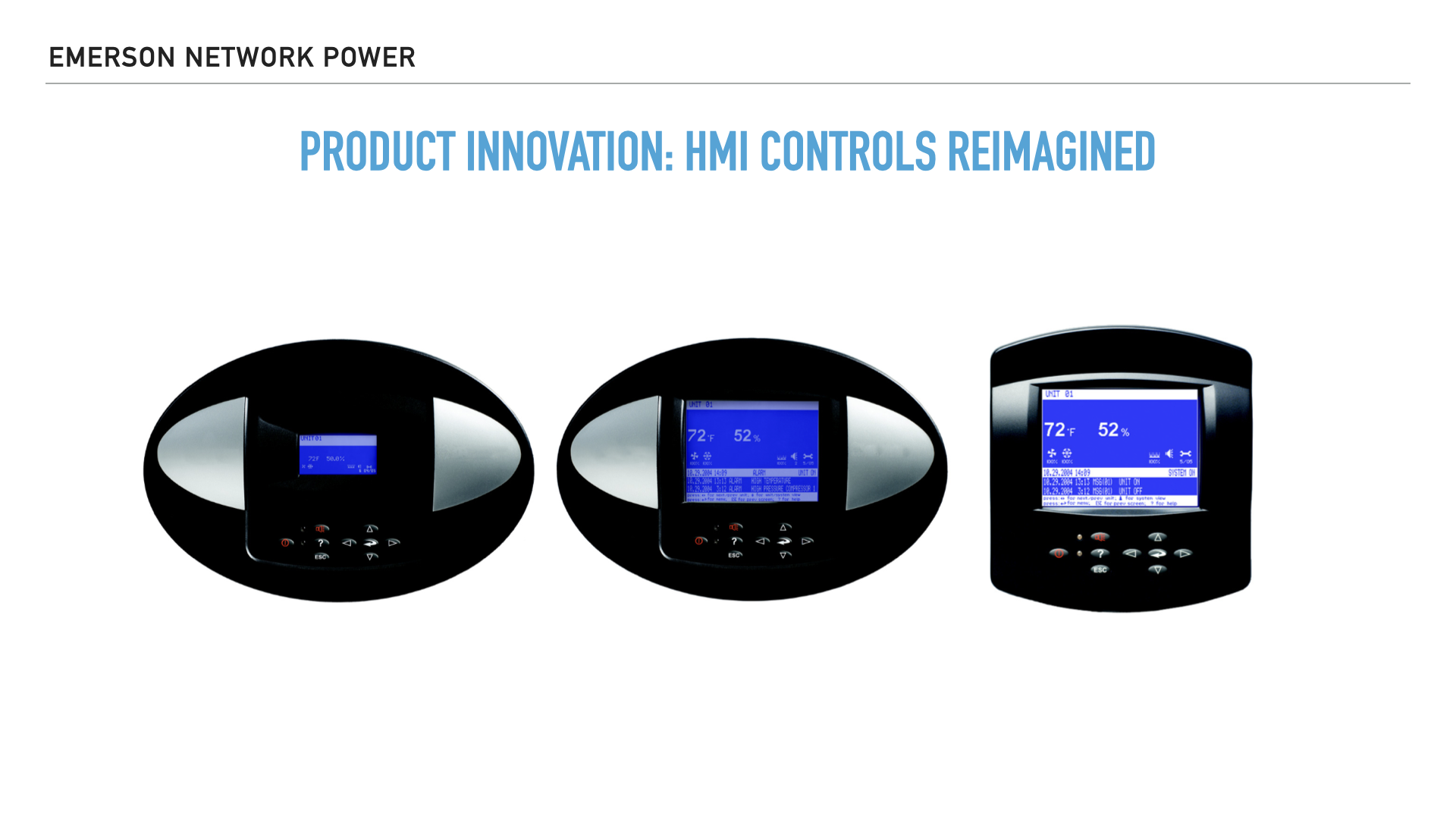
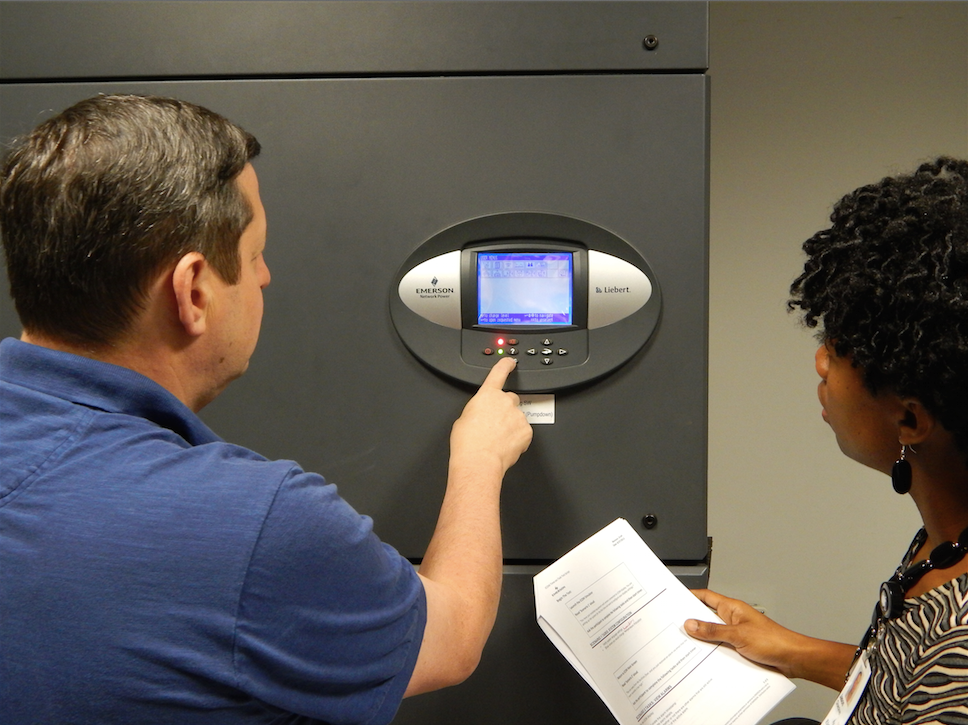
Where we started.
Where we started
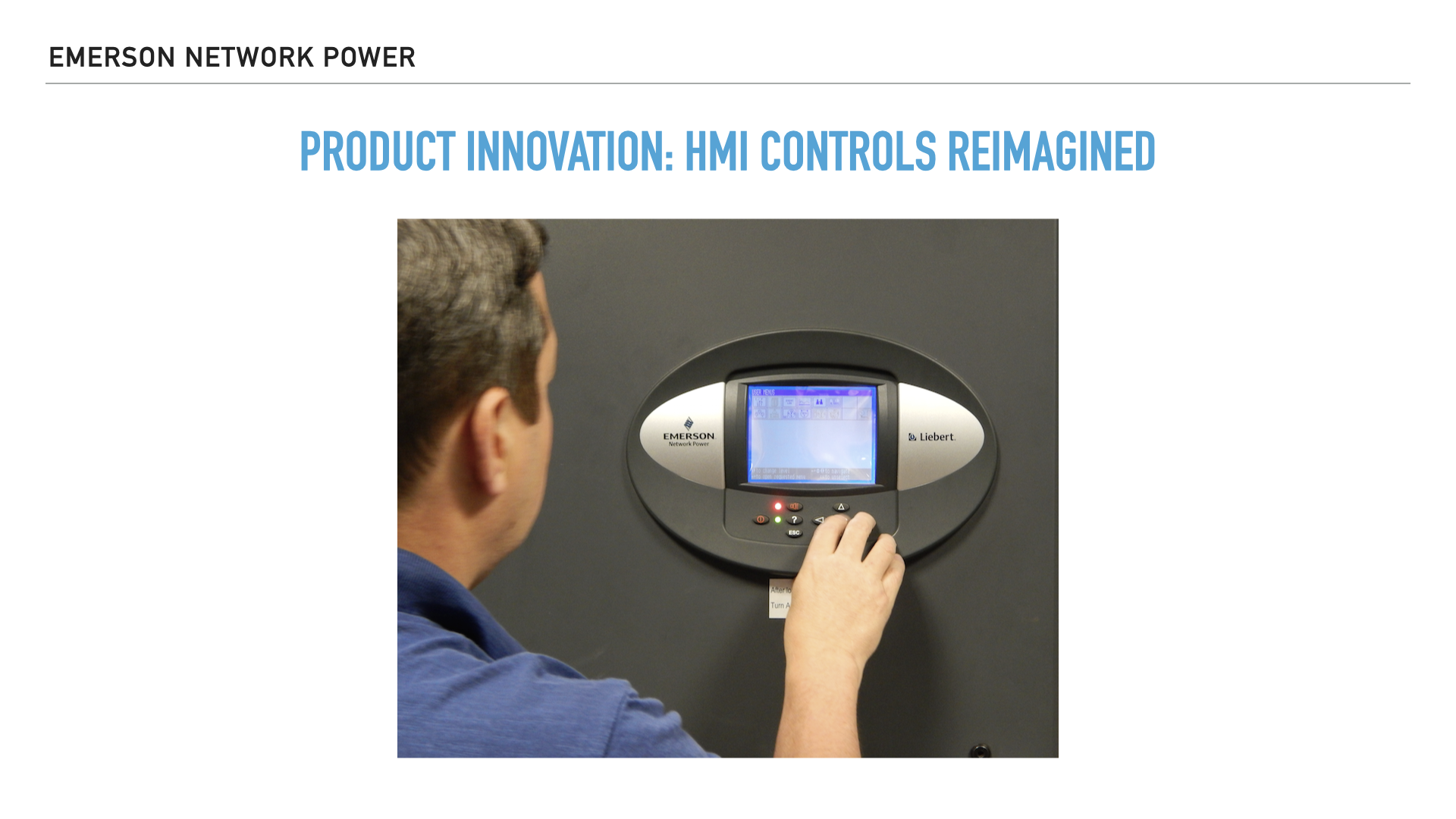
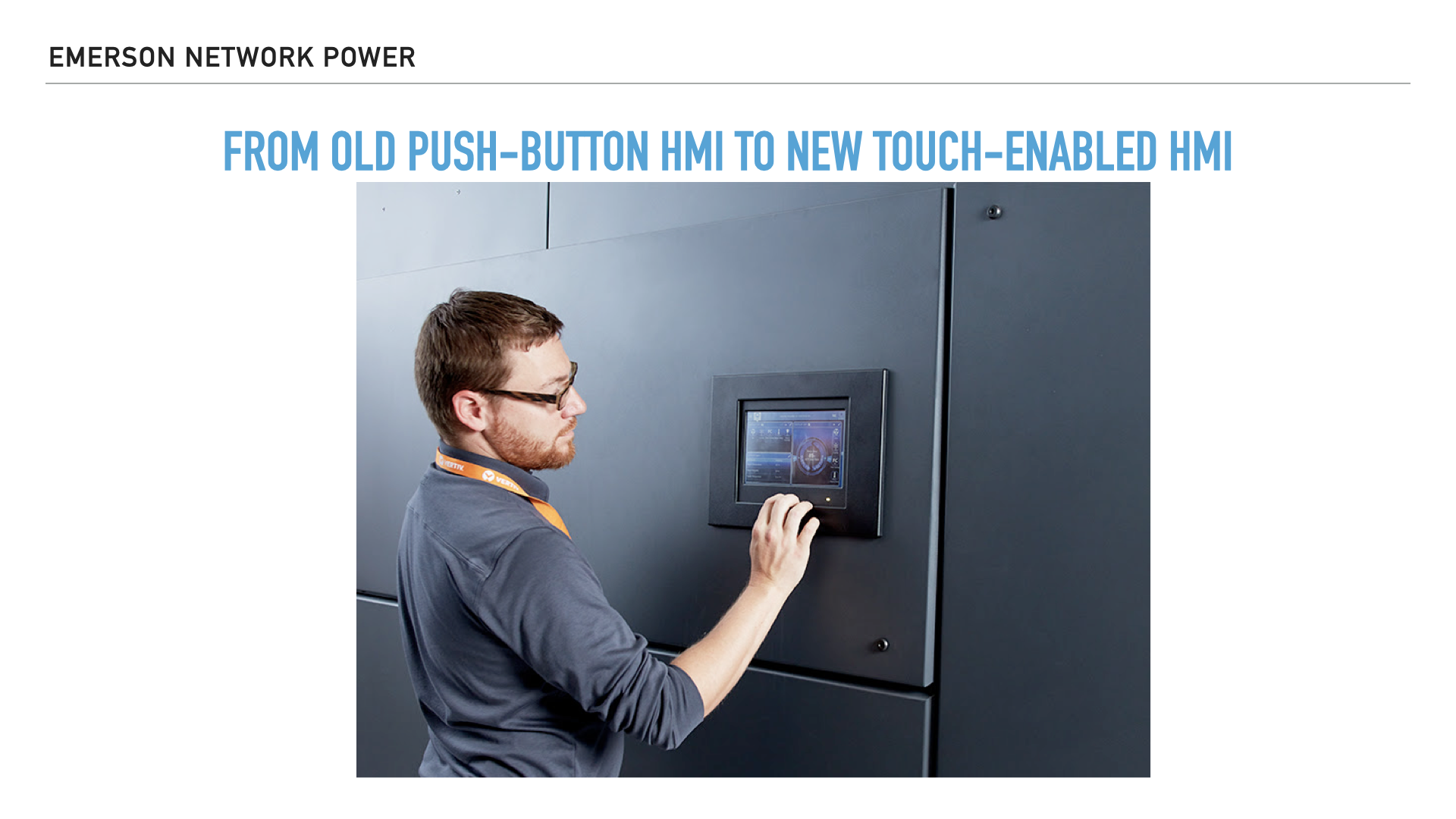
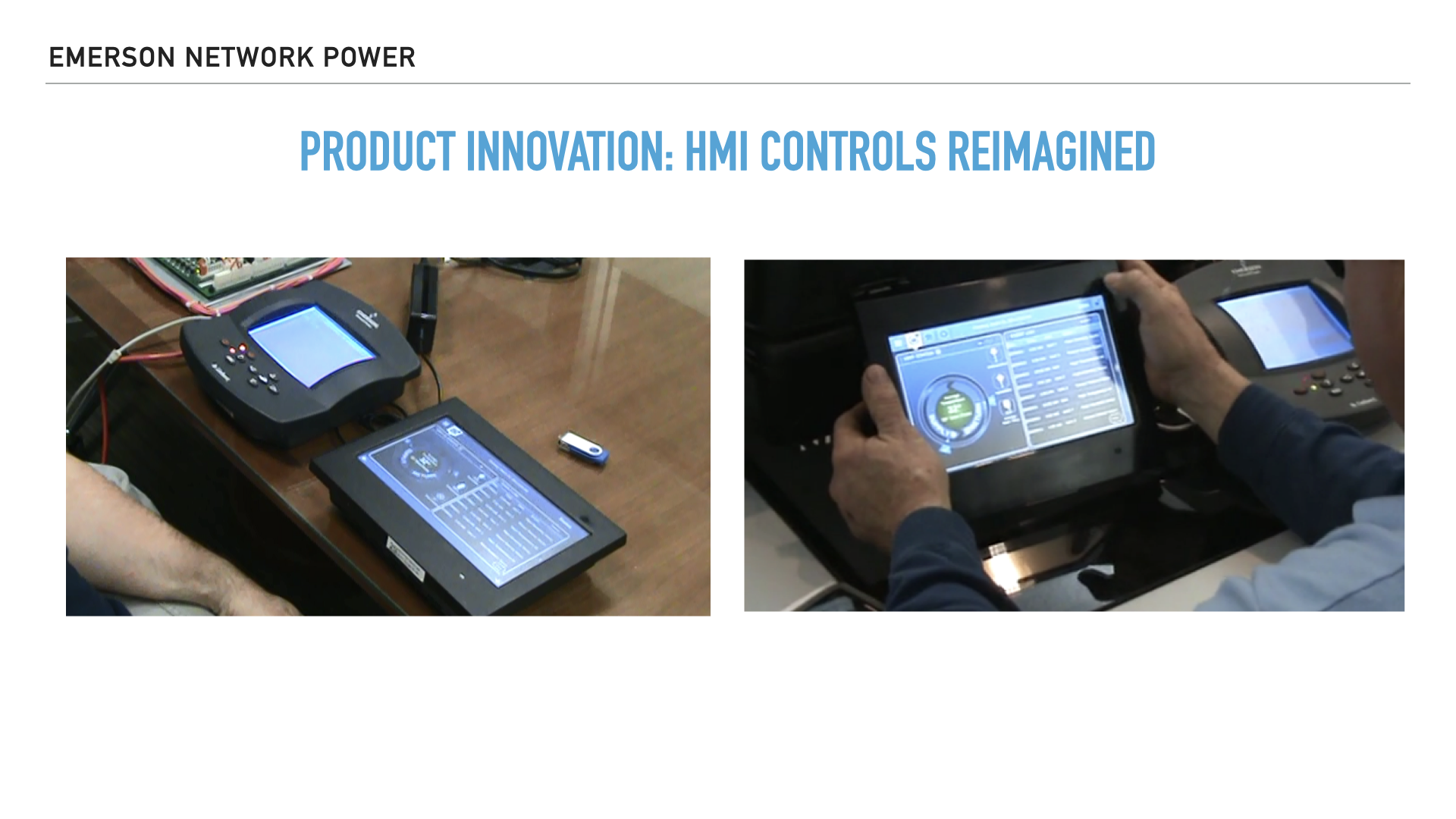
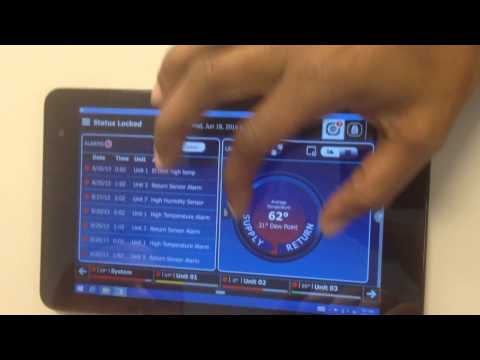
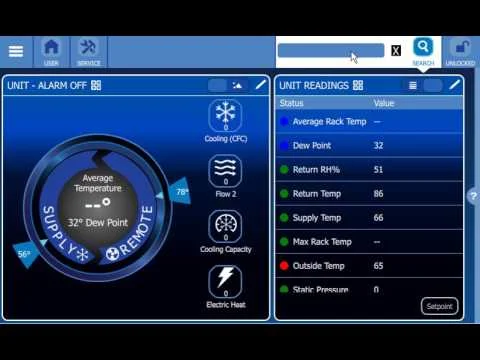
What we delivered — we successfully replaced the HMI from a cumbersome push-button interface to a frictionless touch-enabled interface
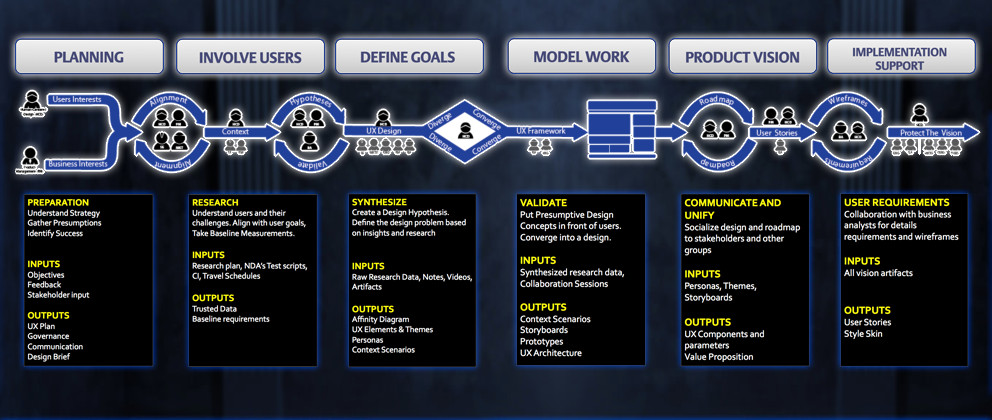
Our process was inspired in part by Alan Cooper’s thinking on Goal-Directed Design.

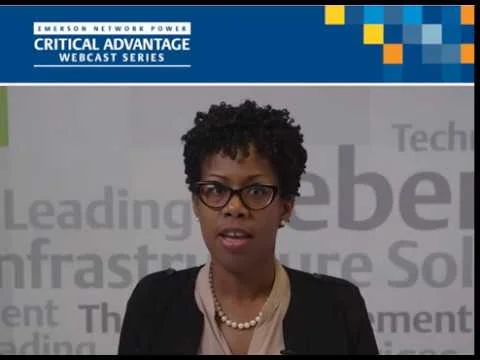
This video provides an overview of how we implemented the Goal-Directed Design process.
To ensure a deep understanding of user needs and real-world challenges, we conducted comprehensive contextual inquiry and field research across multiple product portfolios and product families. Our research efforts began with the Thermal Management Portfolio, where we engaged directly with end-users in their operational environments. By observing workflows, gathering insights, and analyzing user interactions across various product lines, we identified key pain points and opportunities for innovation.
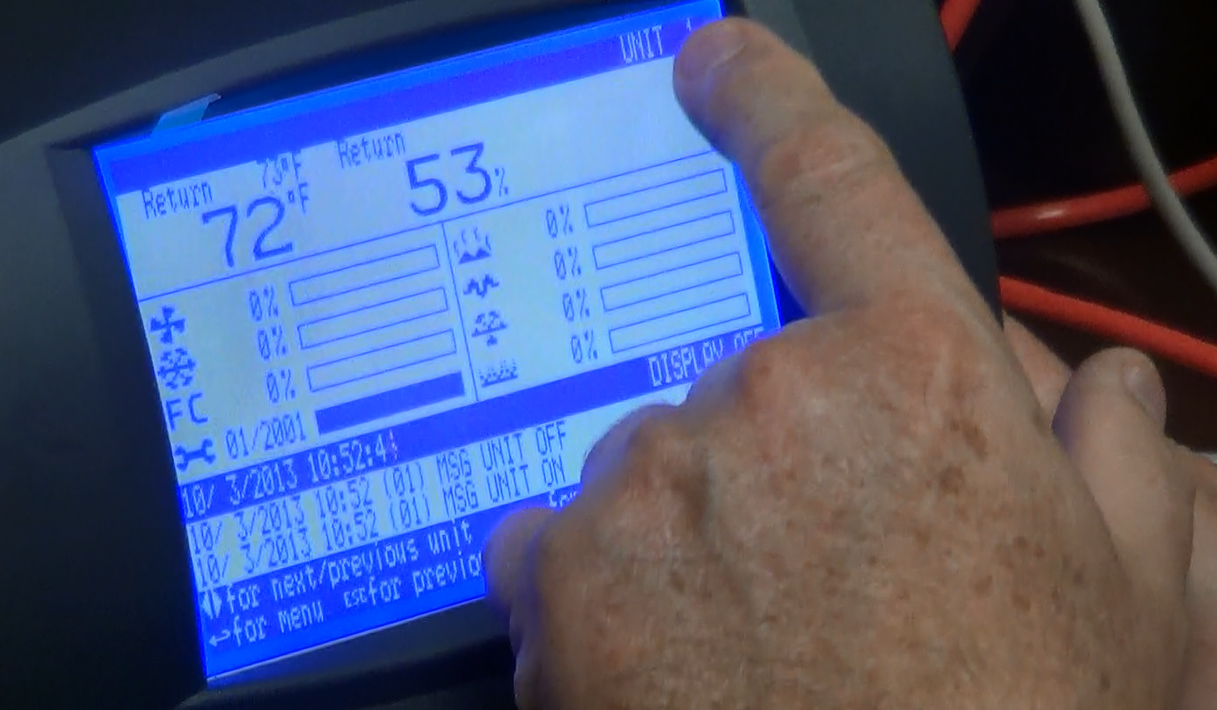
Through extensive user research conducted in data centers worldwide, we gained deep, firsthand insights into the pain points and frustrations users faced while interacting with the existing human-machine interface (HMI). By directly observing operators as they performed mission-critical workflows—such as responding to alarms, adjusting temperature setpoints, and managing thermal conditions—we identified key usability challenges that impacted efficiency, accuracy, and overall system effectiveness.

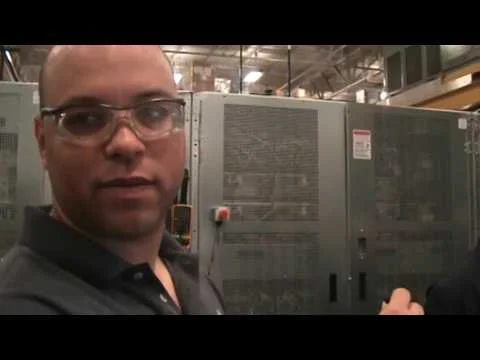
Conducting ethnographic research at scale required us to navigate complex geographical, linguistic, and cultural barriers to ensure that our design solutions addressed the diverse needs of a global user base. Here are a few excerpts from interviews with users, highlighting their frustrations with existing systems and their expectations for a more intuitive and efficient redesigned interface.

During user research and testing, we had to account for the unique environmental challenges of data centers, including variable noise levels, fluctuating lighting conditions, and critical safety considerations when operating mission-critical equipment. Designing an effective human-machine interface (HMI) required far more than just an intuitive visual experience—it demanded a holistic approach to usability.
Our design process incorporated ergonomic principles to enhance physical interaction, haptic feedback to improve touch-based controls, audio cues for effective operation in high-noise environments, and adaptive lighting to ensure visibility across different ambient conditions.
We conducted an extensive research and data analysis process, collecting thousands of data points and reviewing countless hours of recorded user interactions. Through rigorous synthesis and pattern identification, we extracted key insights that informed our design decisions, ensuring that every solution was rooted in real user needs, pain points, and behavioral trends. This deep analytical approach allowed us to create intuitive, user-centered experiences that aligned with both business objectives and industry best practices.
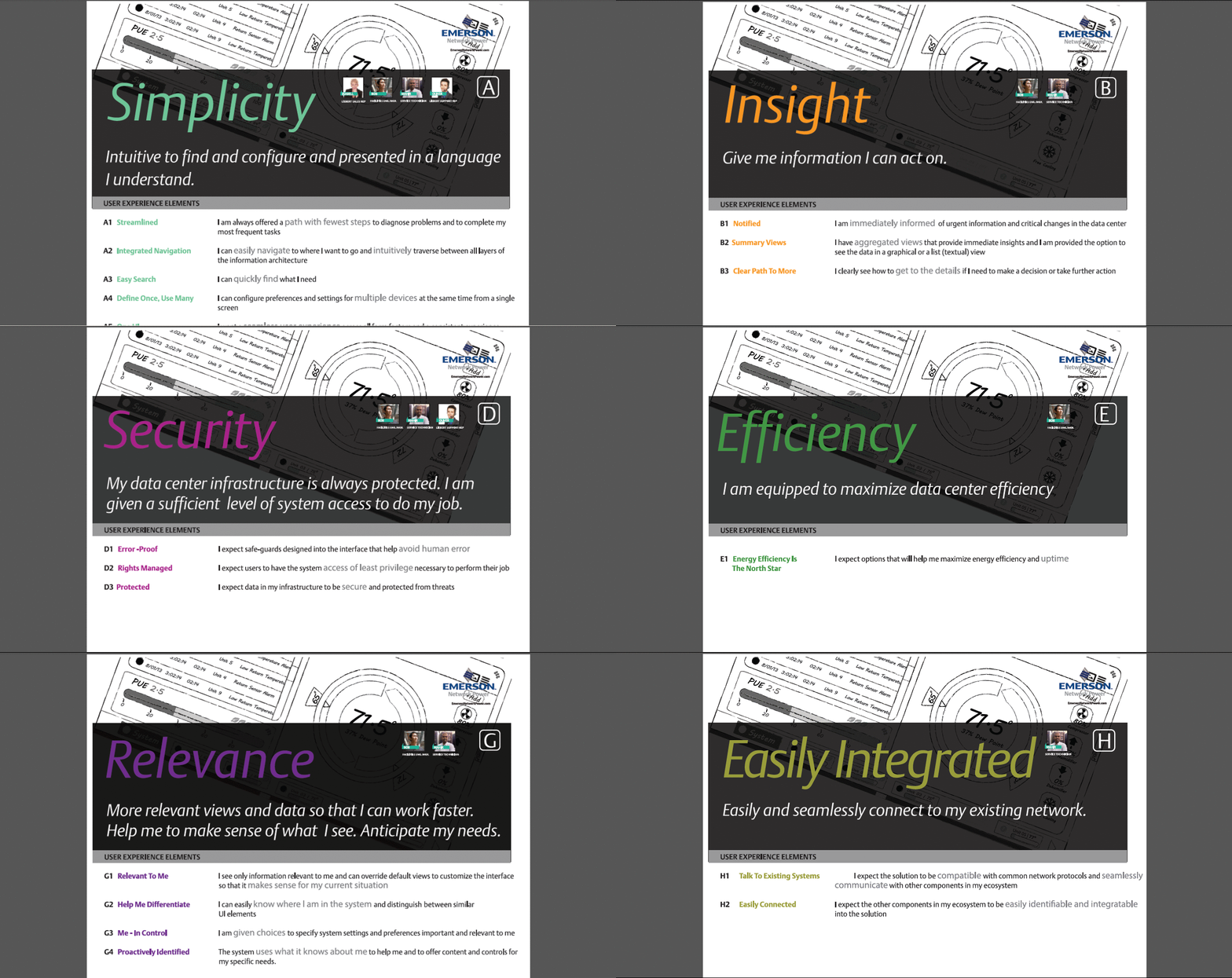
The research findings were synthesized into comprehensive UX Themes and Elements, which distilled key user goals, objectives, and aspirations into actionable insights. These themes served as a strategic foundation, guiding the design process to ensure that the final solutions were intuitive, user-centric, and aligned with both functional needs and business objectives. By identifying common patterns and pain points, we were able to prioritize design decisions that enhanced usability, streamlined workflows, and delivered meaningful value to end users..
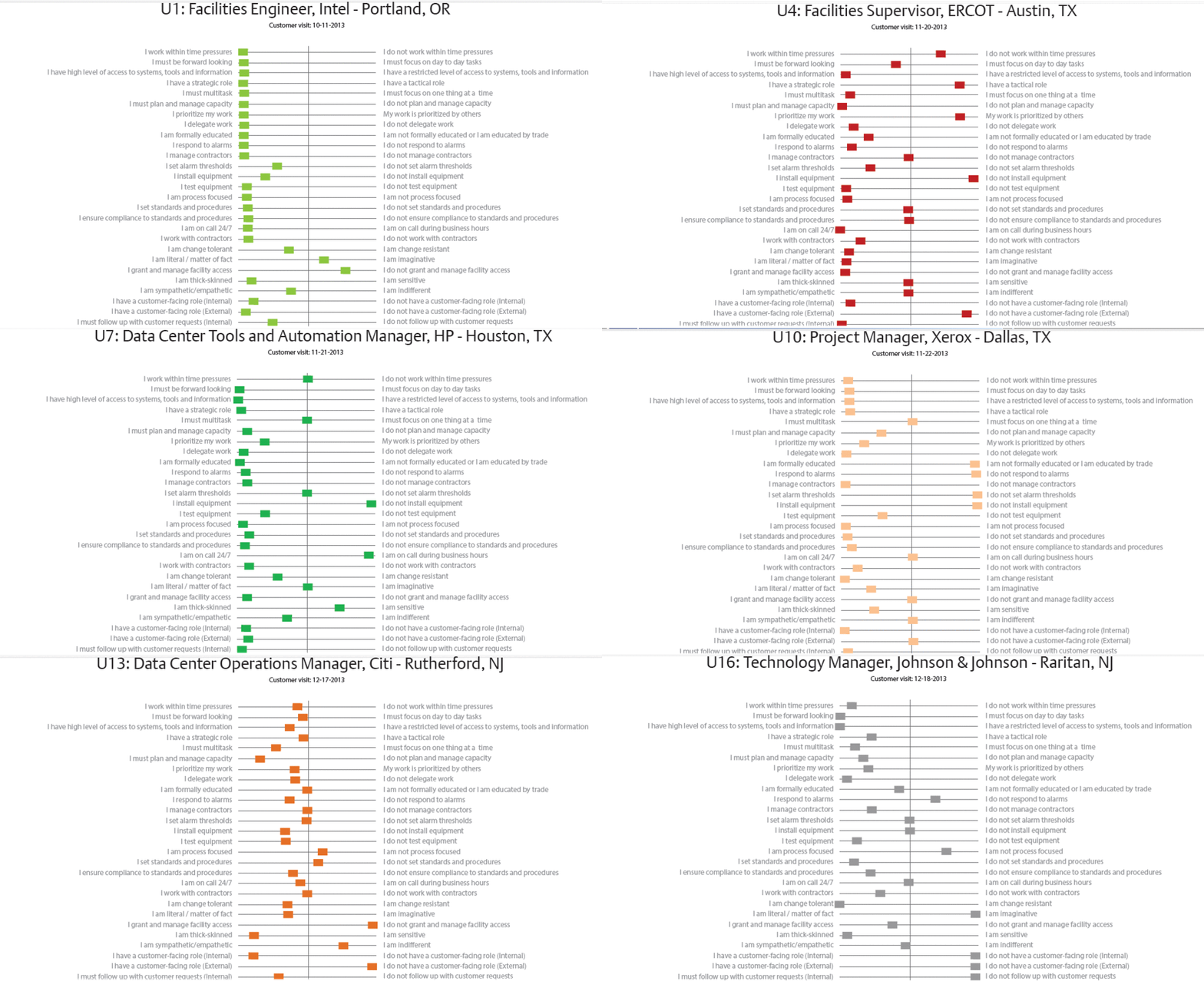
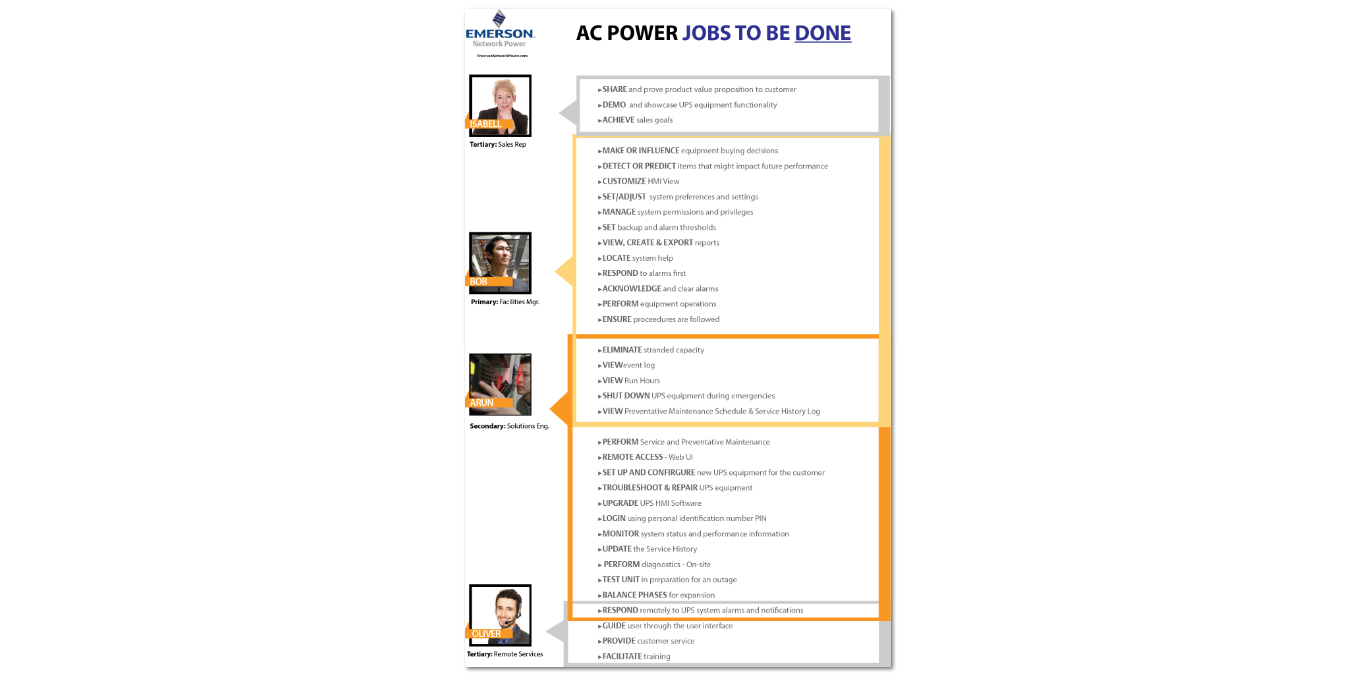
Beyond uncovering key UX themes from data clusters in the Affinity Map, we leveraged these insights to develop comprehensive user behavioral profiles, personas, and Jobs-to-Be-Done (JTBD) models. This approach enabled us to gain a deeper understanding of user needs, motivations, and workflows, allowing us to tailor design strategies that aligned with real-world use cases. By mapping patterns in user behavior, we ensured that our design solutions addressed core task pain points, improved usability, and enhanced overall user experience.
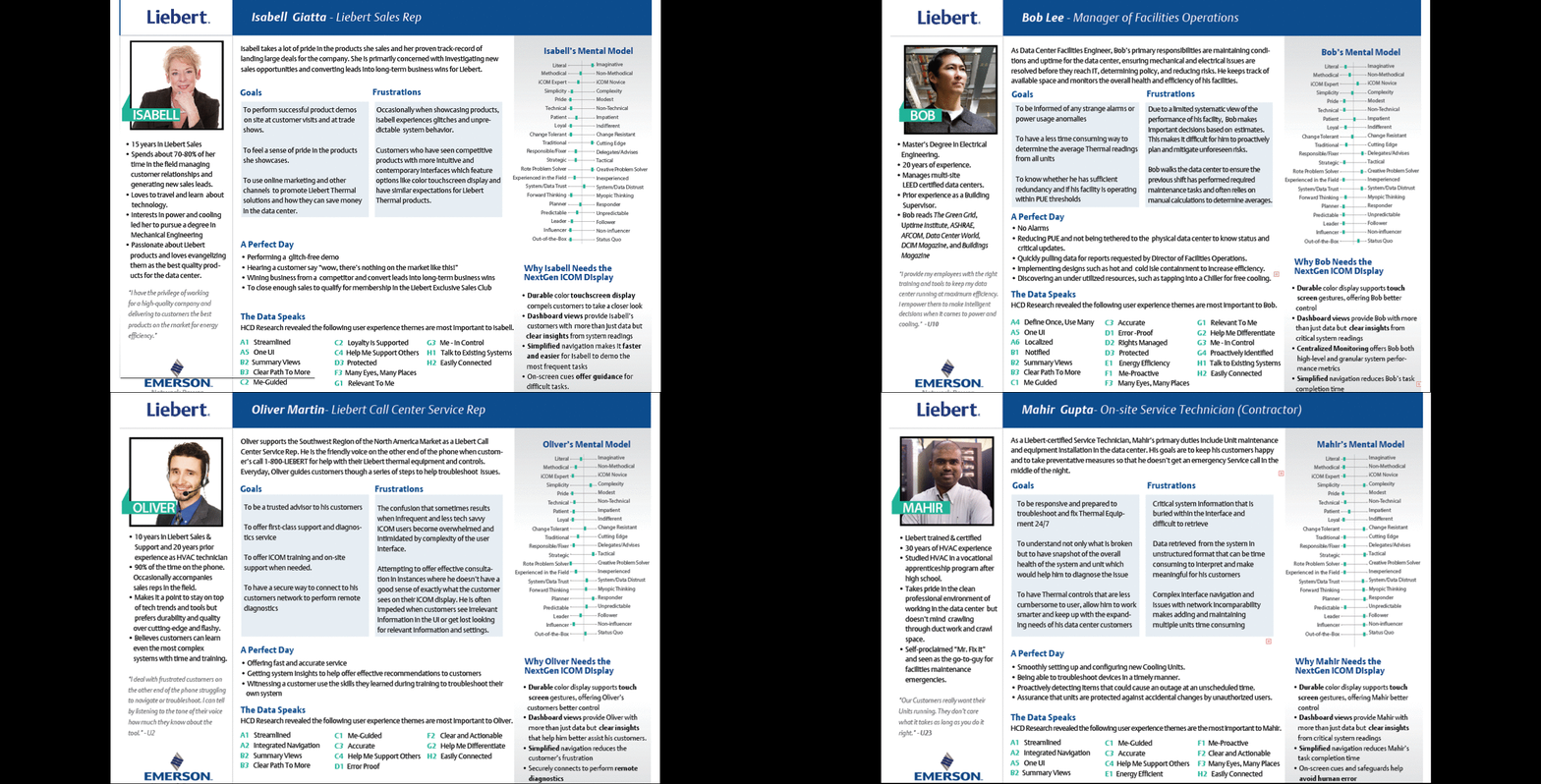
Through our research and data synthesis process, we were able to identify and define primary, secondary, and tertiary personas, gaining a deeper understanding of user needs, motivations, and workflows.
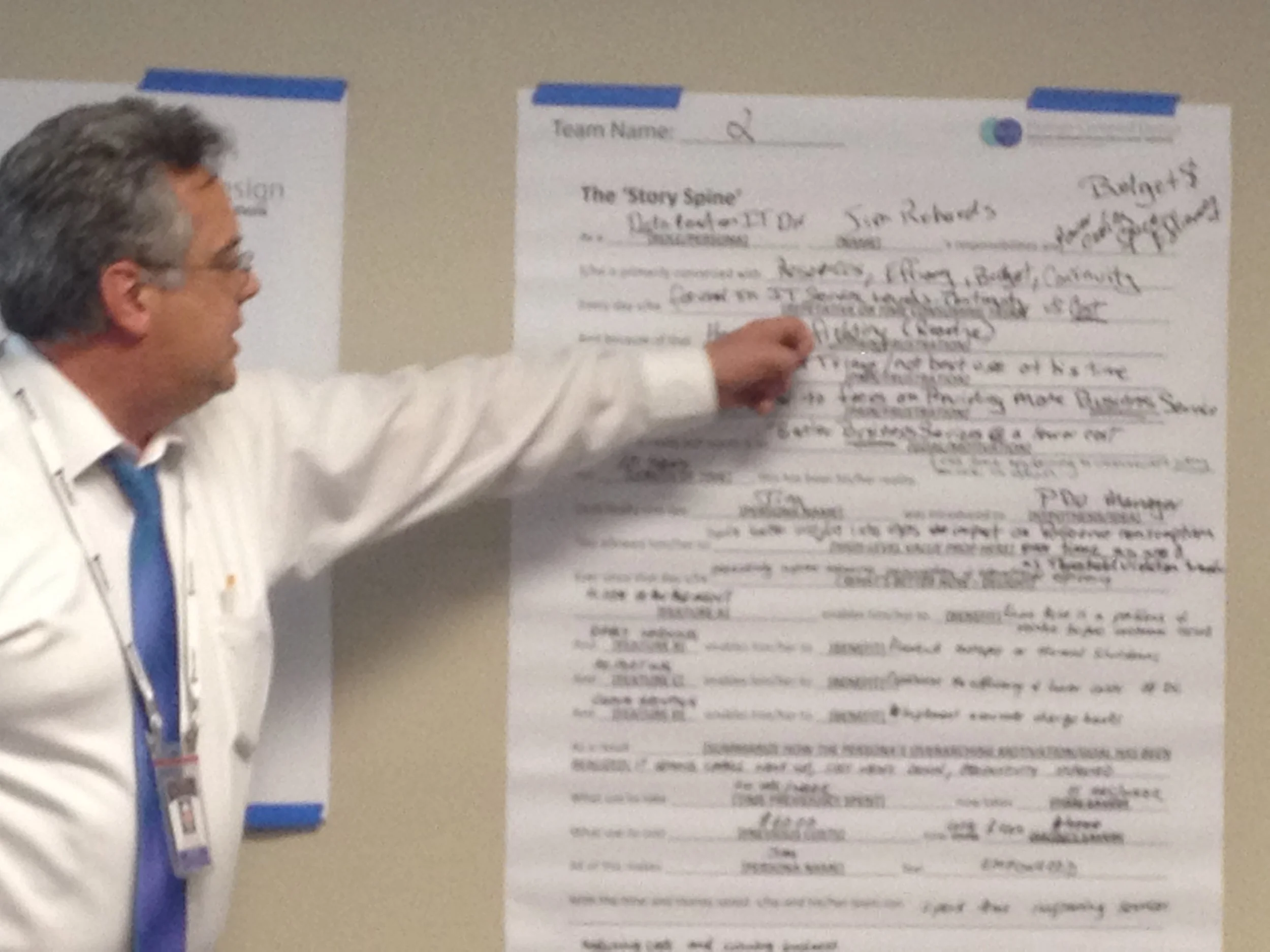
After conducting in-depth research to establish a clear understanding of the challenges and pain points faced by end users, I designed and facilitated Design Thinking workshops to foster collaboration and innovation. These hands-on, cross-functional sessions brought together non-designers, engineers, product managers, and other key stakeholders, integrating them into the design and co-creation process. By guiding participants through structured ideation exercises, user empathy mapping, and rapid prototyping, I helped my team brainstorm and refine design concepts that were not only innovative but also deeply aligned with user needs and business goals.

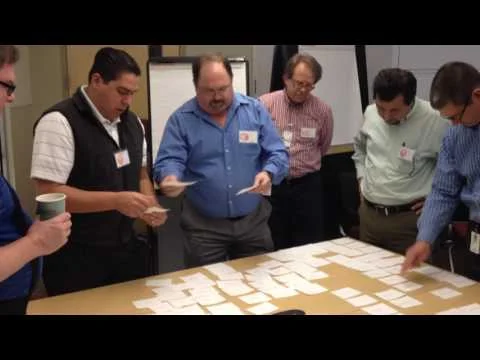
Card sorting is one activity that I would facilitate with workshop teams. The results were used as an input to planning the information architecture (IA) for the new design framework.
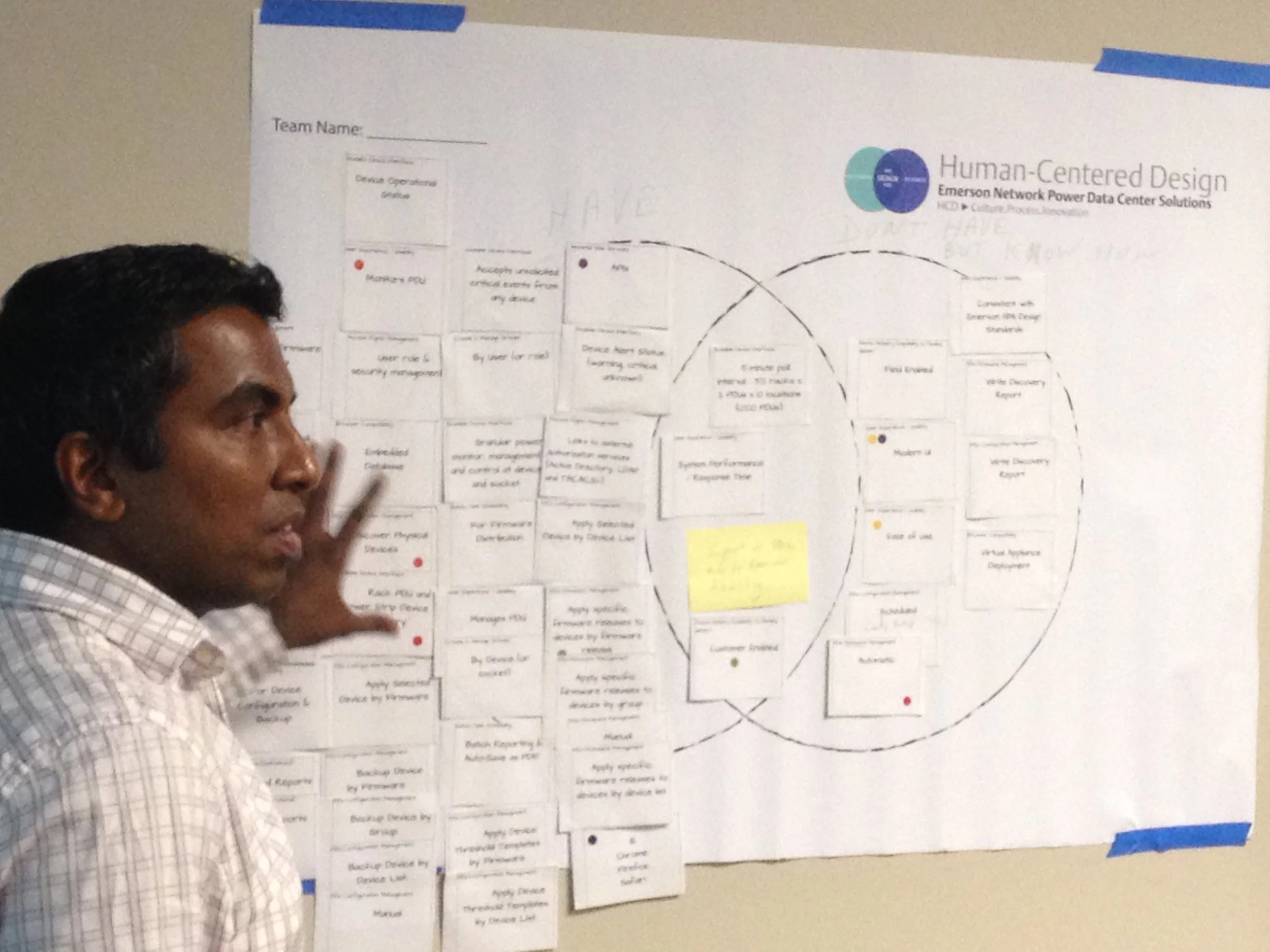
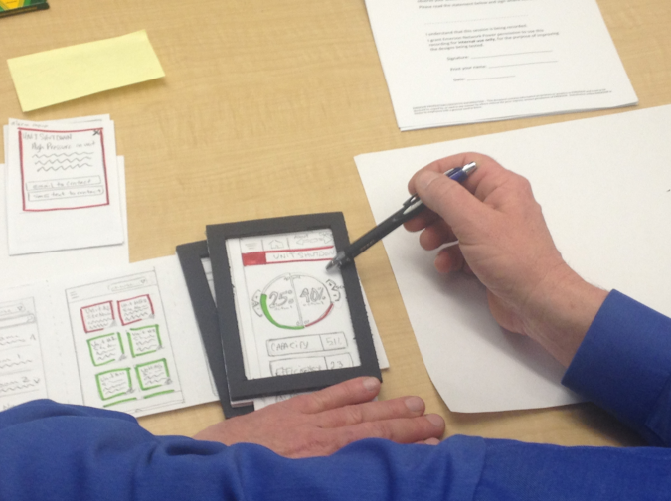
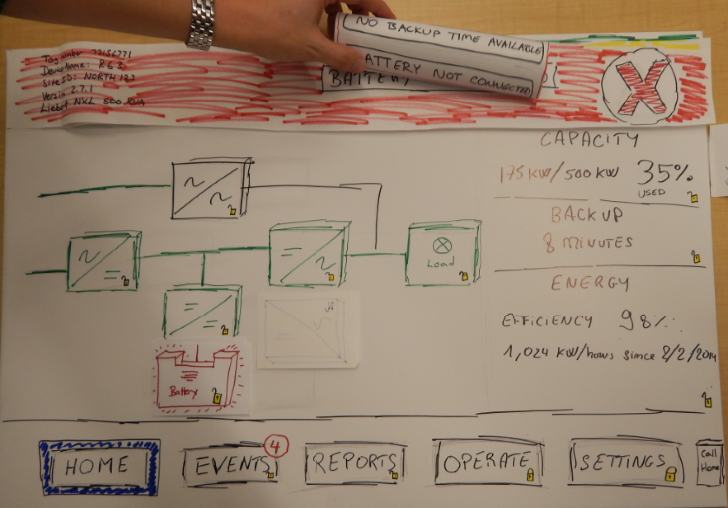
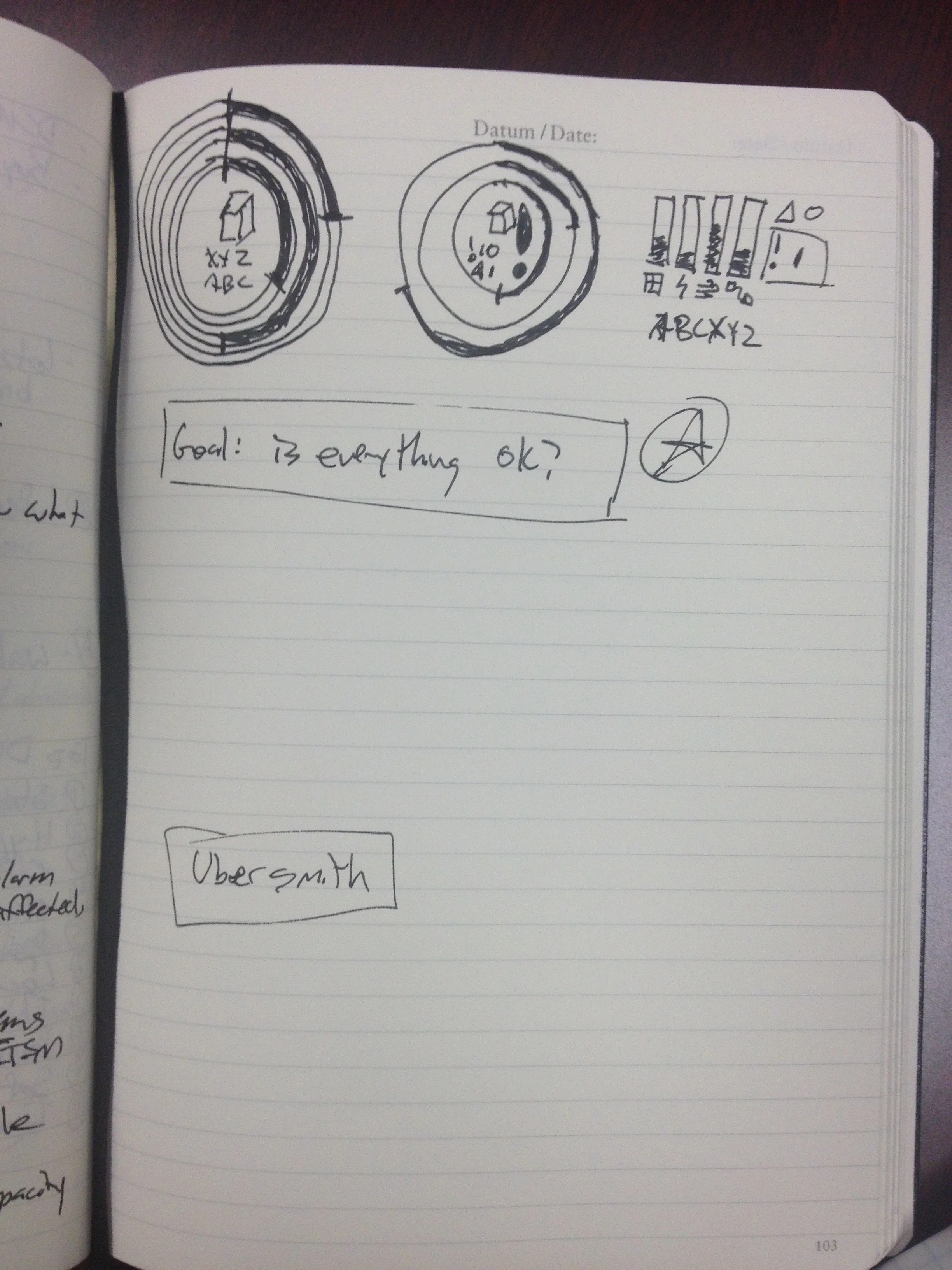
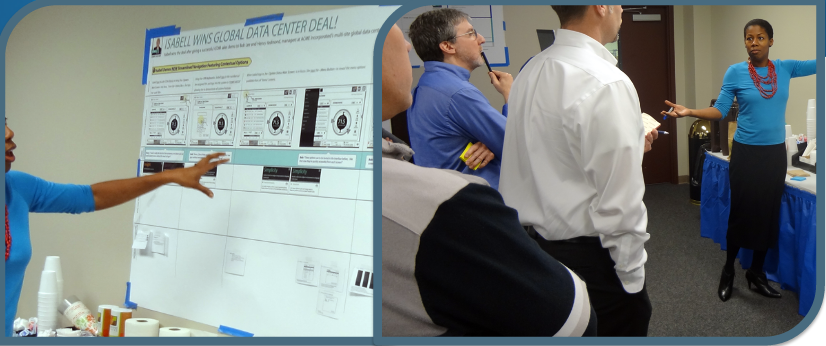
I led hands-on workshop sessions, guiding teams through the process of creating low-fidelity prototypes to explore and visualize potential interface improvements. In these sessions, I facilitated multiple small groups simultaneously, encouraging diverse perspectives and iterative thinking. Each group developed slightly divergent prototypes, allowing for a broader exploration of design possibilities and uncovering innovative solutions that might not emerge through a singular design approach.
On the final day of the three-day workshop, we brought in real end users to evaluate and provide feedback on the early prototype concepts. To ensure the insights were effectively leveraged, I coached the workshop teams on how to analyze user feedback, identify key improvement areas, and iteratively refine their paper prototypes. This hands-on approach not only strengthened the usability and functionality of the designs but also reinforced a human-centered mindset, empowering teams to create solutions that truly addressed user needs.
Once the prototypes were finalized, I provided hands-on training to the workshop teams, equipping them with storytelling techniques to effectively communicate the value and impact of their ideas. This preparation was essential for the final day of the workshop, where senior leaders were invited to review the outcomes. By guiding participants in crafting compelling narratives, I ensured they could confidently articulate their design concepts, strategic rationale, and potential business impact, fostering stronger alignment between innovation teams and executive stakeholders.
Following the successful completion of user research and collaborative workshops, my team had gathered critical insights to inform the foundational strategy for the new design system. With a deep understanding of user needs, workflows, and system requirements, we began conceptualizing potential design solutions and information architecture that would drive usability and efficiency.
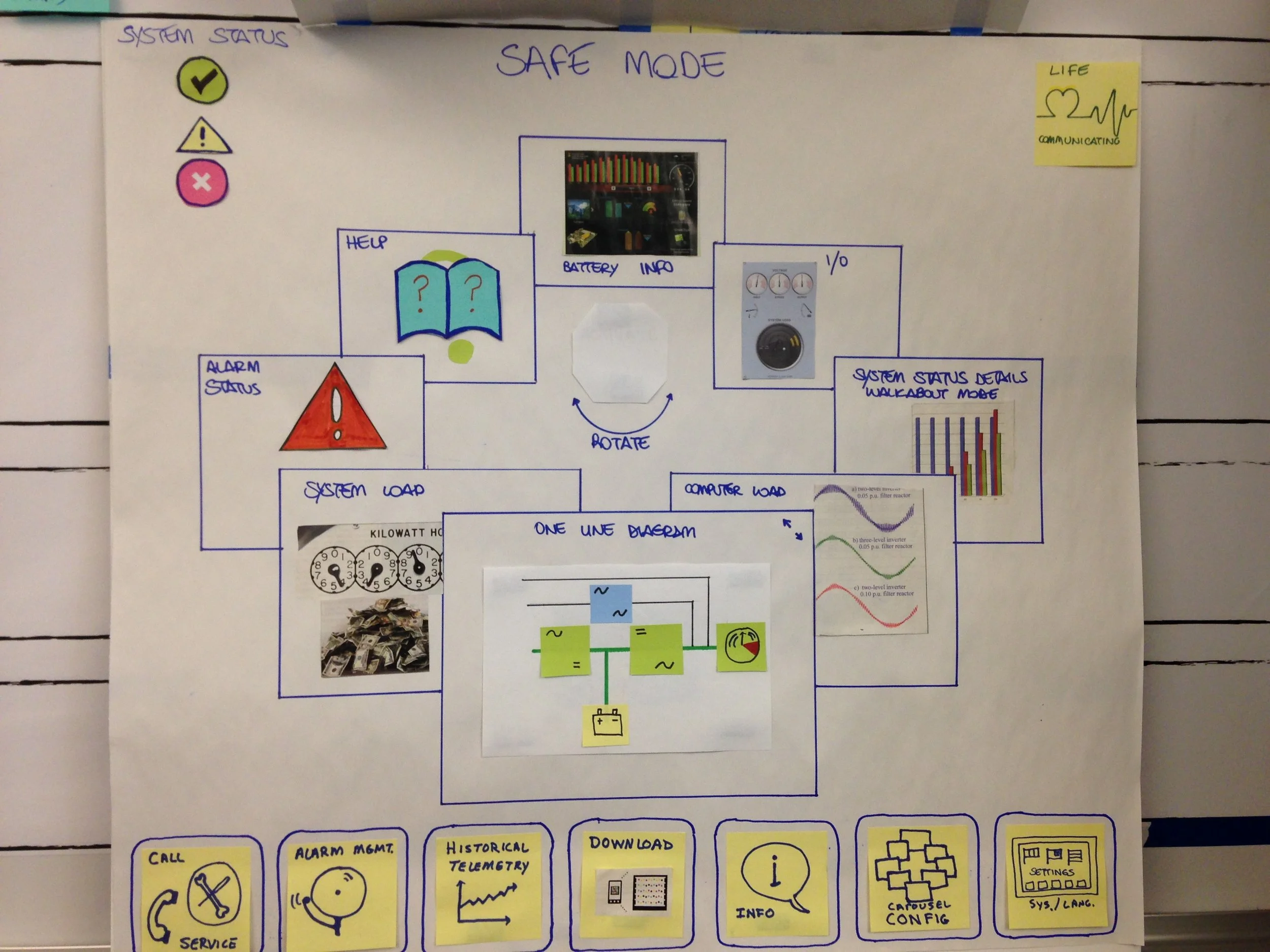
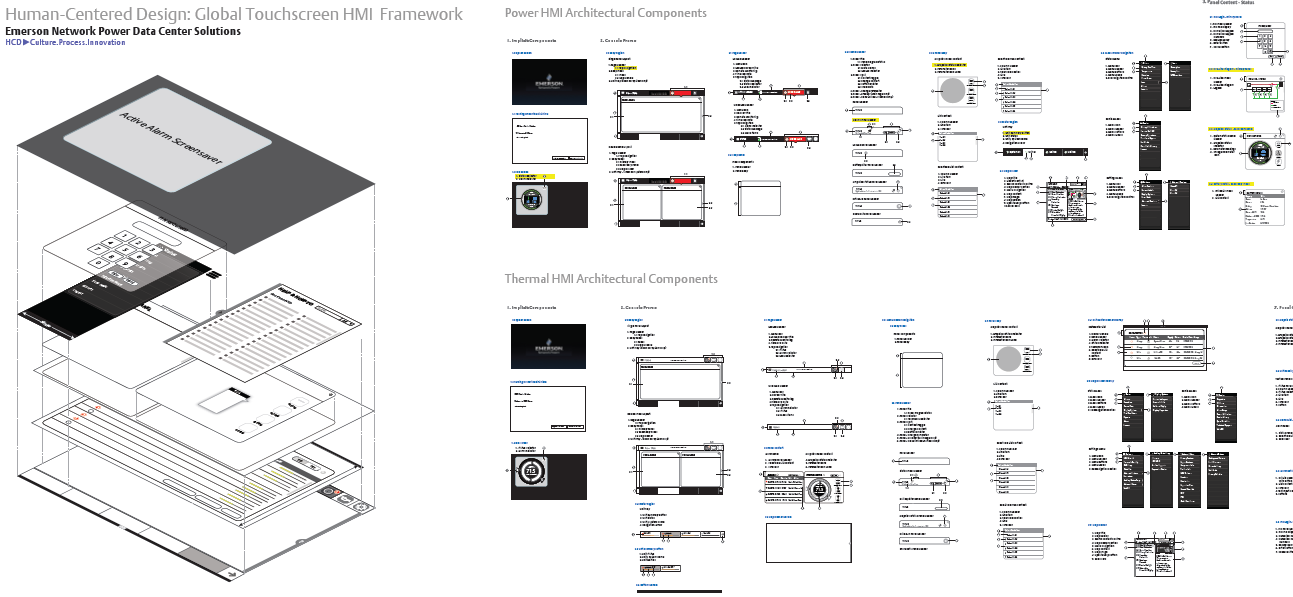
A key deliverable from my UX team was the creation of detailed architectural drawings, such as the one shown here. These blueprints served as a strategic framework, guiding the development of a scalable and intuitive design system that seamlessly integrated across devices, product lines, and user touchpoints.
Building on the UX Plan and initial rough prototypes developed during the design workshop, my design team translated early concepts into polished, high-fidelity UX mockups. These refined designs served as the foundation for iterative prototyping, enabling us to progressively enhance the functionality, usability, and visual coherence of the user experience. By leveraging user insights and design best practices, we ensured that each iteration moved closer to a seamless, intuitive, and highly functional final product.
The new UI framework architecture designed by my team not only eliminated key pain points but also established a cohesive, scalable design system that unified the look, feel, and functionality of applications across the entire product ecosystem. By creating a consistent visual language and interaction model, we enhanced usability, cross-product integration, and brand continuity, ensuring a seamless and intuitive experience for users across diverse device types and form factors.

Frankfurt, Germany — Evaluating design concepts with global customers often required a translator to travel with us.
Once the Product Vision was finalized, I strategically planned and led roadshows to ensure cross-functional alignment and stakeholder engagement. These sessions provided my team with a platform to present and walk through the proposed architecture and design solutions with product management, engineering, and other key collaborators. By fostering open dialogue, gathering feedback, and addressing technical considerations, these roadshows played a crucial role in refining our approach, securing buy-in, and driving a shared vision forward—ultimately ensuring a seamless transition from concept to execution.
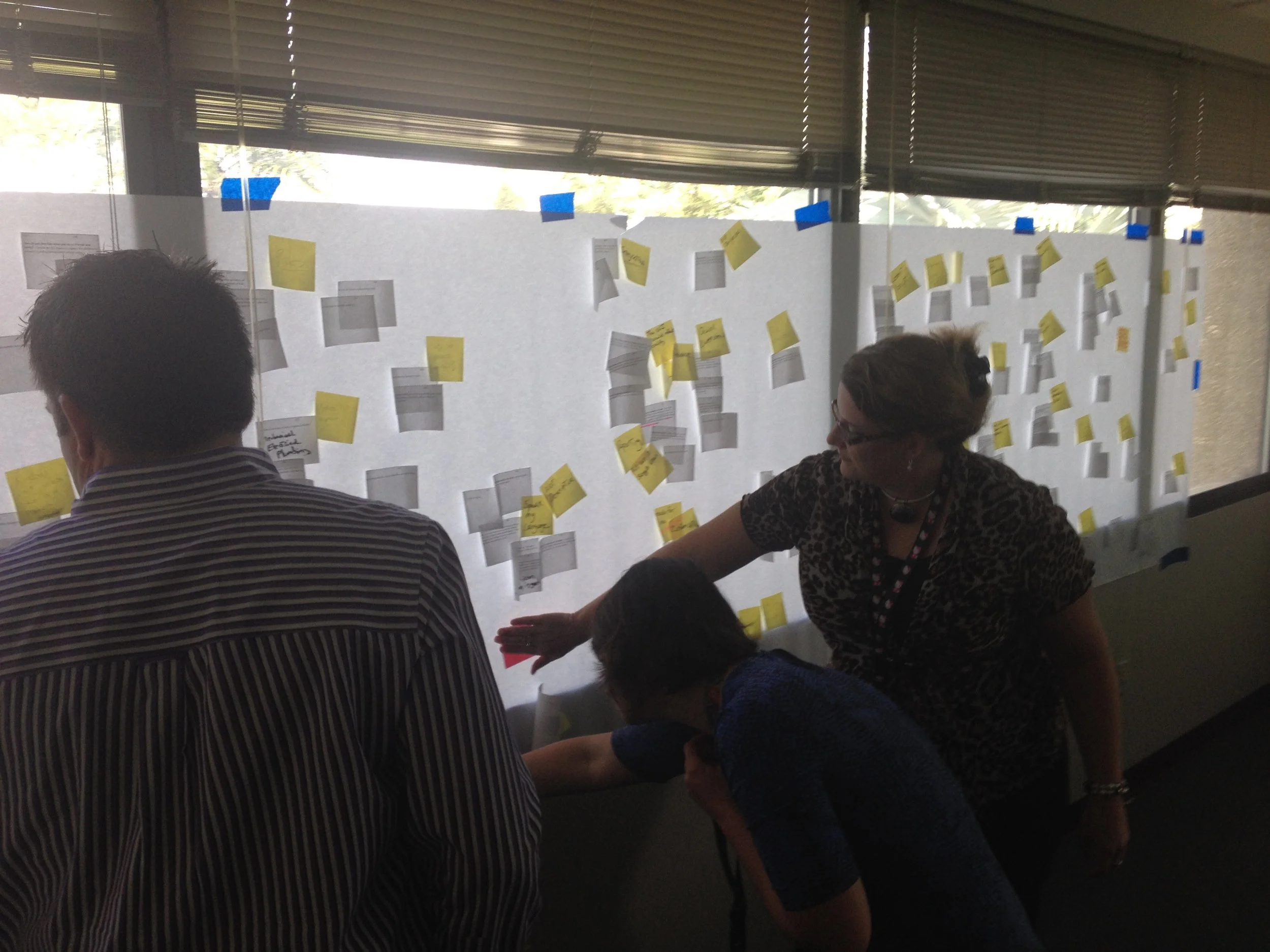
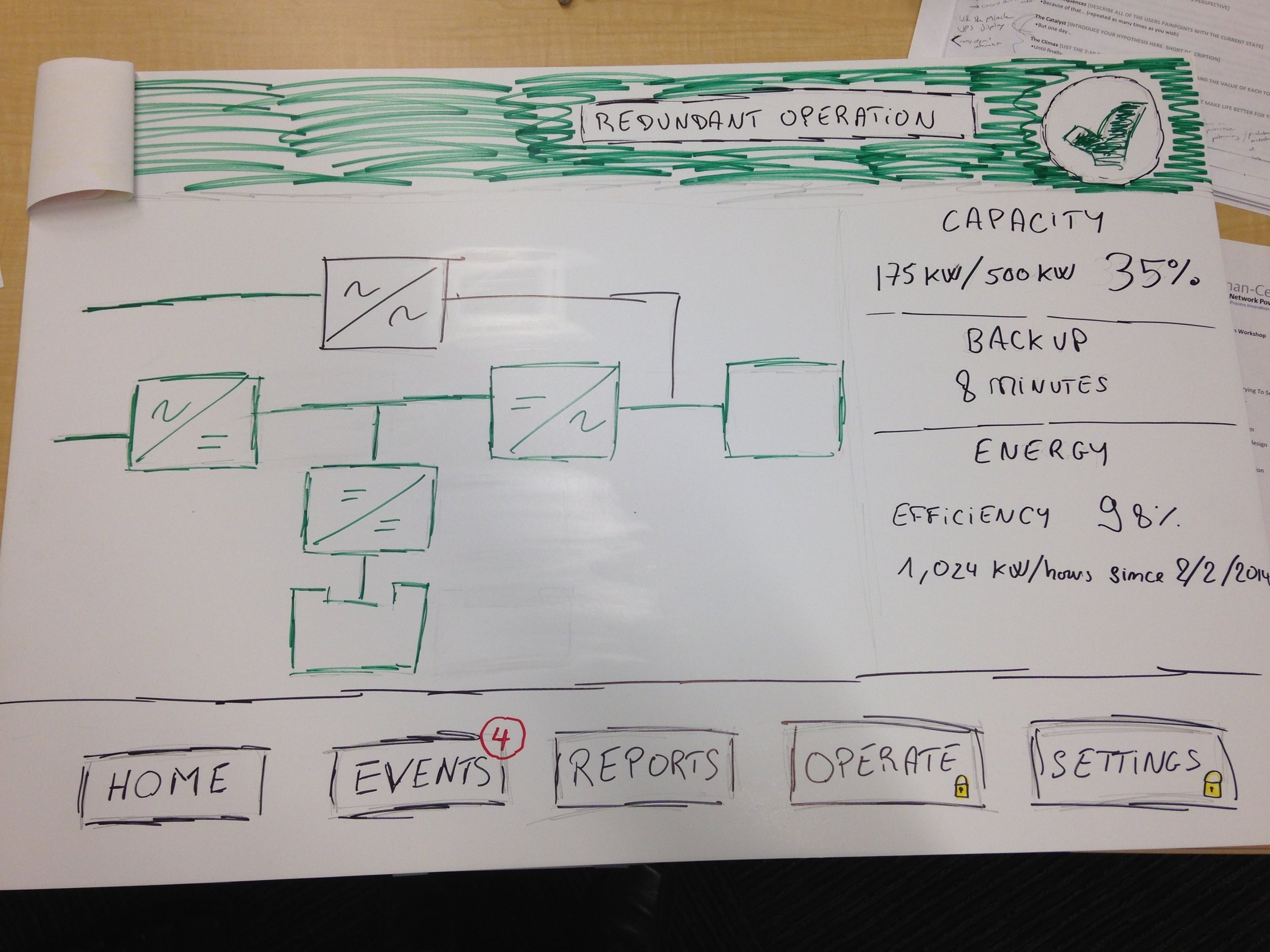
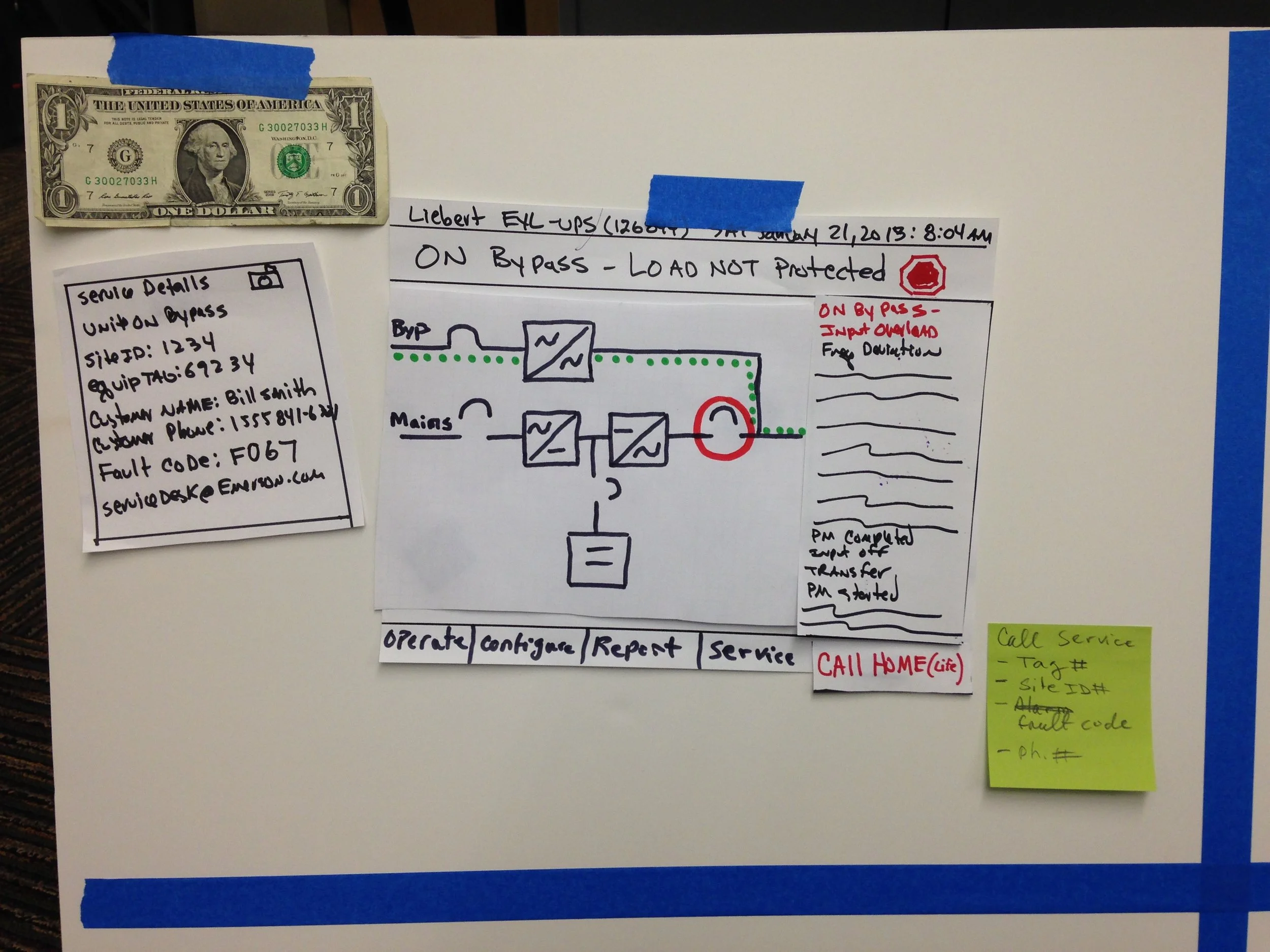
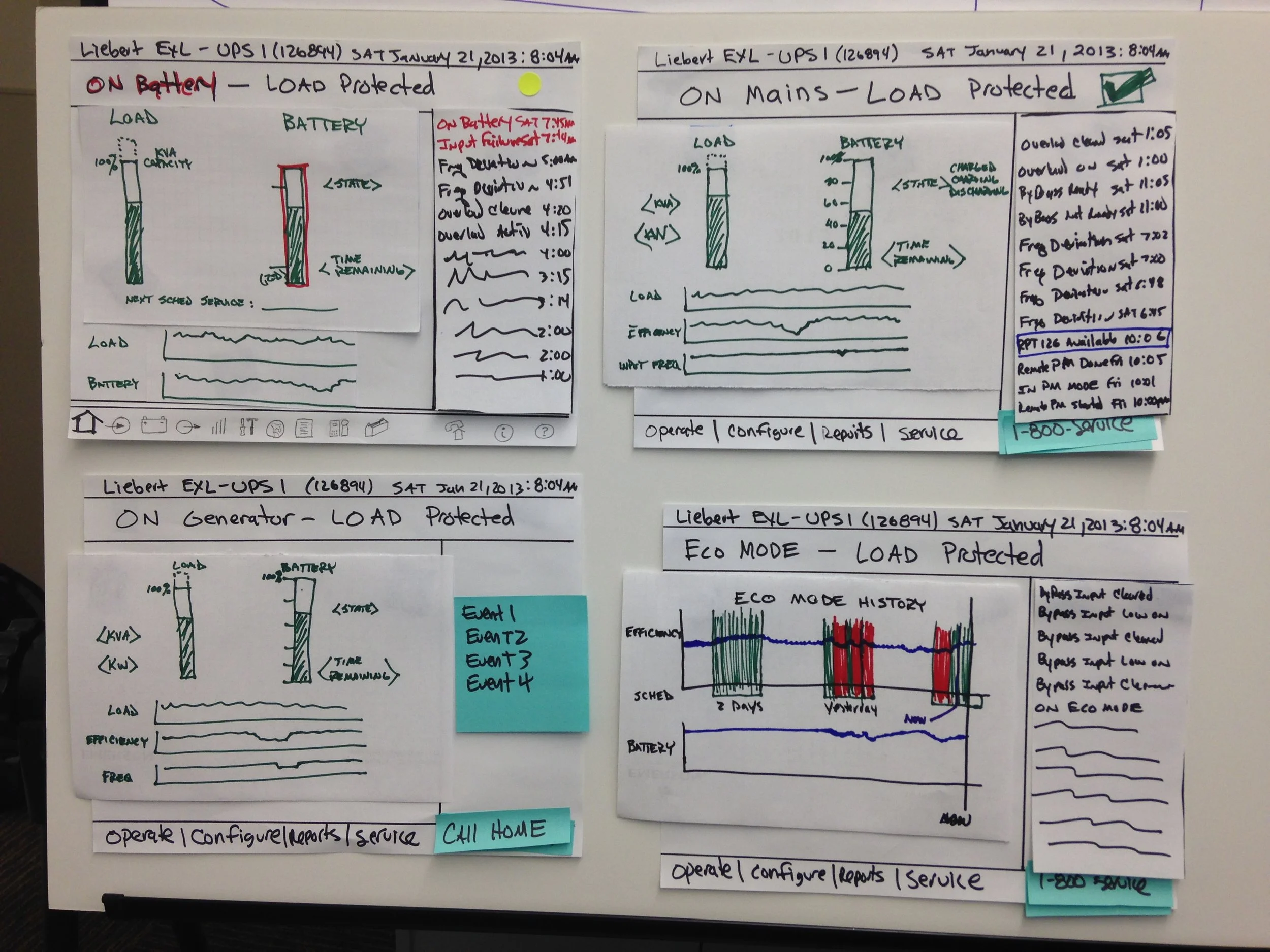
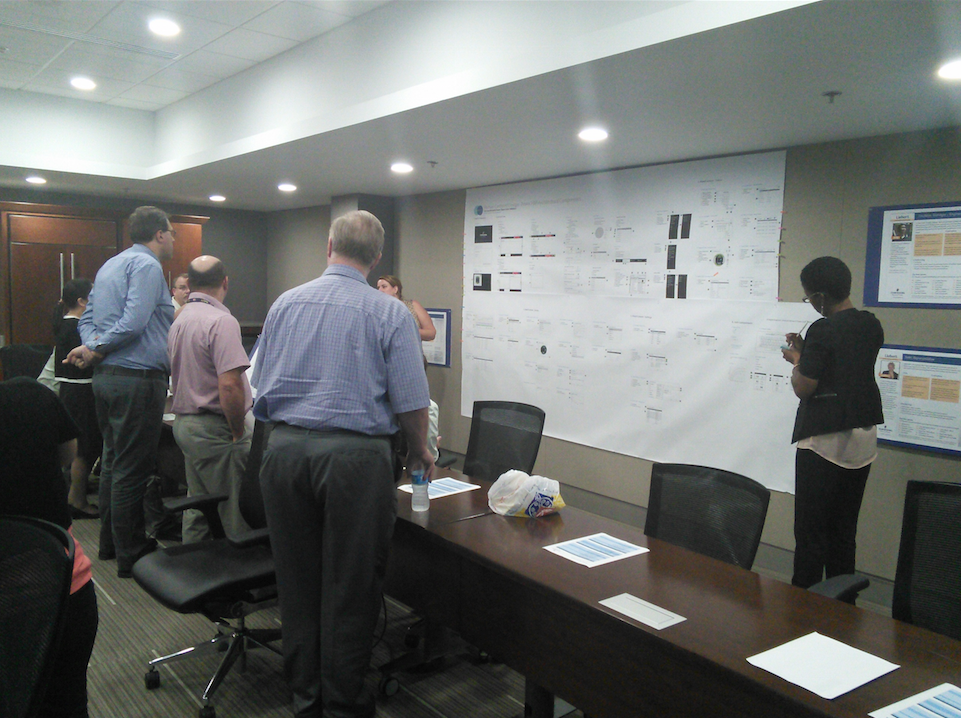
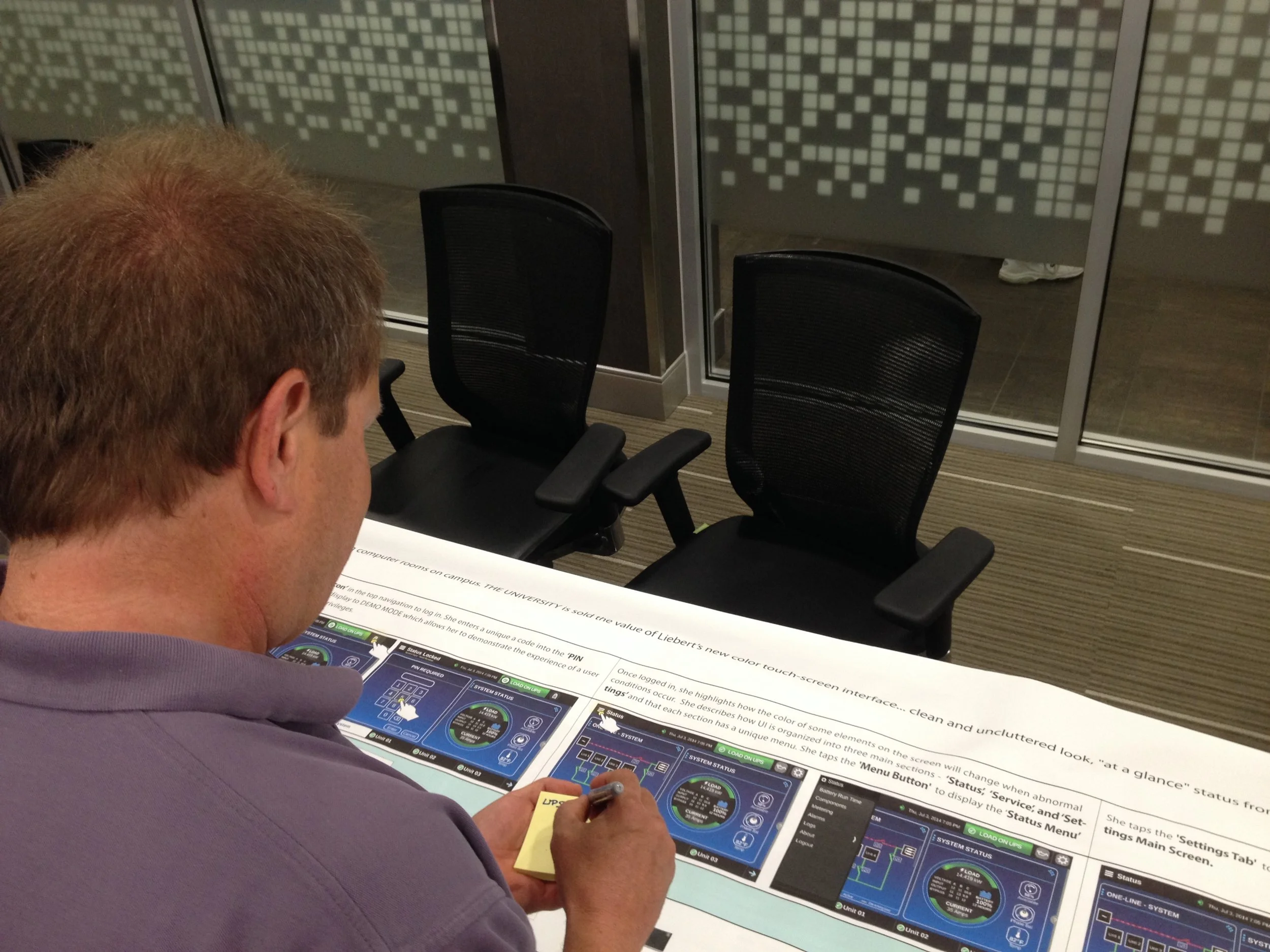
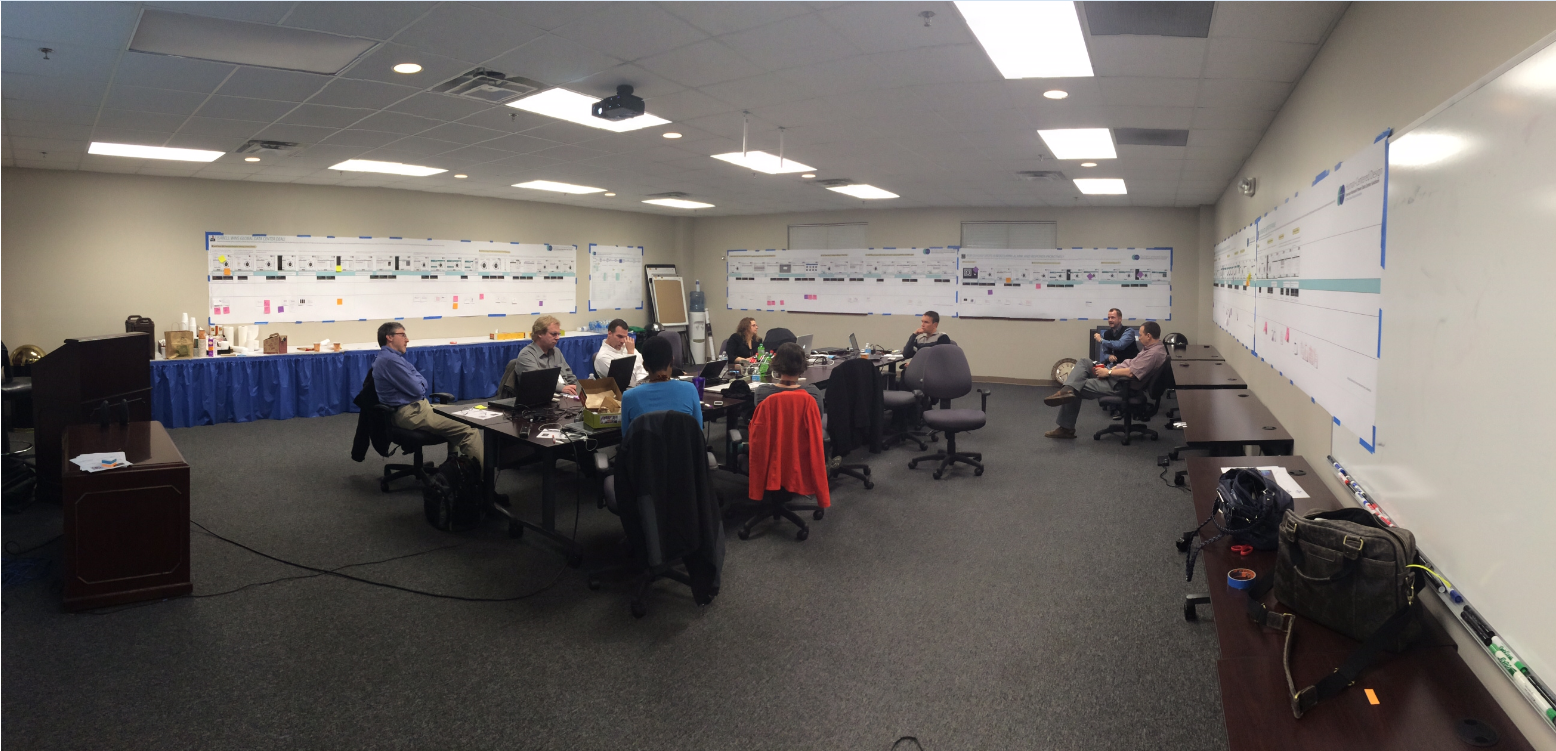
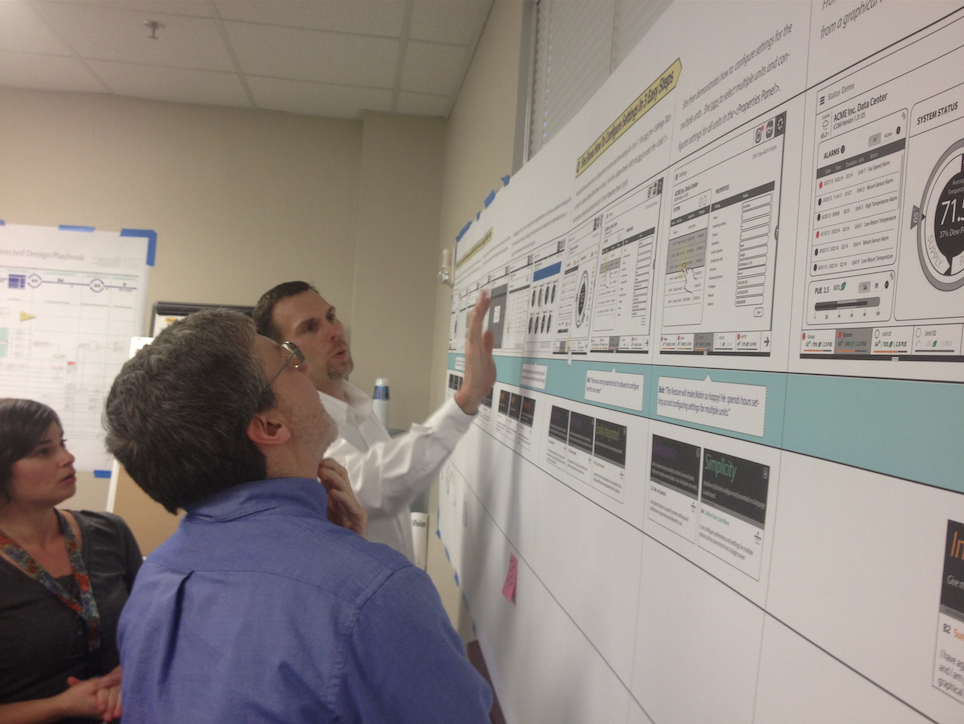
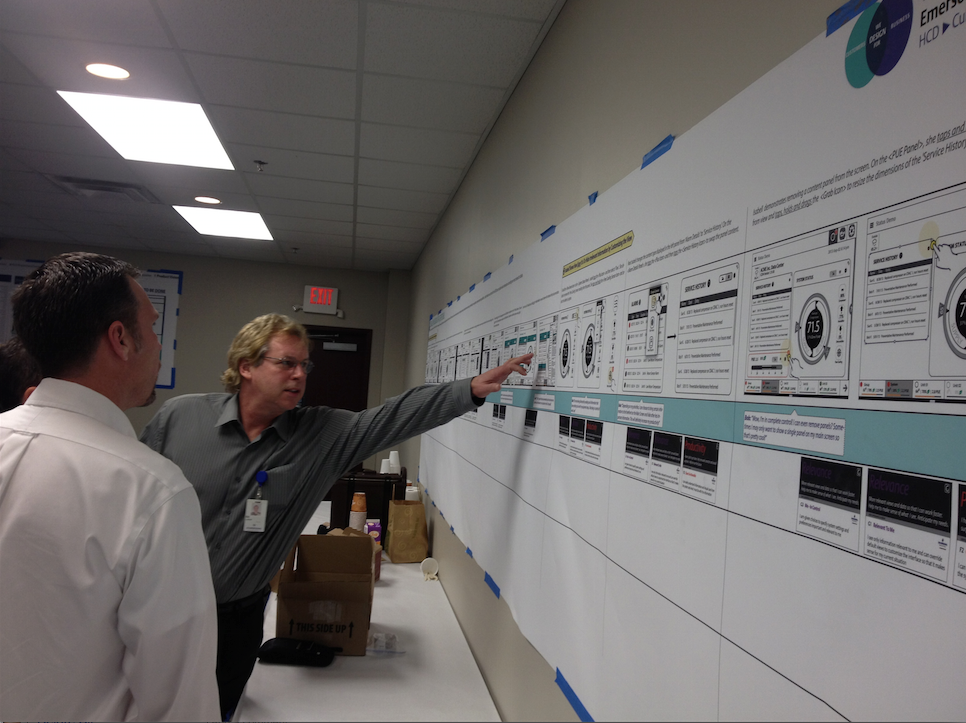
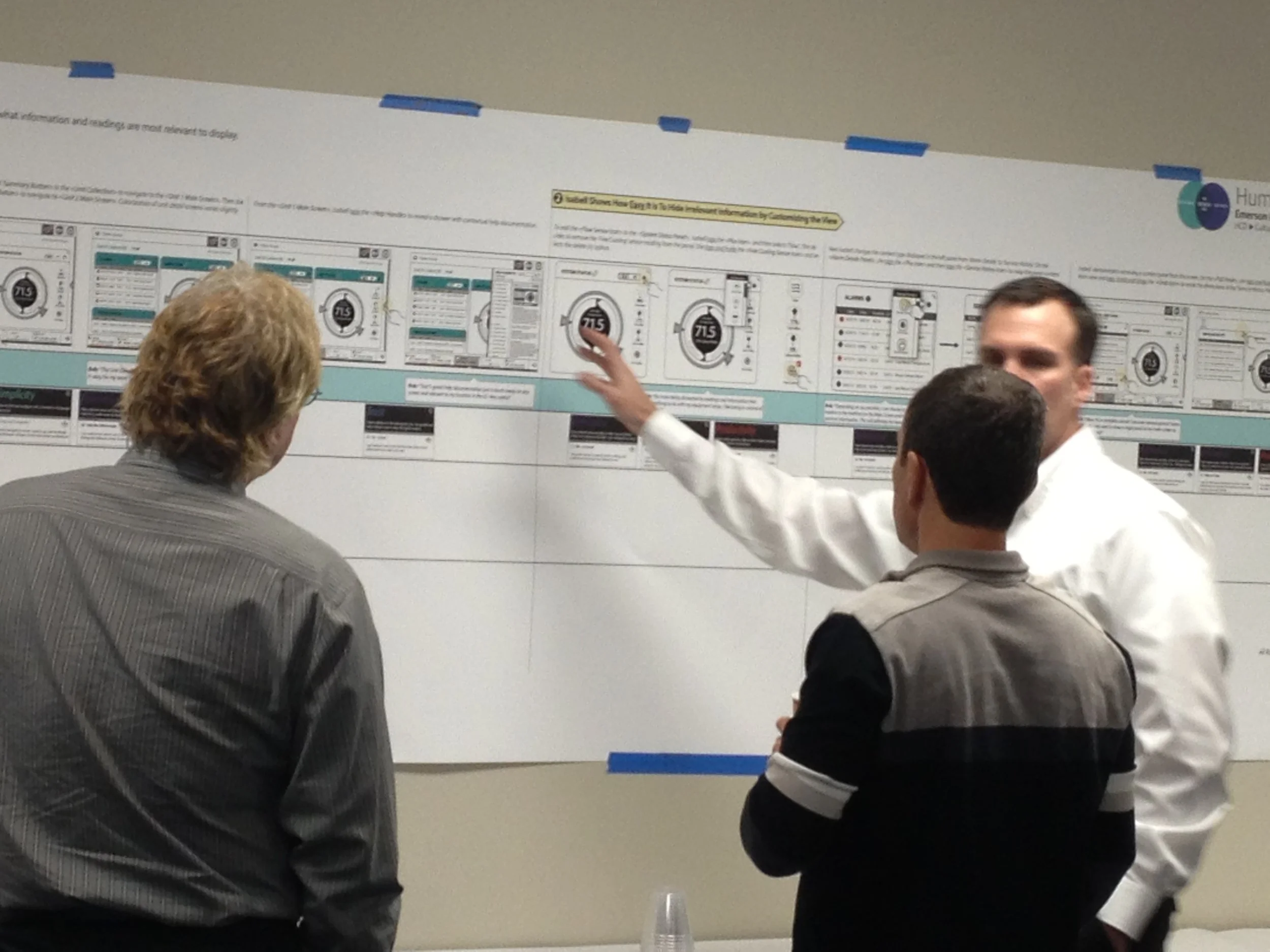
As part of our Product Vision Roadshows, we leveraged large-scale physical storyboards as a powerful communication tool to articulate customer journeys and the overarching design vision to engineering teams. These visual narratives provided an immersive, interactive way to showcase the end-to-end user experience, making complex workflows more tangible and accessible.
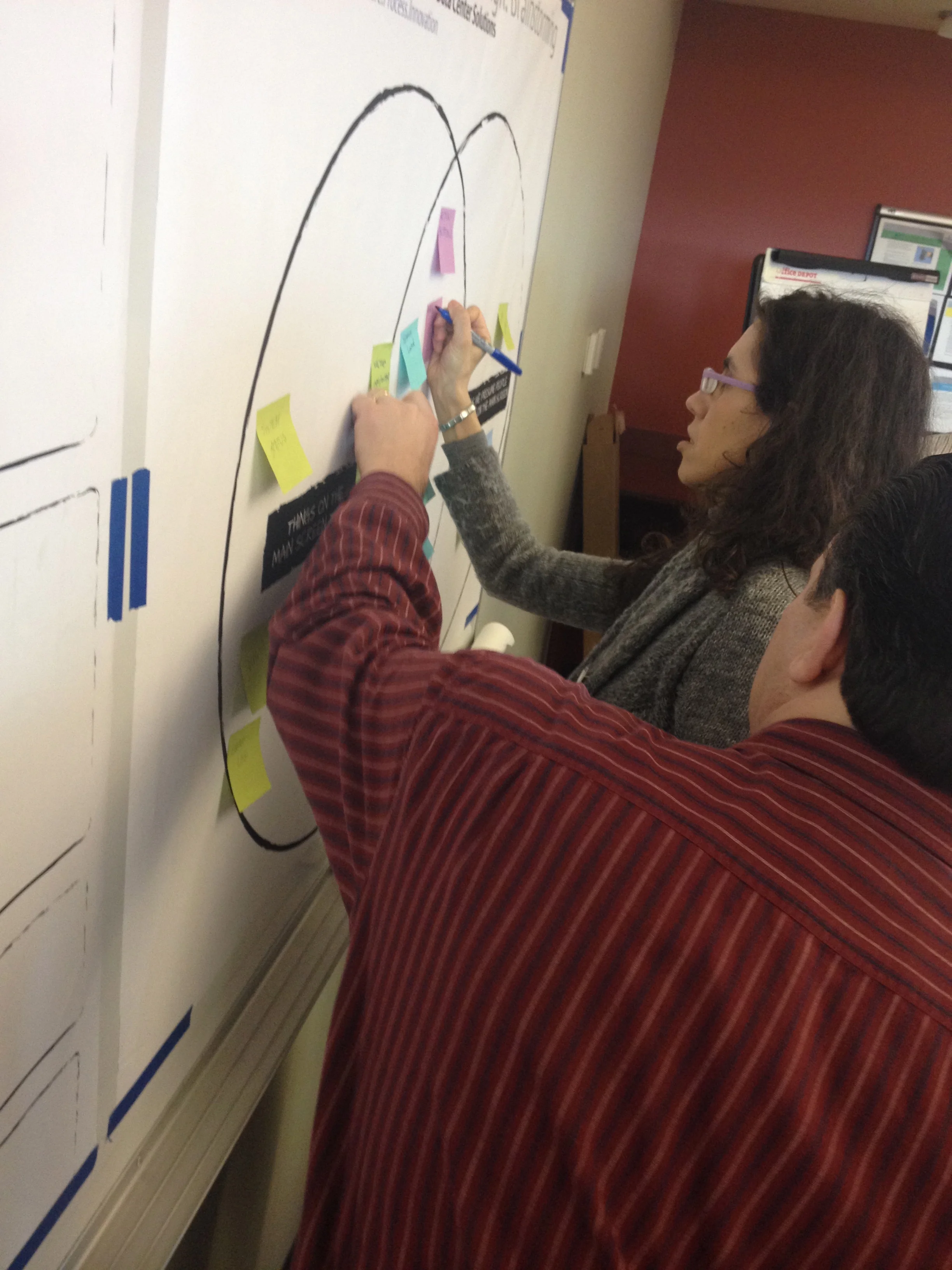
To foster engagement and cross-functional collaboration, engineers were encouraged to interact directly with the storyboards—placing sticky notes with questions, insights, and feedback at key points along the customer journey. This hands-on, tactile approach got teams on their feet and facilitated deeper discussions. It also helped bridge the gap between design intent and technical implementation, ensuring alignment between UX strategy and product development.
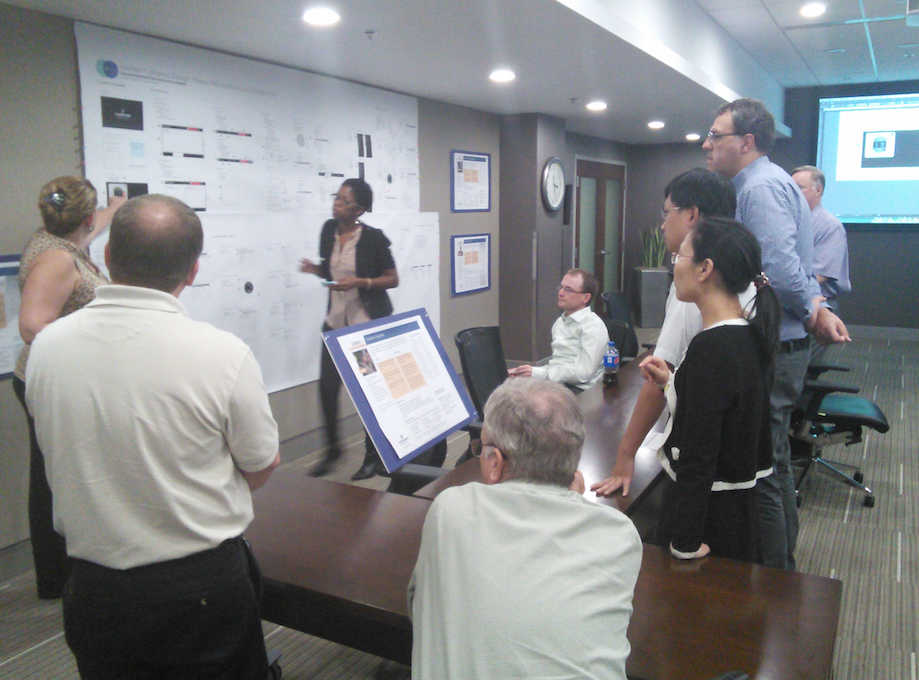
As part of our Product Vision Roadshows, we leveraged large-scale physical storyboards as a powerful communication tool to articulate customer journeys and the overarching design vision to engineering teams. These visual narratives provided an immersive, interactive way to showcase the end-to-end user experience, making complex workflows more tangible and accessible.
To foster engagement and cross-functional collaboration, engineers were encouraged to interact directly with the storyboards—placing sticky notes with questions, insights, and feedback at key points along the customer journey. This hands-on, tactile approach got teams on their feet and facilitated deeper discussions. It also helped bridge the gap between design intent and technical implementation, ensuring alignment between UX strategy and product development.
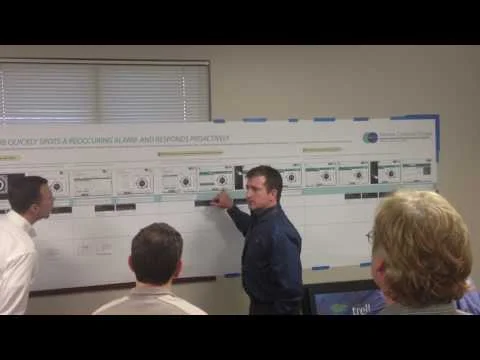
As part of our Product Vision Roadshows, we leveraged large-scale physical storyboards as a powerful communication tool to articulate customer journeys and the overarching design vision to engineering teams. These visual narratives provided an immersive, interactive way to showcase the end-to-end user experience, making complex workflows more tangible and accessible.
To foster engagement and cross-functional collaboration, engineers were encouraged to interact directly with the storyboards—placing sticky notes with questions, insights, and feedback at key points along the customer journey. This hands-on, tactile approach not only facilitated deeper discussions but also helped bridge the gap between design intent and technical implementation, ensuring alignment between UX strategy and product development.

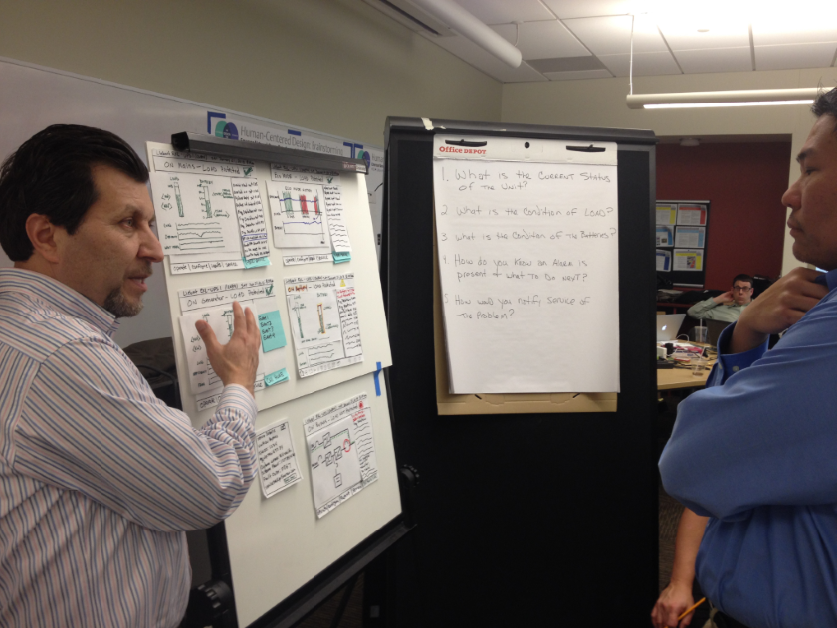
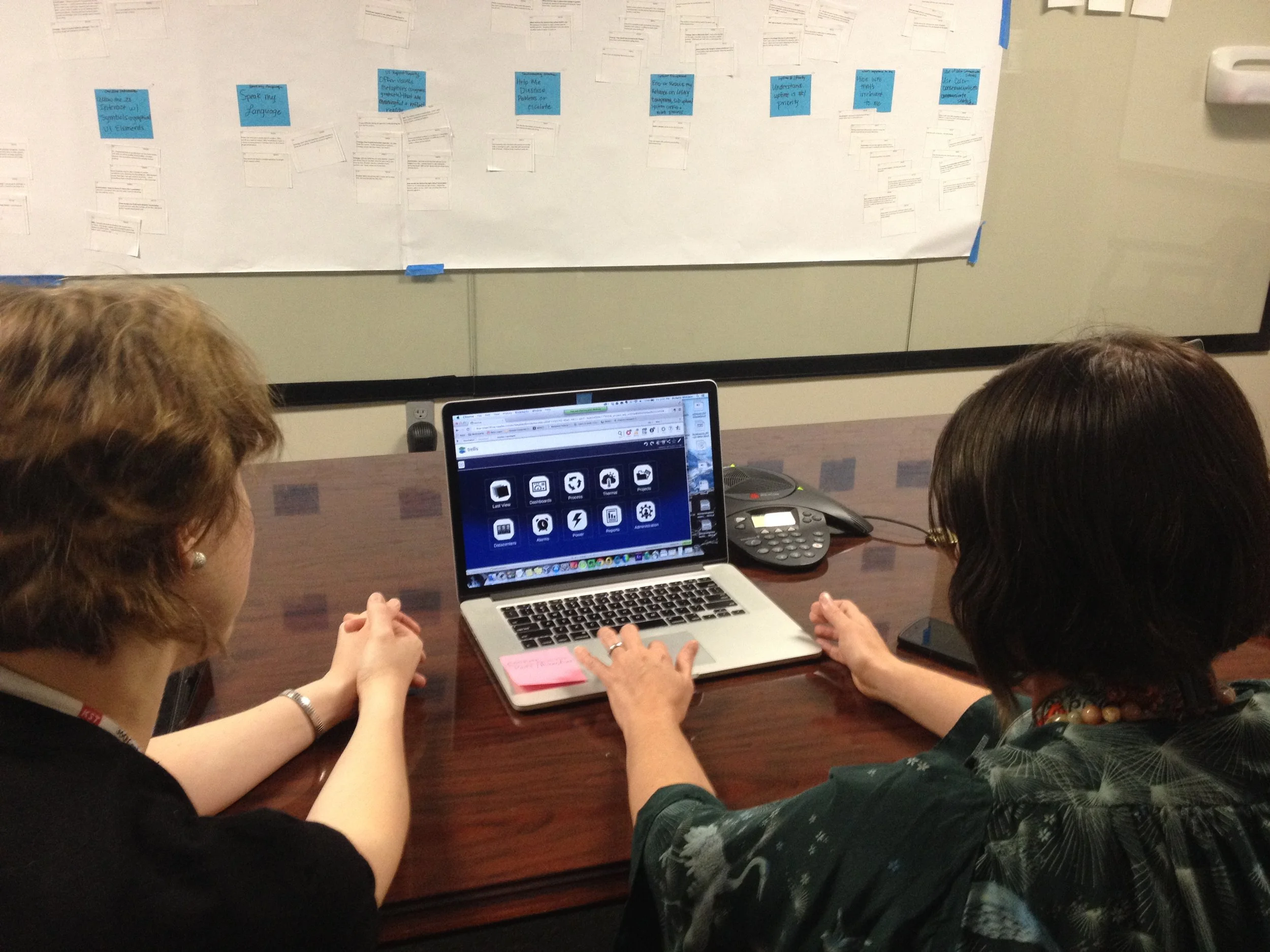
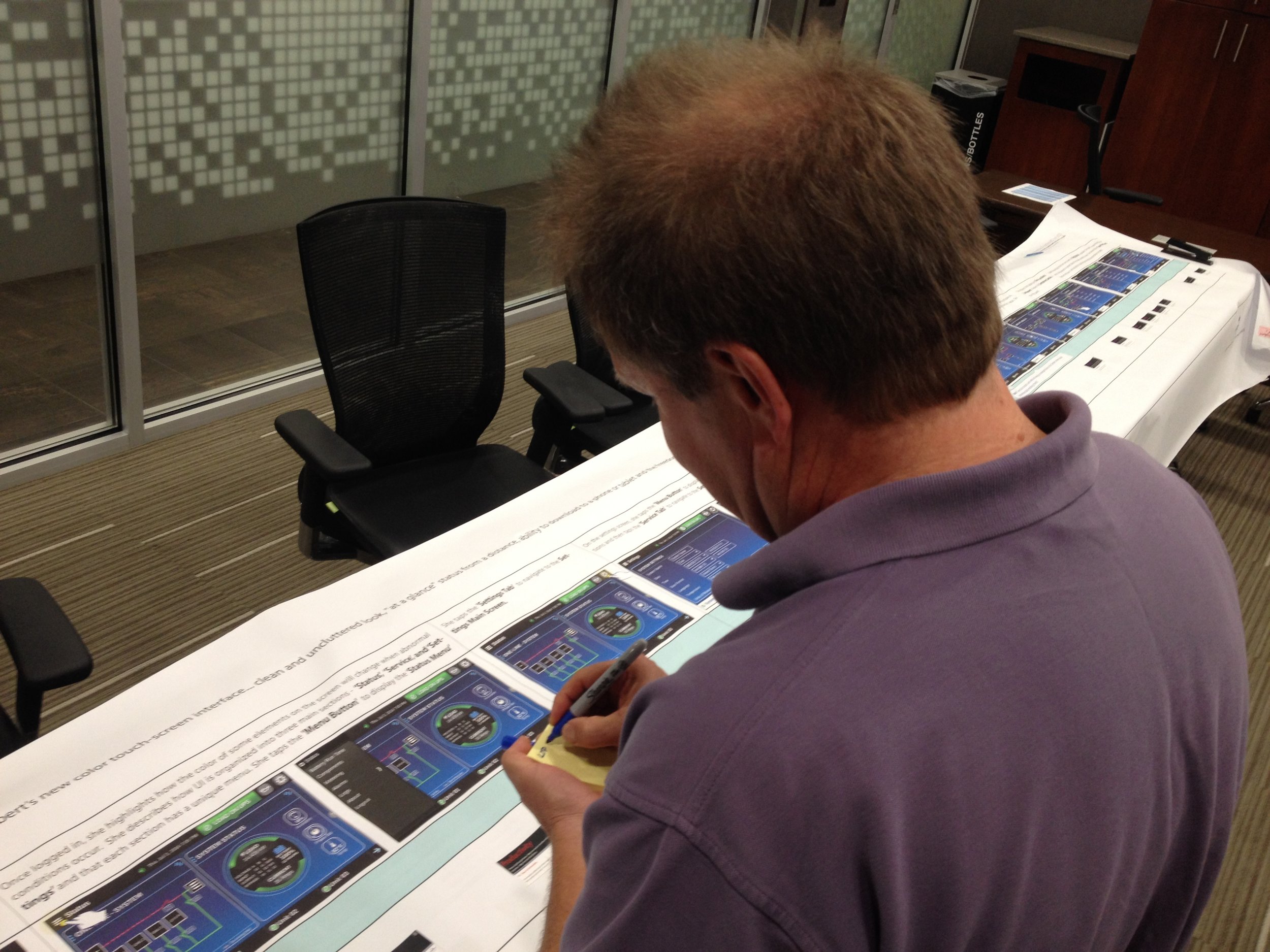
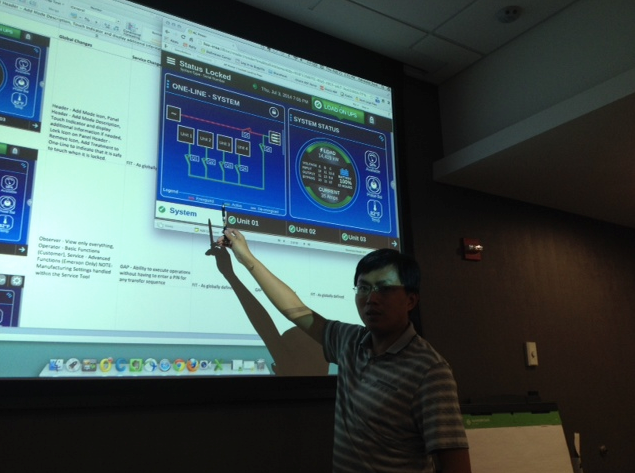
Here, a UX Designer from my team reviews a section of a storyboard outlining a proposed user interface interaction. While we developed an end-to-end interactive prototype using Axure to bring our designs to life, I have found that the ‘Walk The Walls’ approach is particularly effective in fostering deeper, more meaningful discussions among cross-functional product teams.
With the development of the proposed user interface entrusted to globally distributed engineering teams, clear and precise communication was essential to ensuring design integrity. To bridge potential gaps, we implemented a structured approach to design collaboration, providing comprehensive context, guidelines, and documentation. This method was critical in preserving key design nuances, ensuring that every aspect of the user experience—from interaction flows to visual hierarchy—was faithfully executed across all teams and regional development hubs.
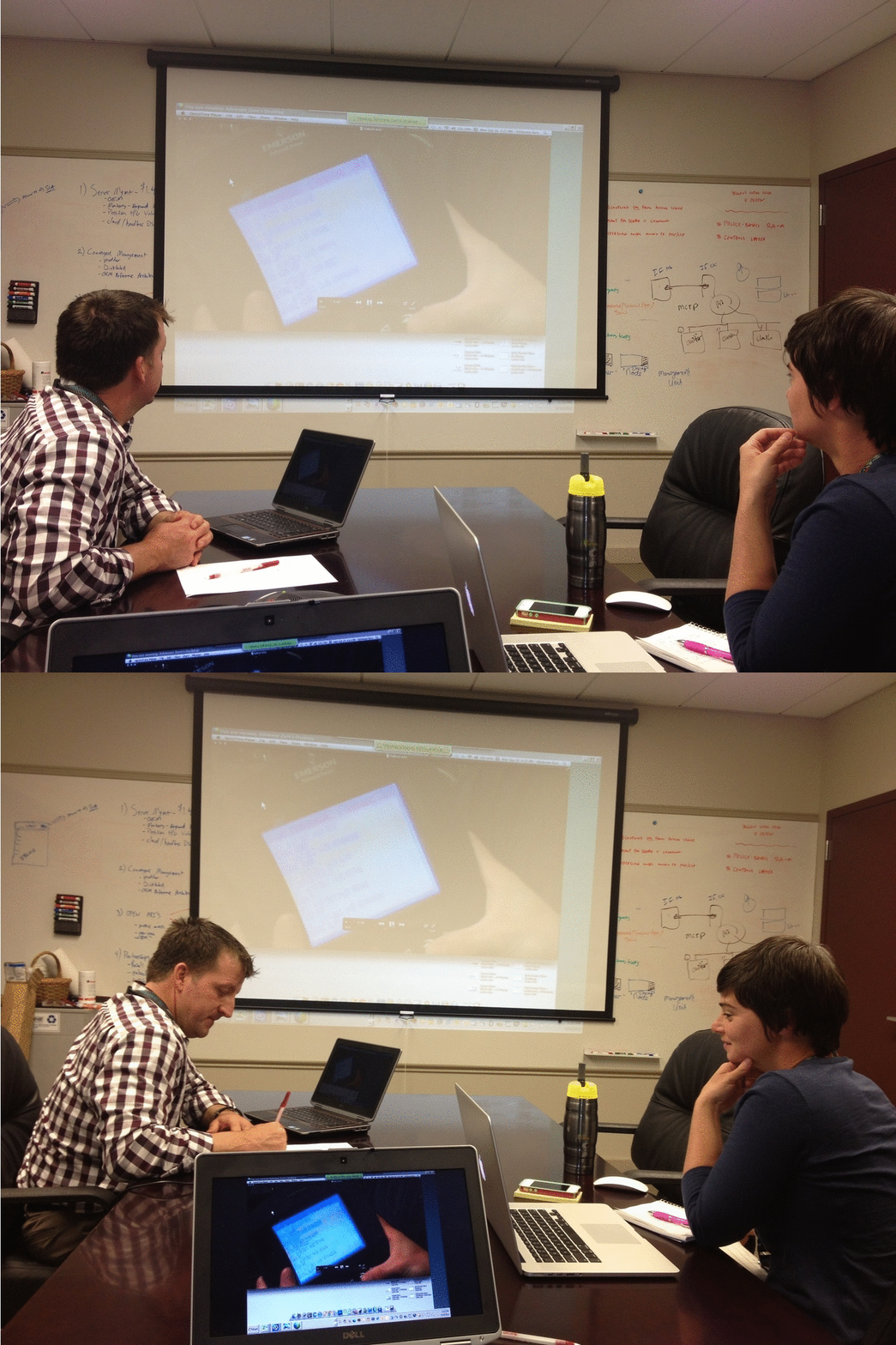
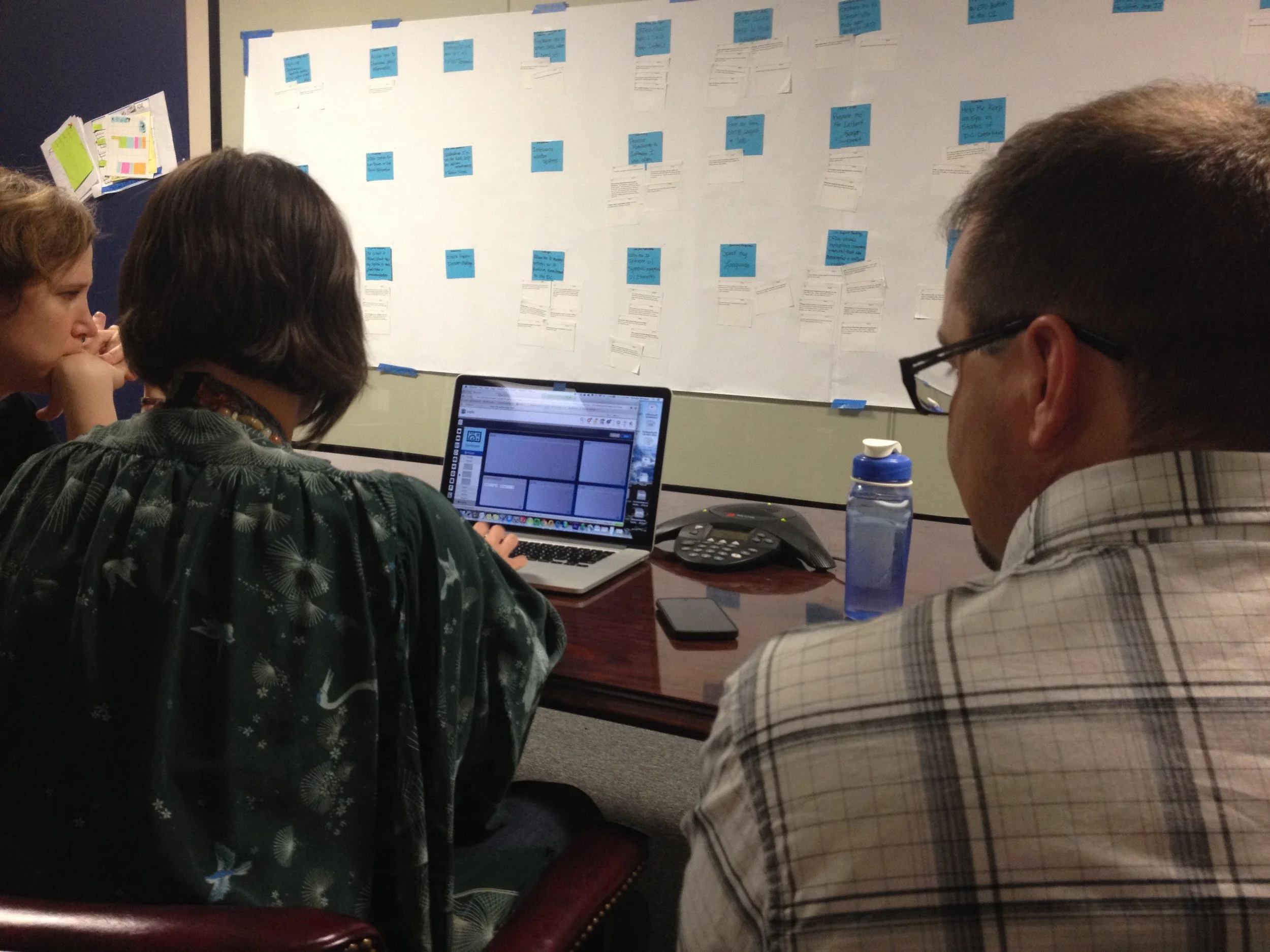
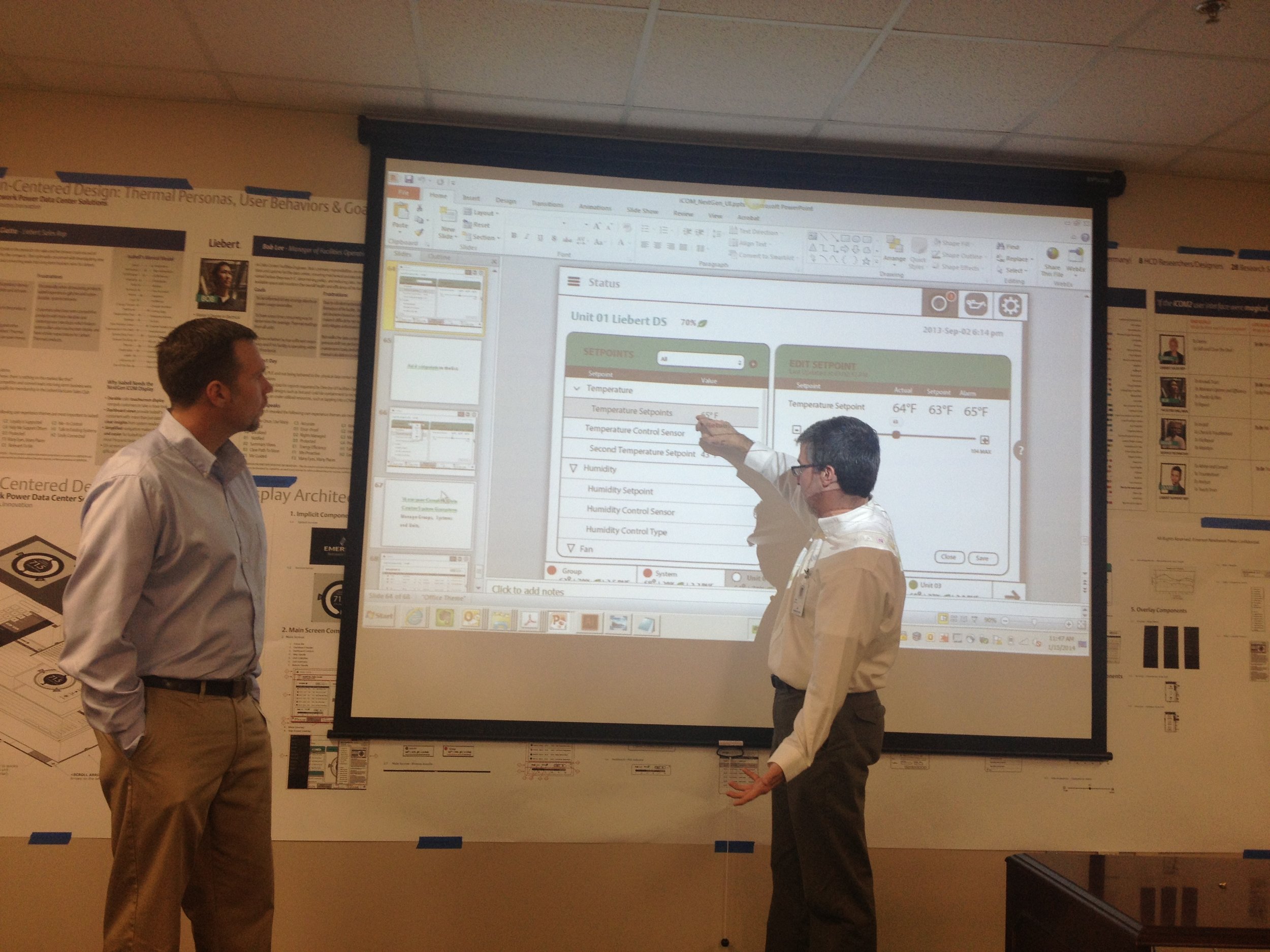
After guiding the engineering teams through the “Walk The Walls” activity—an immersive, hands-on review of our design concepts—we introduced the digital functional prototype within Azure. This interactive session allowed stakeholders to visually and experientially engage with the prototype in real time.
Immediately following the presentation, we began incorporating live feedback, rapidly iterating on the design to ensure alignment across teams. This collaborative, real-time approach significantly reduced the inefficiencies of traditional feedback loops, eliminating the need for prolonged back-and-forth exchanges via email and Azure comments.
After guiding the engineering teams through the “Walk The Walls” activity—an immersive, hands-on review of our design concepts—we introduced the digital functional prototype within Azure. This interactive session allowed stakeholders to visually and experientially engage with the prototype in real time.
Immediately following the presentation, we began incorporating live feedback, rapidly iterating on the design to ensure alignment across teams. This collaborative, real-time approach significantly reduced the inefficiencies of traditional feedback loops, eliminating the need for prolonged back-and-forth exchanges via email and Azure comments.
After presenting the Product Vision, I facilitated targeted deep-dive discussions with division product and engineering teams to translate strategic goals into actionable product requirements. These sessions were instrumental in refining the product backlog, ensuring alignment between user needs, business objectives, and technical feasibility. Additionally, I led collaborative planning efforts to define iteration cycles, prioritize features, and establish a structured release roadmap that balanced innovation, usability, and development constraints.
Product teams from across Emerson’s global network traveled to our Huntsville, AL studio, investing significant time and effort to participate in planning deep dives with me and my team. For many, this was their first exposure to UX methodologies, and some approached the process with skepticism. However, through collaborative workshops and strategic discussions, we were able to transform ambiguity into clarity, ensuring teams left with a well-defined vision of what they were building and why it mattered.
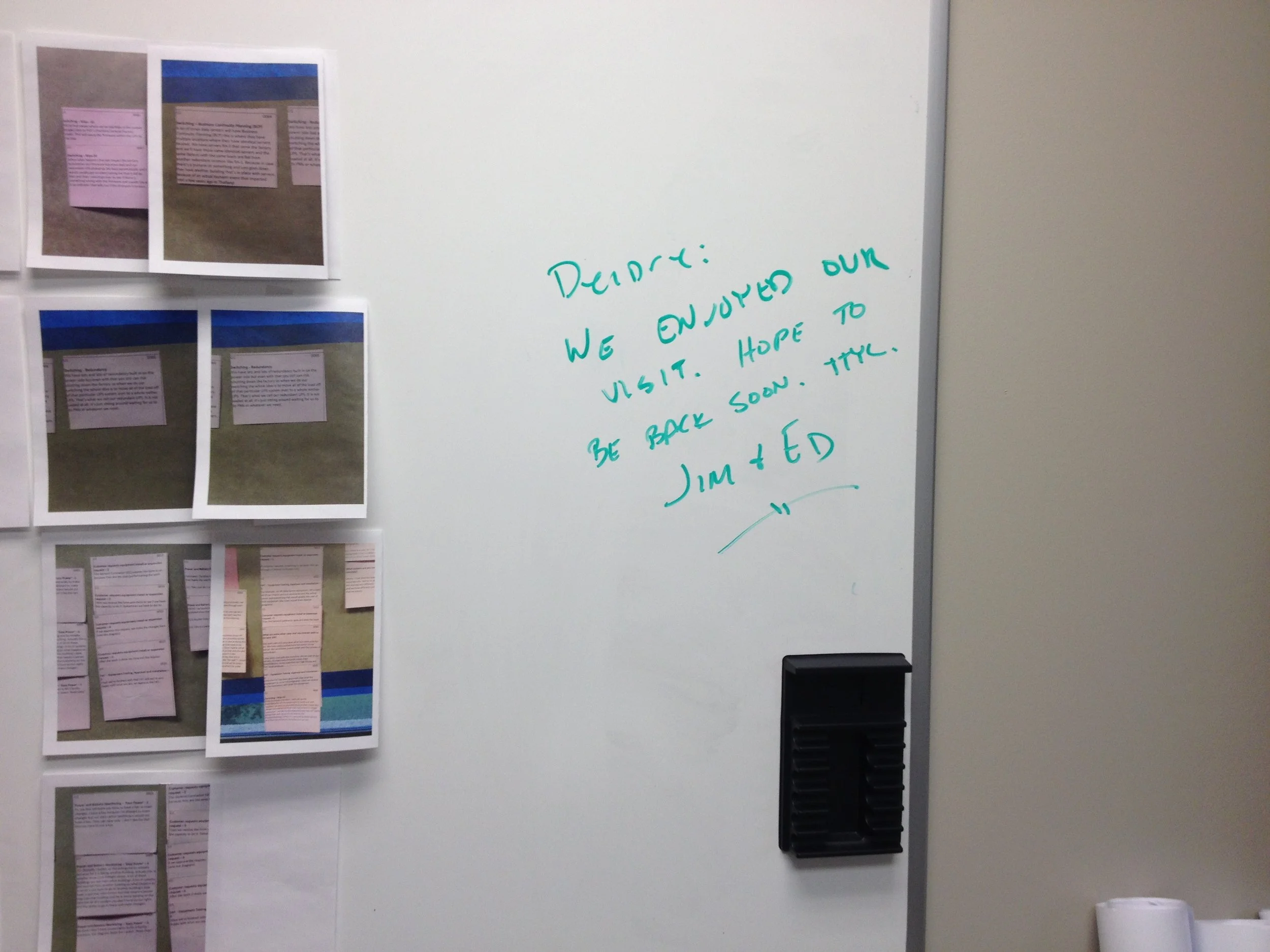
It was incredibly rewarding to witness this shift—seeing engineers and product managers embrace user-centered design principles and gain confidence in the process. Occasionally, I would even receive a thoughtful note of appreciation, a reminder of the lasting impact our work had on both the products and the people behind them. 😊
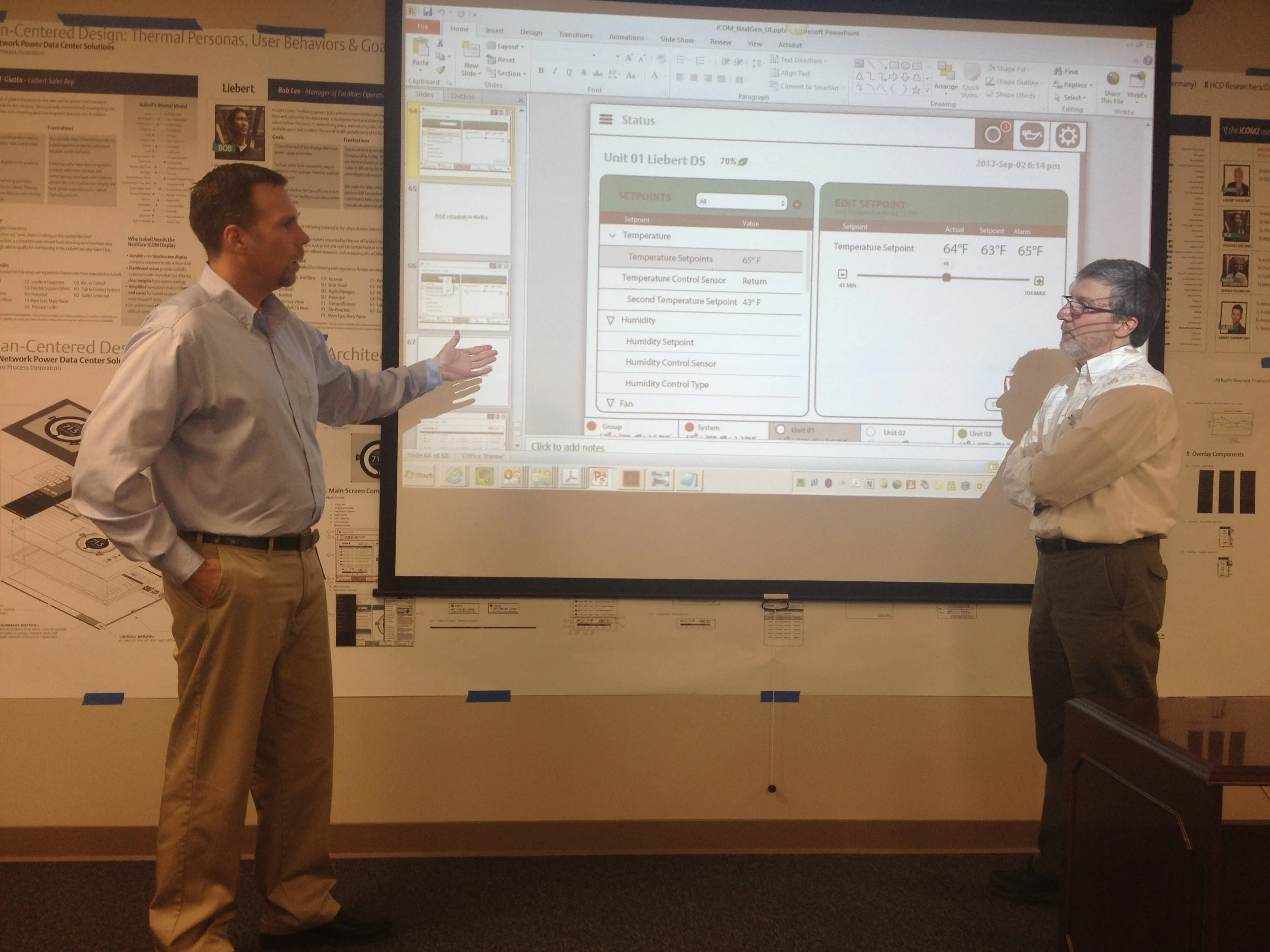
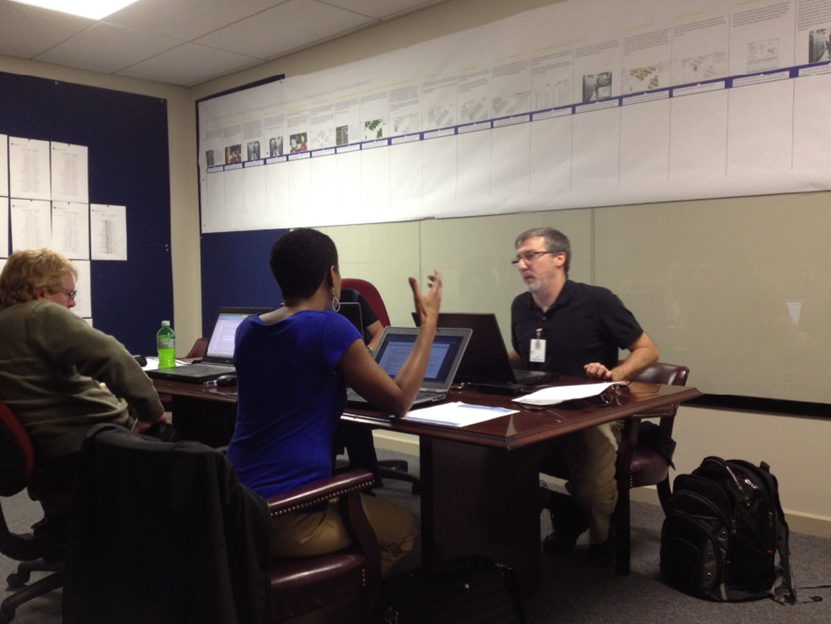
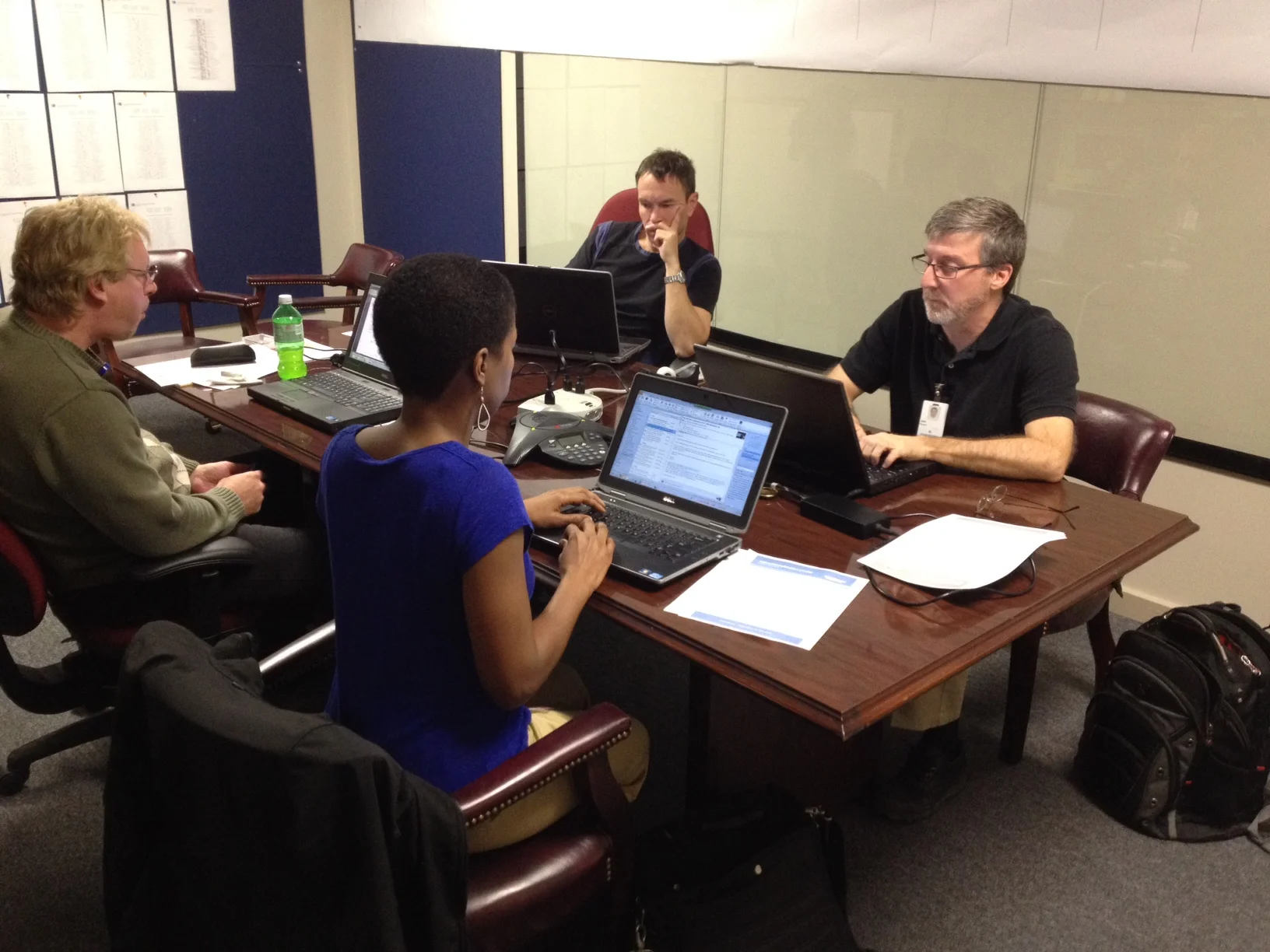
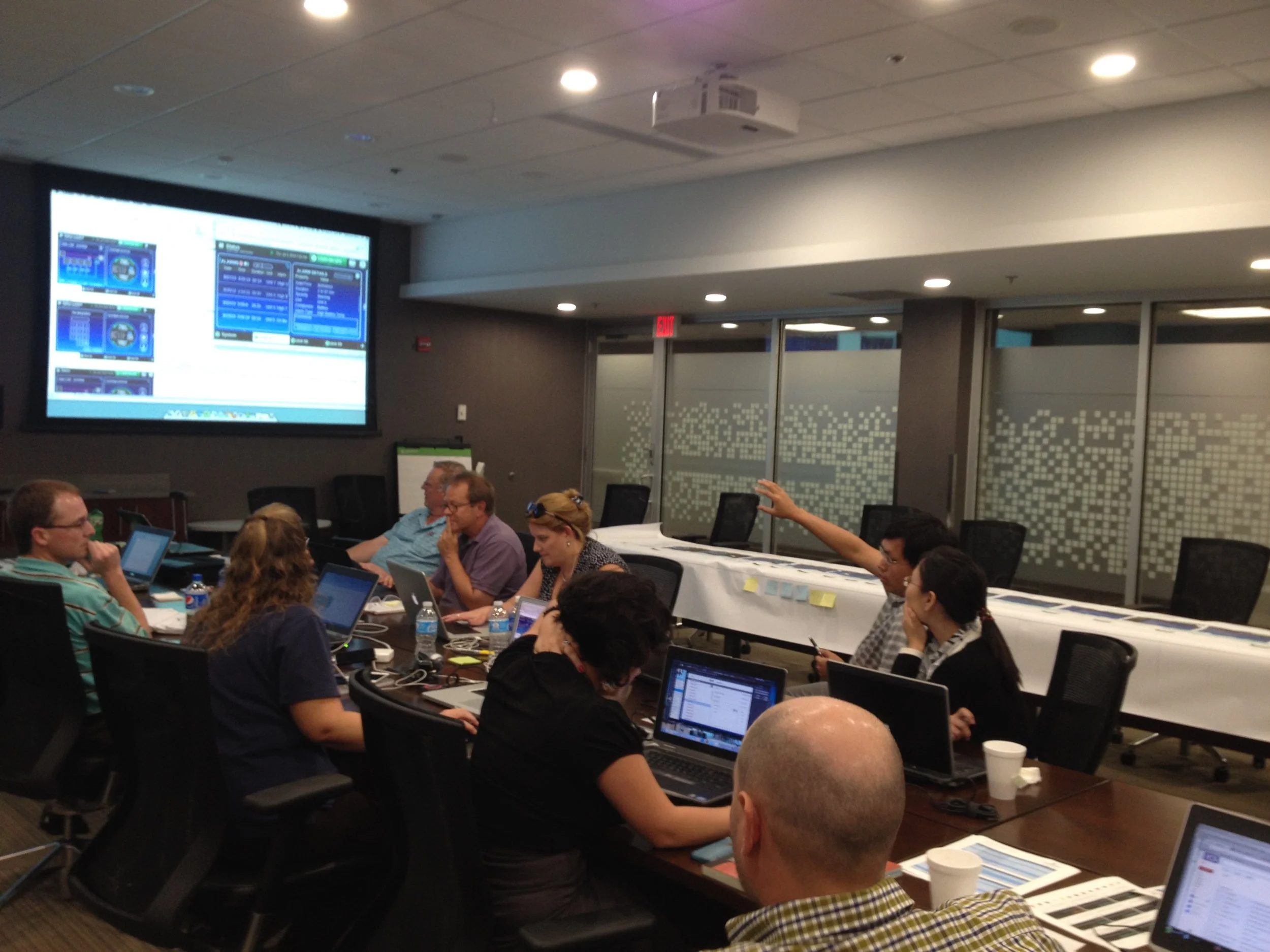
Here, my team and I are actively engaged in a strategic planning meeting with members of two separate software engineering teams—one based in Europe and the other in China—who were in the process of adopting the UX framework we designed. While both teams would leverage the shared library of reusable UI components we designed to establish a consistent, unified look and feel across applications, each had some unique technical and user requirements that required careful consideration.
As part of this collaboration, I frequently led negotiation discussions to address UX tradeoffs, ensuring that design consistency was maintained while accommodating the divergent needs of each team. By balancing usability, scalability, and development feasibility, we worked together to create a cohesive, user-centered experience across Emerson’s global product ecosystem.
We had the invaluable opportunity to build and test high-fidelity prototypes of the redesigned human-machine interfaces (HMIs) using an actual touch-enabled LCD display, identical to those that would be mounted on the final production units. This hands-on approach allowed us to conduct heuristic evaluations and A/B testing in a real-world context, ensuring our design decisions were grounded in practical usability insights.
Through these tests, we established a baseline measure of task completion rates, closely observing how users navigated critical workflows with the existing HMI compared to the proposed redesign.
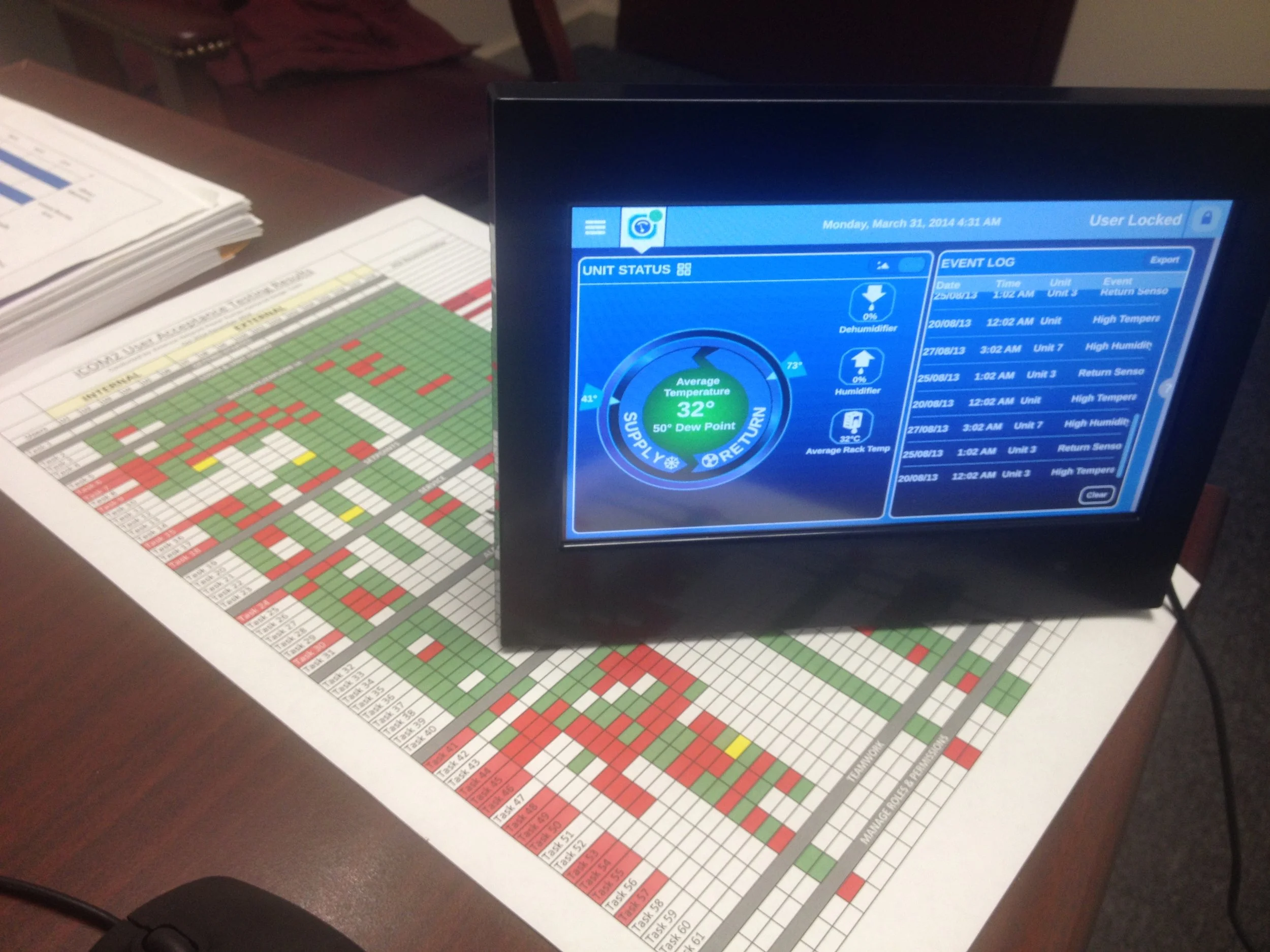
The document shown in this photo is an example of how UI Task Analysis test results were systematically coded and visualized to ensure clear communication with Product Management and Software Engineering teams. This structured approach allowed stakeholders to quickly identify usability challenges and opportunities for improvement.
In the table, the X-axis represents each test participant, while the Y-axis lists all UI tasks they were asked to complete using the interface. The results are color-coded for easy interpretation: green indicates successful task completion, yellow highlights areas where users encountered difficulties, and red signifies tasks that participants were unable to complete.

In each Agile sprint, my team delivered a functional product demo, which we then evaluated with end users to gather critical feedback. This particular demo represents one of the earliest iterations of a specific product. While it successfully showcases core functionality, user evaluations surfaced glitches and areas for improvement, which informed our next iterations.
At this stage, the graphical user interface (GUI) components had not yet undergone visual refinement, as our primary focus was on validating usability, workflow efficiency, and overall interaction design.


Successful product Launch!

Successful product launch - under Emerson Brand

Successful product launch!
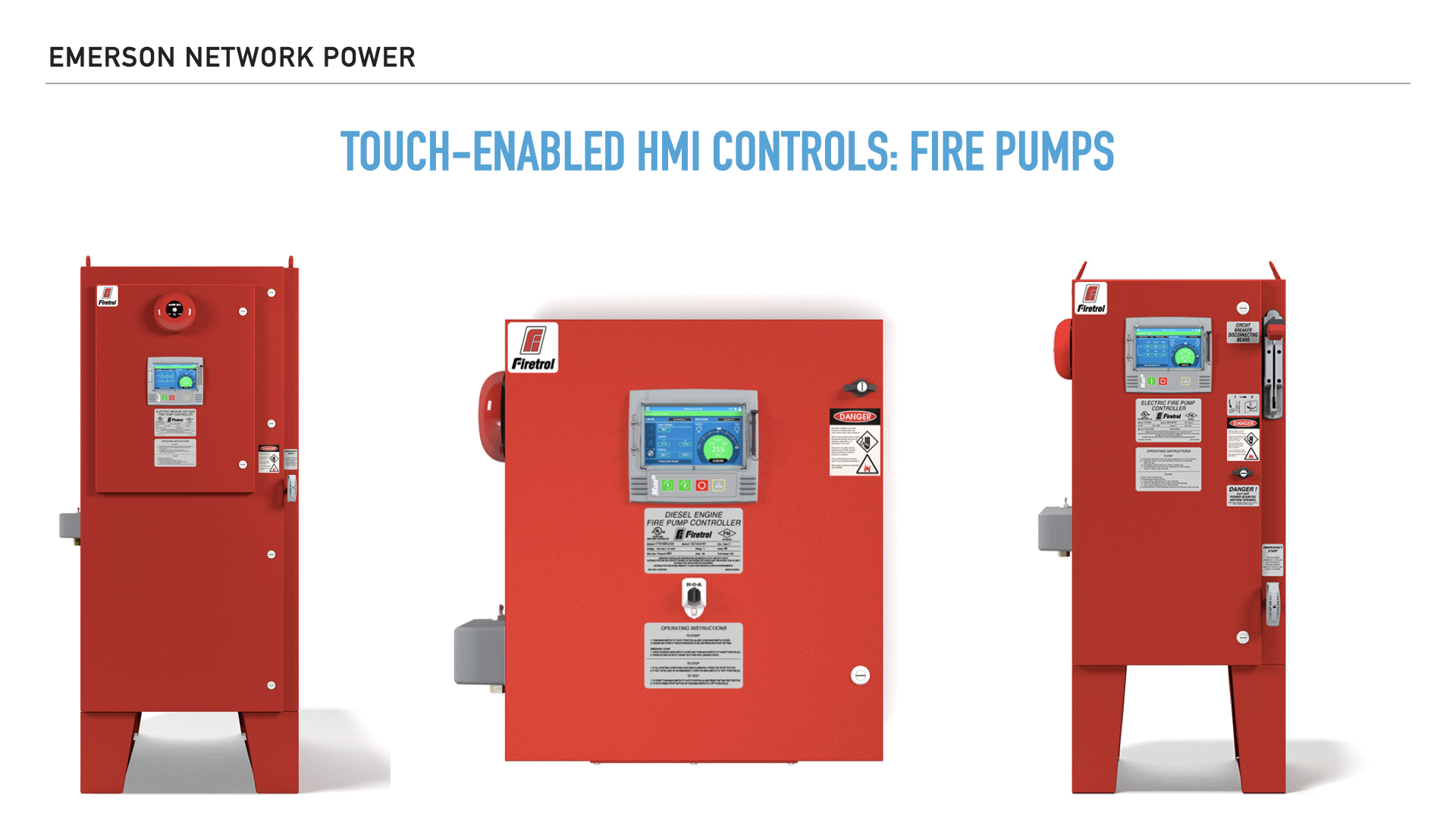
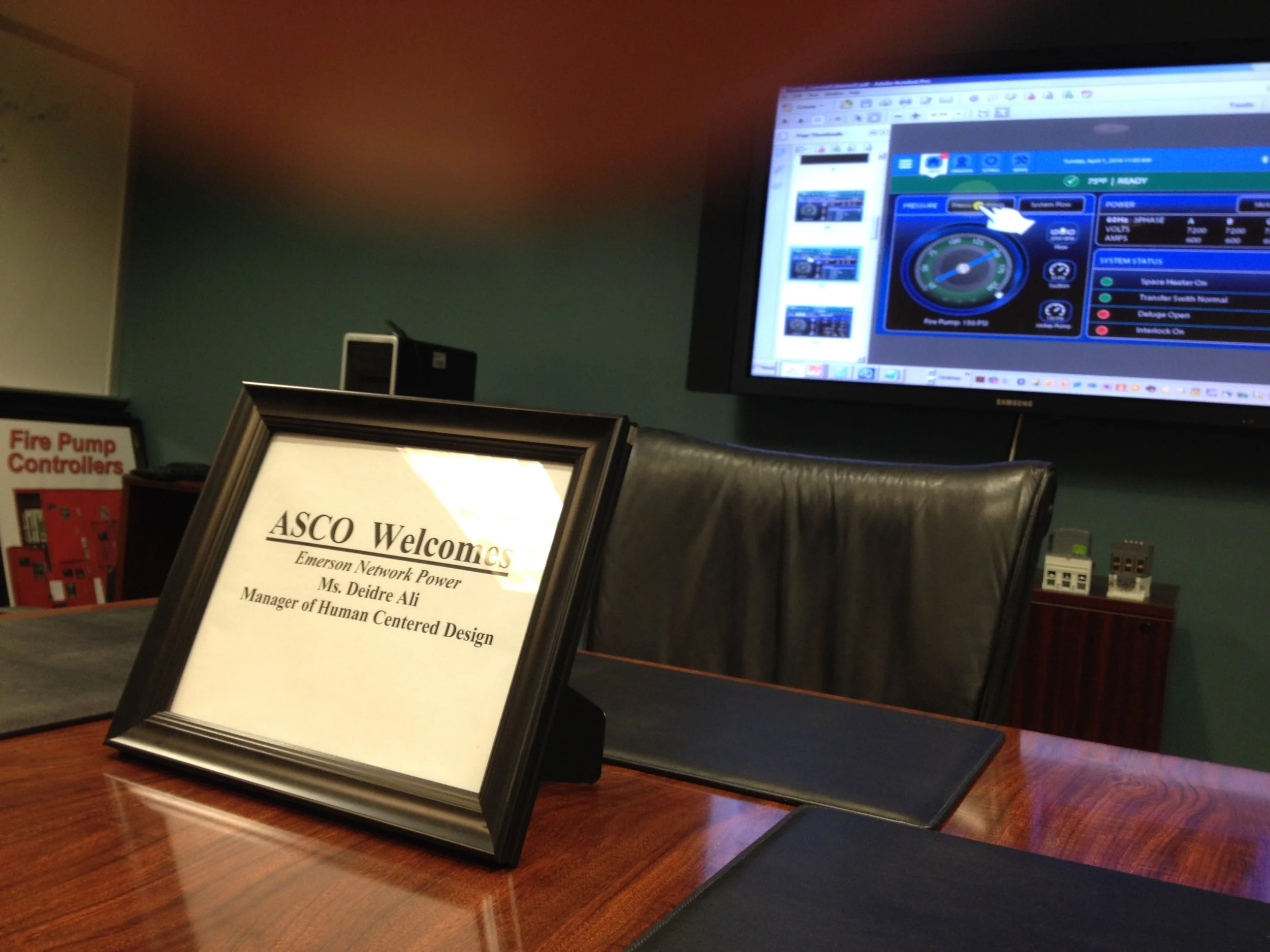
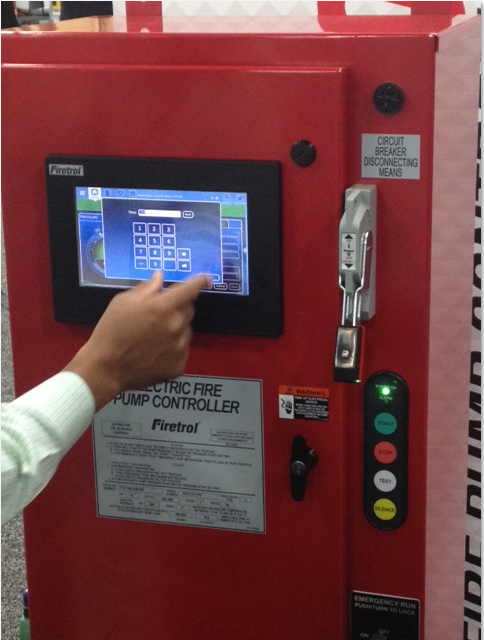
ASCO, a business unit of Emerson, sought to modernize the user interface (UI) of its Mark III Electric Fire Pump Controller product line. Recognizing the need for a cost-effective, scalable solution, I was invited to pitch and lead the design implementation of a reusable UI framework that I had architected.
Rather than investing in a fully custom-designed UI for each product, my proposed framework provided a flexible, standardized approach that significantly streamlined development. This solution not only reduced costs but also accelerated ASCO’s engineering workflow, cutting the time required to produce a functional (coded) proof of concept by 75%—from several months to just a few weeks. The success of this implementation demonstrated the power of strategic UX innovation in driving efficiency, reducing complexity, and enhancing product scalability.
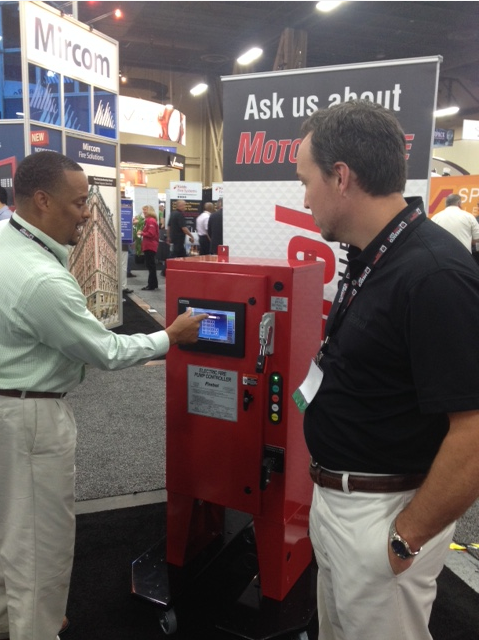
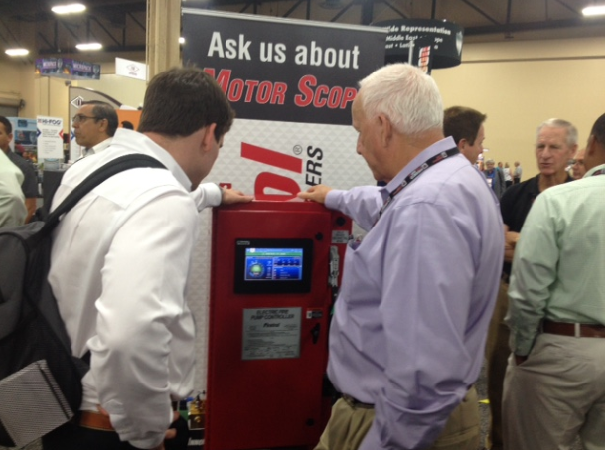
The reusable UI framework developed by my team enabled the Firetrol Engineering team to achieve an unprecedented turnaround, successfully delivering a proof of concept (POC) within a highly compressed timeline. This rapid development allowed Firetrol to showcase its innovation on a national stage, debuting the POC at the 2016 NFPA Conference in Las Vegas, NV—the industry’s largest and most influential trade show. Our framework not only accelerated development and reduced engineering effort but also laid the foundation for future scalability and design consistency across Firetrol’s product ecosystem.
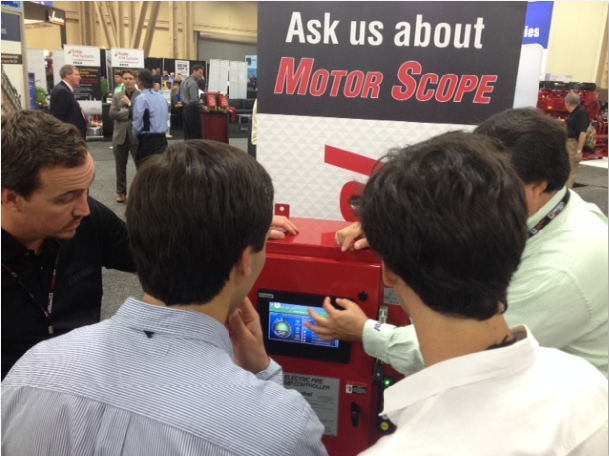
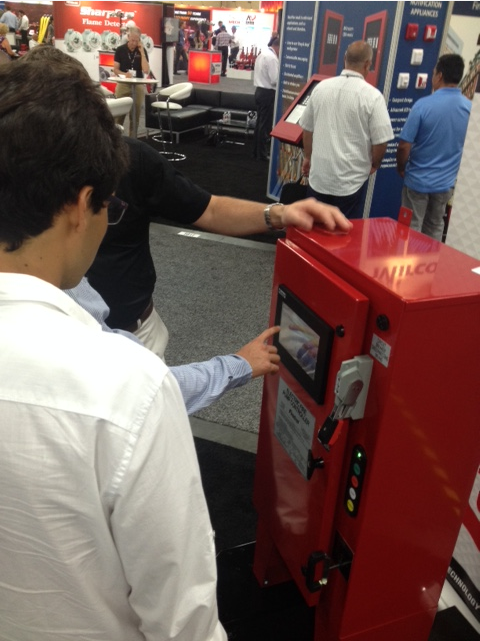
As part of my role, I had the opportunity to attend numerous industry trade shows where the products my team and I designed were showcased and met with overwhelmingly positive feedback. One of the most memorable moments was the debut of the ASCO user interface for Firetrol at the National Fire Protection Association (NFPA) tradeshow. The innovative design immediately captured the curiosity and interest of attendees, drawing them to our booth to explore its functionality firsthand.
Seeing months of dedicated research, design, and iteration culminate in a successful product launch was truly rewarding. Witnessing industry professionals engage with and appreciate our work reinforced the impact of human-centered design in delivering solutions that are not only intuitive and efficient but also set new standards for usability in mission-critical systems.
Following product launches, my role frequently evolved to include strategic support for product marketing and promotional efforts. This involved collaborating with marketing teams, sales divisions, and key stakeholders to effectively communicate the value, usability, and innovation of our designs. I contributed to go-to-market strategies, product positioning, and customer education initiatives, ensuring that the user experience narrative was seamlessly integrated into brand messaging, promotional materials, and industry outreach efforts.

Following product launches, my role frequently evolved to include strategic support for product marketing and promotional efforts. This involved collaborating with marketing teams, sales divisions, and key stakeholders to effectively communicate the value, usability, and innovation of our designs. I contributed to go-to-market strategies, product positioning, and customer education initiatives, ensuring that the user experience narrative was seamlessly integrated into brand messaging, promotional materials, and industry outreach efforts.

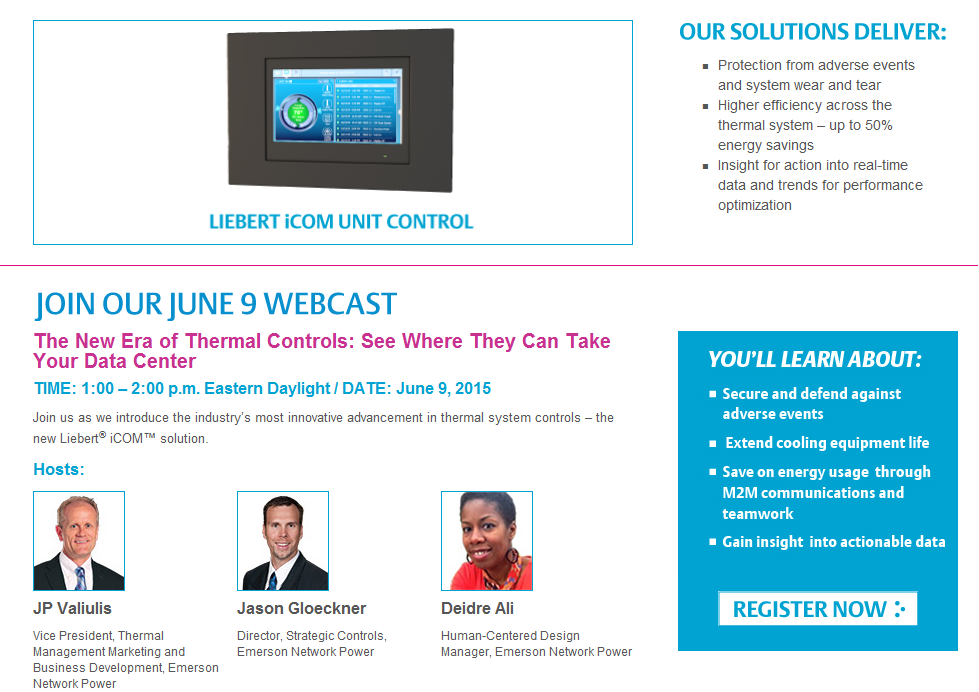
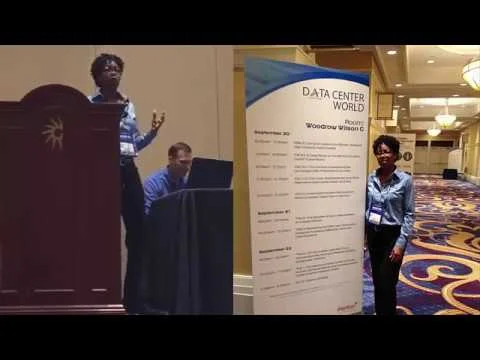
Speaking Engagement: “The New Era of Data Center Controls: Human Centered Design and the New Liebert iCOM”

Enter description here
360° Feedback
Leadership
"Deidre is extremely customer-centric in what she does and looks to try and instill these values into the business. She is extremely strong in teams and has an extremely valuable skill set that can help reach across Emerson Network Power business units and allow us to create a user experience for our customers. This is going to be key as we go into the future. I am excited her team is helping to impact the future look and feel. This is going to be key as we go into the future as a new company (Vertiv). This is a great opportunity to drive change within the organization and see Deidre as a key player in this." - Vice President of Marketing, Emerson Network Power
"Deidre took on a leadership role in this area and rolled out processes to support multiple organizations and drive towards a common goal, The feedback below from the Vice-President of our Thermal Business Division was echoed this year (2014) by many others: Deidre
“Wanted to let you know how much we have enjoyed working with Deidre. She is very knowledgeable, well organized and easy to work with. She has done an excellent job on the iCOM project and has gone above and beyond to make sure the project will be successful. Thank you for her support.” -Director of Project Management, Emerson Network Power
"She has driven this process (User Experience/Human Factors) as a best practice within the company and it is becoming more widely adopted. She has definitely brought new ways of thinking into the business and a different way of questioning which has helped focus on what matters. Deidre works well with others and has generally positive feedback from her team and peers. She has demonstrated the ability to pull together people from other functions and get them to participate in workshops and other collaborative activities." -Director of Product Management, Emerson Network Power
"Deidre, I want to thank you for what I thought was an excellent event (Product Vision Workshop). You have helped to inspire a group of sometimes 'set in our ways' engineers. All of the feedback was positive, and I look forward to seeing this taken to the next level." - Vice-President of Global Marketing, Liebert / AC Power